An old-fashioned approach to a modern health care crisis
Published 1:30 am Wednesday, March 25, 2026


By Darrell Kirk
Staff reporter
James Maya, 86, is a wildlife photographer, a retired teacher, and a man with a gift for painting pictures with words. When he describes what it feels like to be a patient of nurse practitioner Aurora Hoyle, he reaches for Norman Rockwell.
“I have very vivid images of the great illustrator Norman Rockwell, and his picture of Americana back in the 40s and 50s — of schoolchildren, firemen, the helpful policemen. And then whenever I sit in Aurora’s office, I have this image of him [Rockwell] up there in the clouds, drawing this and painting the image that he would come up with of old-time personal health service.” He pauses. “That’s just what it is.”
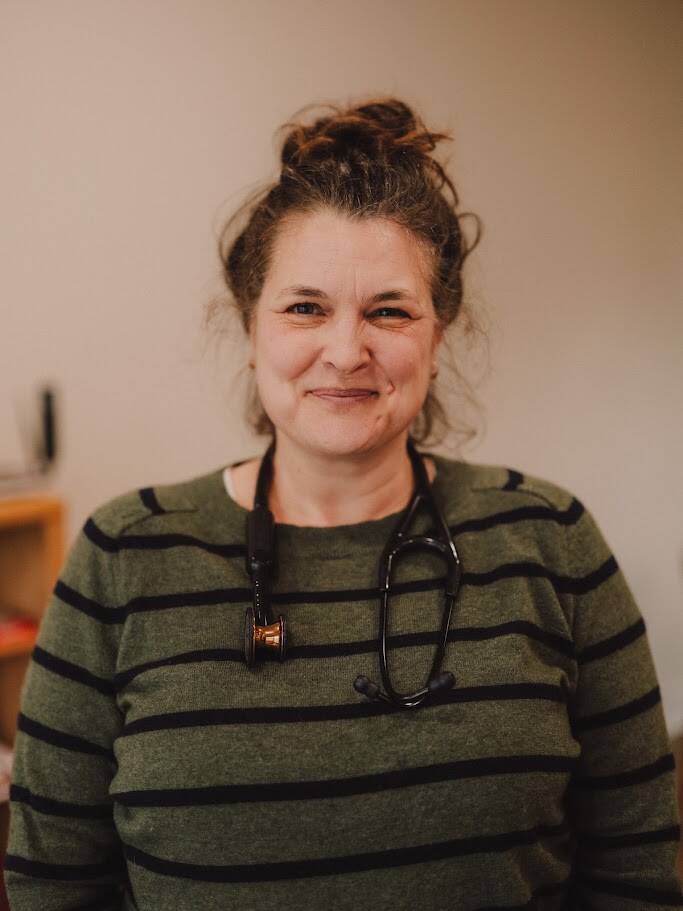
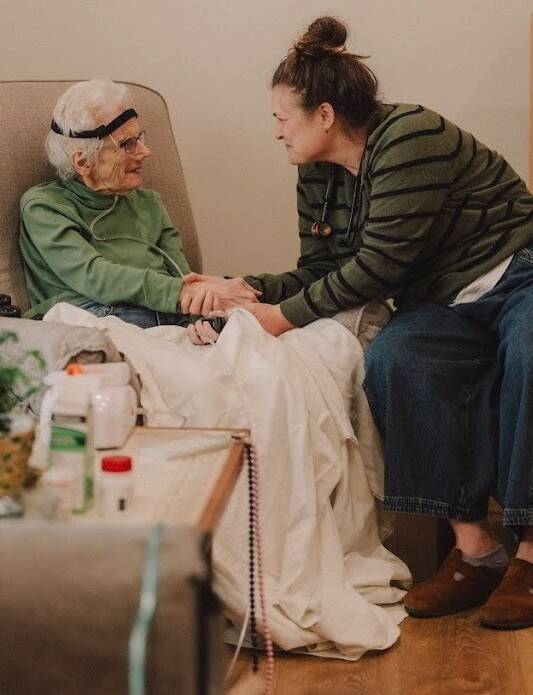
It is a portrait many on San Juan Island would recognize: a nurse practitioner — unhurried, curious, genuinely present — sitting with her patients as if time were not a commodity being rationed by insurance codes. Except Aurora Hoyle doesn’t always wait for her patients to come to her. Often, she goes to them.
A Practice Built for the People Who Fall Through the Cracks
Hoyle founded Aurora Community Health after years in community-based settings — home health, nonprofits, and federally qualified health clinics. The problem was clear.
“We weren’t providing care that was specific to the community we were serving,” she says. “And that really bothered me.”
What she saw was a community whose needs didn’t fit a standard clinic model: patients who couldn’t navigate a call system routed through Bellingham, elderly residents who couldn’t make the trip in, people with mental illness who hadn’t left their homes in years. So she built something different — house calls, running about an hour each — where she draws blood, conducts full physicals, and sees what a clinic visit would never reveal: whether the heat is on, whether there’s food in the house, whether the path to the bathroom is a fall waiting to happen.
“The most important thing about a home visit is that you actually get to see what’s going on,” she says. “You find a lot of things.”
The Moments That Define Her
Rita O’Clair, 81, came to Hoyle after a fall that broke her leg and left her without mobility. Someone told her Aurora treats all appointments as house calls, and, as O’Clair puts it, “I took up with her immediately.” What kept her was something else entirely: “She doesn’t turn pale and refuse to see a patient if she wants to talk about Death with Dignity drugs.” It is the kind of candor her patients come to count on.
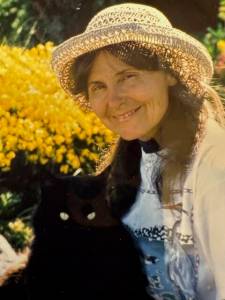
James and Carolee Maya, both 86, have a different defining moment. When they came down with COVID together, Hoyle arrived quickly, fully protected, and assessed each of them. When Carolee felt something was badly wrong in the night, she called again. “She made a second call and reassured me that I was very sick, but I was going to be fine,” Carolee recalls. “And sure enough, I was.”
But it was months later, after Carolee’s brother suffered a devastating stroke in Las Vegas, that Aurora’s place in their lives was cemented. When the Mayas returned home, Hoyle showed up at their door. “She said, ‘Are you two guys home?’” James recalls. “And she came over with two bags full of groceries and invaded our kitchen and just made this fabulous meal for us. And we sat down and we drank wine and we talked about life and death and all those other aspects of life.”
“She’s My Doctor. She’s Amazing.”
Evan Perrollaz — mayor of Friday Harbor and founder of the San Juan Islands Healthcare Foundation — is also Aurora Hoyle’s patient. He created the foundation in 2024 after watching vulnerable residents fall through gaps no other organization was filling. He is quick to note that his foundation works collaboratively with the Family Resource Center, the Mullis Center, and other island organizations. “I just wanted to remove barriers and fill in any gaps that aren’t covered by the other organizations,” he says.
About Hoyle, he doesn’t hesitate. “When I go to an appointment with her, she gives me like an hour — your doctor basically just sat down and said, ‘Talk to me. What do you need? How can we best get you to where you want to be?’” He describes himself as very supportive of her dream of a free clinic on the island. “She wants to build a free clinic and she’s really passionate about it,” he says. “I think it’s a fantastic idea.”
When the System Fails, Who Shows Up?
Perrollaz is blunt about why. “We don’t talk enough about the fact that people don’t want to go to the hospital because they don’t feel like they get treated very well, or they simply don’t have the funds and don’t know how to navigate the system.”
He thinks of a neighbor, a man he watched lose significant weight while quietly hiding what appeared to be a serious illness. “His wife had advanced memory issues, and he kept everything very close.” The man had access to resources but didn’t know it. “He tried to control the narrative of his life because he didn’t want people to know about his situation — he wanted to protect his wife.” The foundation, Perrollaz says, could have stepped in immediately. Instead, the man fell and fractured a bone in his neck. “He ended up in the hospital and then a nursing home, and his wife had to move to memory care. Their world collapsed literally in 24 hours.”
“All it takes in this community,” he says, “is one fragile [piece of the] ecosystem to crash for somebody’s world to come to a crashing halt.”
The Bedrock
It is exactly that fragile ecosystem that Hoyle is trying to shore up — building toward a nonprofit community health clinic woven into the island’s existing fabric of services. Not siloed from the food bank, the Family Resource Center, the paramedicine nurse. Connected to all of them.
“We’re missing where primary care is a cog in that,” she says. “It’s all tied together.”
She freely acknowledges the way she is doing things “might not logically make sense from a business perspective.” But that, for now, is beside the point. What matters is access — getting care to the people who need it, on the island where they live.