See a marine mammal tangled, call the Response Program
Published 1:30 am Thursday, May 28, 2026
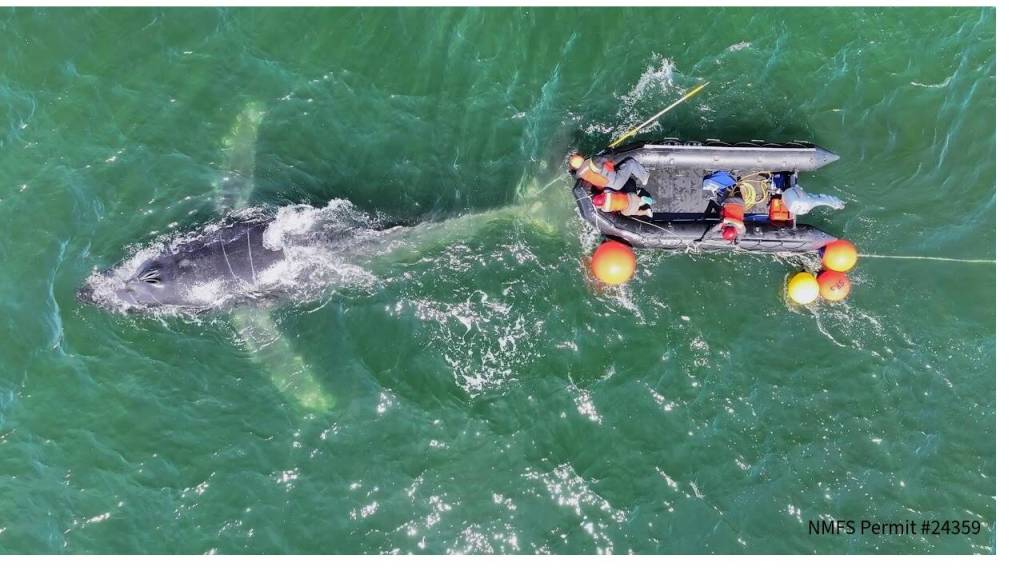
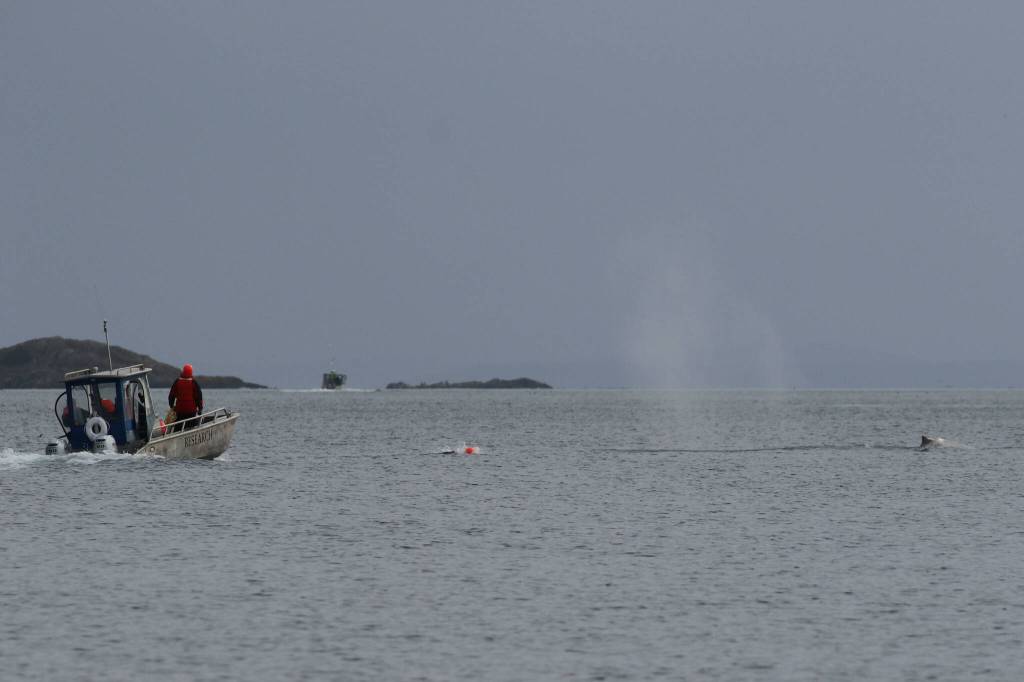
When a juvenile humpback whale twice found itself wrapped in fishing gear, a Steller sea lion nearly died due to packing material wound tightly around its neck or the female humpback that also became entangled in fishing gear last year, it took a village to respond to the calls. Cascadia Research Collective, National Oceanic and Atmospheric Administration, the SeaDoc Society and The Whale Museum are just a few of the teams that respond to the call.
“We are lucky in this area that we have people who are trained and permitted,” said Dr. Joe Gaydos, executive director of SeaDoc Society and world-traveling wildlife veterinarian, surgeon and research scientist. He encourages those who see a marine mammal tangled or in distress to call The Whale Museum’s Response Program (formerly the San Juan County Marine Mammal Stranding Network) at 1-800-562-8832. Through this program, The Whale Museum, in collaboration with SeaDoc Society, responds to stranded marine mammals throughout the county. This work is done under permit and in agreement with NOAA. NOAA defines a marine mammal as “stranded” when it is found dead on land or floating, or alive on the beach and unable to return to the water or injured/sick and in need of veterinary attention.
Erin Casellas, The Whale Museum’s Response Program coordinator, recently received a Level Three entanglement rating authorization through NOAA. In a nutshell, large whale entanglement ratings classify responders into five training and expertise levels, ranging from basic reporting to leading advanced hands-on rescue operations. Administered by NOAA Fisheries and governed by the International Whaling Commission, these tiers dictate exactly who is authorized to intervene with entangled whales in U.S. waters.
Level one is an online course via NOAA that teaches reporting, documenting and standing by the animal until a responder can arrive. Level two consists of working out on the water and learning more specifics about responses.
To achieve a three to five rating, one must apply through NOAA, where other advanced responders evaluate the application. Level three responders are able to attach tracking buoys to the gear on a whale. A full entanglement response may not be possible the same day a report is taken due to weather, time of day and location. Tracking buoys allow the response team to locate the whale when a response is possible. Level four responders are authorized to lead responses for every species of whale except the North Atlantic right whale on the East Coast.
“They are critically endangered,” Casellas explained, “and tricky, behavioral wise, so more skill and experience is necessary.”
Level five allows the person to lead responses for every species of whale.
When asked if she would try for the higher ratings, Casellas said it is a career goal of hers, and she is thrilled to be a part of responding; however, “It will take years of being part of responses.”
Currently, Cascadia Research Collective, a nonprofit out of Olympia, takes the lead in whale entanglements throughout the Pacific Northwest. When people report in, they either call the national hotline (1-877-767-9425 or 1-877-SOS-WHAL), which is then referred to the region’s lead responders, who then may contact other local responders. If The Whale Museum Response Program’s hotline is called first, Casellas and her crew contact Cascadia. Since the journey from Olympia to the San Juans takes time, Response Program responders may attempt to find the animal and monitor it until Cascadia arrives.
“What I have been learning is that it is detrimental if someone who isn’t authorized attempts to untangle the animal,” Casellas told the Journal. Safety of the animal and safety of the person are key reasons. The animal is likely in distress, and unless approached with care, it could become further distressed and more evasive for future disentanglement attempts. Approaching a wild animal at any point can put both the person and the animal at risk. The animal may also have wounds that need appropriate documentation.
There are other reasons not to attempt to rescue an animal without proper training. When out on the water, Casellas noted, it’s much easier for responders to locate a reported animal by a trailing buoy or other gear rather than discrete lines on the body of the entangled animal. If the person cuts the line, it can become harder for responders to find the animal. Another is ensuring the gear is properly disposed of and does not turn into ghost netting or gear, lurking as more pollution within the marine ecosystem.
Fishermen are encouraged to report lost gear, which, according to Casellas, can help. NOAA takes pictures of the gear as part of documenting the event. Even if the gear is not collected, photos may be identified or even tracked, which researchers can use to discover how far the animal has traveled, potentially where the animal became entangled and when. “There is this whole forensic aspect of identifying how it was wrapped on the whale to determine the configuration,” Casellas explained.
Gaydos also pointed out that losing gear is considered no-fault reporting, clarifying, “No one will track you down. No one wants their crab or fishing gear to have an animal entangled in it.” As more and more people are out in the water, doing human activities, the more incidents are likely to occur, he added; it’s a simple probability. Following Washington’s gear rules and reporting, however, can be preventative. See https://wdfw.wa.gov/fishing/shellfishing-regulations/gear-rules.
Reports of entangled humpbacks may be higher in the Salish Sea, compared to other whale species. This is partially a result of the humpback’s increase in population numbers. Other species are also threatened by human activity. In May 2025, a 61-foot, 40-ton male Fin whale live-stranded on Samish Island, dying shortly thereafter. Biologists from the Washington Department of Fish and Wildlife, Central Puget Sound Marine Mammal Stranding Network and Cascadia were on the scene. Preliminary findings shared by Cascadia from a postmortem exam included malnutrition, an ulcerative skin condition, severe internal injuries due to initially live stranding, evidence of a recent entanglement and non-lethal interactions with killer whales.
“In 2015, the first confirmed entangled blue whale was reported to NOAA,” Casellas noted, “Just knowing the biggest animal on the planet can become entangled [in our garbage] and die is heartbreaking.”
Smaller marine mammal entanglement should not be overlooked.
“Seals and sea lion [entanglements] are different than whales,” Gaydos explained that these pinnipeds are more likely to get wound up in packing straps and other garbage, while whales are more likely to get stuck in nets, lines and other fishing gear.
For seals and sea lions, removing the object is key. Once that is accomplished, the animal will generally heal up nicely, according to Gaydos. SeaDoc documented one such recovery involving a 12-person response crew and a 500-pound Steller sea lion. See their Salish Sea Wild series at https://www.seadocsociety.org/salish-sea-wild.
It is always better to report than not. “Some people get nervous,” Gaydos told the Journal, “they don’t know whether to call or not. It’s better just to call, and the responders will figure it out.”
In 2025, a caller reported a whale that was barely moving. When the Response Program arrived to further investigate, they realized it was an overturned sailboat and a deflated dinghy. The appearance was round, gray and splotchy, not dissimilar from a whale. “It’s a win-win,” Casellas told the caller, “There [isn’t a distressed whale], and the reporter did the right thing!” The Response Team then proceeded to inform Cascadia of the good news.
On the water without cell phone coverage? The Coast Guard’s VHF Channel 16 can be used to report whale entanglements. Whale watch operators who spotted the juvenile humpback that was entangled twice last year were able to communicate via their radios and monitor the whale until responders arrived. When the young whale became entangled the second time, the lines slipped back into the wounds of the first entanglement, making it more difficult to remove.
Much of The Whale Museum’s Response Program’s funding from the federal government disappeared last year. Responding became difficult without the support of other collaborating organizations and donations. “I feel lucky to be here, to be a part of the organization, but the full funding part is missing,” Casellas said. While islanders can help by reporting what they see on shorelines and on the water, donating is also huge.
“There is so much work and effort that goes into [responding]. They are expensive, and require a lot of people, time and special equipment,” Casellas said, shining praise on all her cohorts.
To learn more about The Whale Museum and the stranded marine mammal response program in San Juan County, visit https://whalemuseum.org/. To learn more about the SeaDoc Society, visit https://www.seadocsociety.org/.