Myth busted: SJI recycling
Published 1:30 am Tuesday, May 26, 2026


Every islander has almost certainly heard the rumor that recycling here isn’t real. While there are wider issues at play that may or may not be true about recycling as a whole, the rumors about local recycling being fact or fiction are fairly easy to dig into.
Does it happen or not? When islanders take the time to toss something in a certain bin, then into a special can picked up on a special day, paying a separate fee from local garbage collection, does it really matter? Are these rumors reality or just something community members tell each other at parties to assuage the guilt that inevitably comes each time a recyclable is thrown into the trash?
A main impetus for many of the rumors is China’s “Green Sword” restrictions, implemented between 2011 and 2018. Most of the United States’ recyclables were sent overseas prior to that time, but over those few years, China launched more and more stringent requirements (like a 0.5% contamination cap on recyclables and ultimately a complete ban on plastics). The global awareness of China rejecting U.S. recyclables shifted everything — including people’s beliefs about whether recycling is actually recycled or simply dumped with the rest of their garbage.
“At the time, some of the programs were actually landfilling this stuff,” Katie Fleming, San Juan County’s waste coordinator, acknowledged, remembering the scramble of waste management programs that suddenly had their main recycling resource removed as an option. “Ultimately, though, it was a good thing. We are eight to nine years out of that now. It’s caused manufacturers and companies in the region to deal with it better here, domestically and regionally.”
Washington is one of the most recent additions to a list of 33 states implementing extended producer responsibility laws, which shift the burden of recycling back onto producers and manufacturers rather than the end user. The Recycling Reform Act, passed by the Washington Legislature in 2025, requires producers to be a part of (and provide financial backing for) a Producer Responsibility Organization. This organization will ultimately reimburse recycling service providers’ costs, effectively transferring the financial responsibility for recycling services from local governments and households to the companies that create and profit from the materials.
Details about the program’s timeline and application can be found on the Department of Ecology’s website, but crucial elements include contracting with a PRO to manage producer responsibility, releasing a statewide accepted recycling list, and providing recycling services to all residents with garbage pickup services for reduced rates. Washington is one of seven states to choose Circular Action Alliance as their PRO, a nonprofit that producers will be required to join and fund, or they will no longer be able to sell their products in Washington starting March 2029.
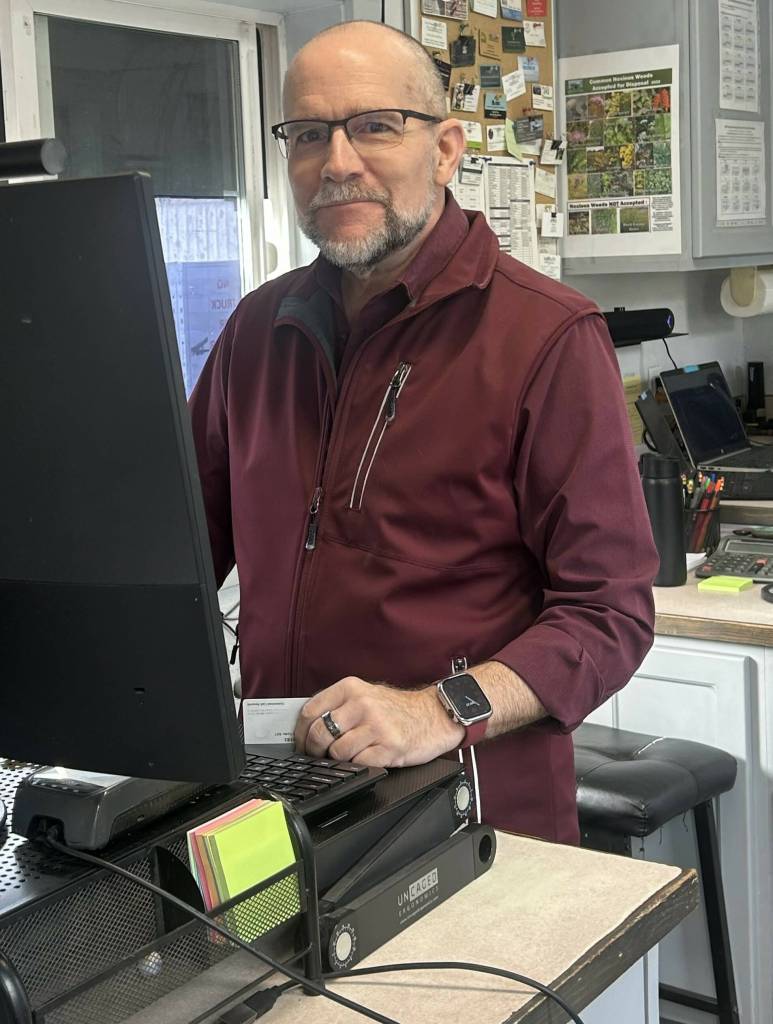
One element of the state’s law may be particularly noteworthy to islanders – the Recycling Reform Act Advisory Council, on which the Town of Friday Harbor’s Public Works Director, Mike Liptack, serves.
“The advisory committee’s job is to help [the department of] Ecology implement the law. They’re trying to turn the words of the legislature into something practical,” Liptack told the Journal. “I applied. We are in a unique space on the island – a smaller community with a passionate base of people and a high-quality recycling stream. I’m on the subcommittee that helps decide what gets recycled, and we are representing the small entity.”
Considering there are only 17 people total on that subcommittee, including government representatives, producers and recycling operators, Liptack’s involvement reflects the overall fervor on San Juan Island for recycling and waste solutions.
“I’ve done routes [with the Town of Friday Harbor refuse services]. They hand-pick errors in the recycling, which is very rare,” Liptack shared. “We are known for our high-quality stream of recycling.”
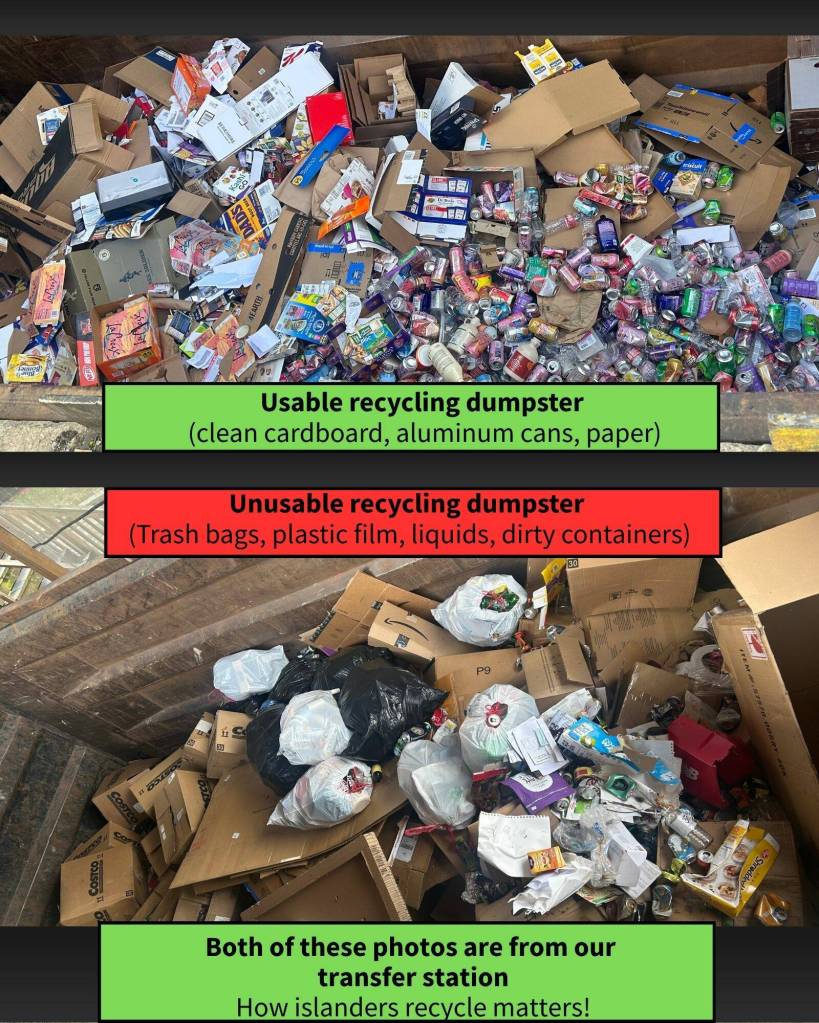
High quality refers to recyclables that have been correctly sorted and are clean enough to process without contaminating other items. San Juan Island’s transfer station, owned and operated by Lautenbach Recycling, takes mixed recycling, which means all recyclables go in the same curbside bin and then large containers that are shipped off-island to be processed at Recology’s Materials Recovery Facility in Seattle. The facility uses state-of-the-art machinery and AI-driven sorting technology to process up to 40 tons of recyclables per hour. One misrecycled plastic bag can jam the machines and halt operations for extended periods.
“The number one thing people can do to help, right now every day, is: do not put plastic bags in your mixed recycling,” Carolyn Moulton of Lautenbach Recycling said. “Rinse out your containers. Empty, clean and dry is what we need. For plastics: it’s buckets, tubs and jugs, not flexible plastic. The most helpful advice, really, is to only recycle things you’re certain about. When in doubt, throw it out. That, maybe counterintuitively, leads to higher recycling success rates.”
The prevalence of contamination from those who aren’t educated about the cleanliness of recyclables is a major reason local resorts (and even the Town of Friday Harbor) don’t recycle their public bins. It is true that many of the green or blue bins seen at resorts are dumped in the same place as the garbage — it’s just not worth the sorting when most things recycled by the general public in those settings are contaminated anyway. Liptak removed the recycling bins from around town, something he’s gotten pushback on, for this exact reason.
“If you’re putting a blue bin in some location to make your patrons feel good but not actually recycling due to cost or sorting, just be honest, call it trash,” he said. “People lose trust in the process and don’t get to see the success that’s being made. We become jaded from some of the problems. But the reality is that the highest volume of recycling on the island is happening at home. Each individual person’s contribution is going to move us closer to that goal of a maximally recycled stream. That’s what’s going to make the biggest difference.”
Liptack is one piece of a larger network of people on this island who are passionate and dedicated to the process of recycling and its impacts in the islands. Moulton, who works for the regionally based Lautenbach, noted the excellence of that network and the people working on these initiatives.
“You guys have a top-notch team that’s really working on this all the time,” she said. “They’re doing great things for this county, they are hard workers, and they care passionately about the environment and our impact on it.”
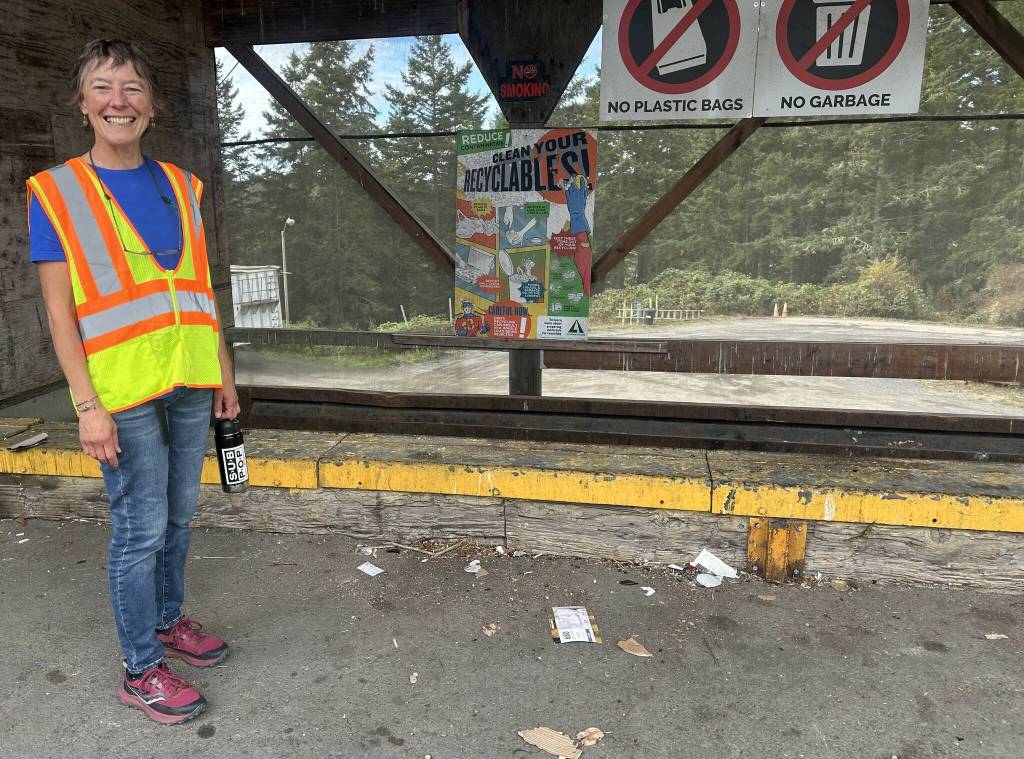
Fleming, who started the county’s plastic film recycling program and personally empties the bins in front of Marketplace daily, chuckled when asked about rumors that recycling isn’t real.
“Why would I be here? Why would my intern be here? If we didn’t know that it was going somewhere to actually be used,” she laughed, with an undertone of frustration. “We put energy into recycling. We want to make it work. Our citizens have a part to play in putting the right stuff in.”
She speculated that local mixed recycling bins may be part of why people think their recyclables are going to the dump — commingled (or single-stream) recyclables do resemble trash. When the Journal was told second-hand accounts of people witnessing trash services dumping recycling bins and trash bins in the same truck, the Journal went right to the source.
Logan Luft, general manager of San Juan Sanitation, was bewildered when asked if this had happened.
“When I hear someone saying this, it makes me realize they don’t understand what a bad business model that would be,” Luft said. “Recycling holds value, and that value offsets the cost to us. It is so much more expensive to dump recyclables into the landfill than to take them to a recycling facility. The price difference is astronomical. It just doesn’t pencil out at all.”