Of oaks, folks and climate change | Guest Column
Published 9:34 pm Tuesday, November 25, 2014
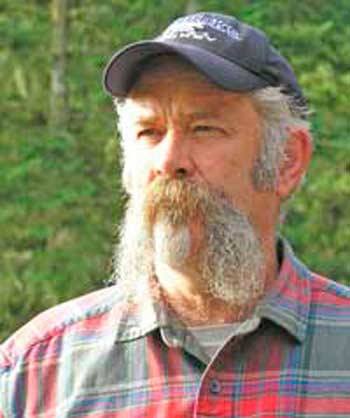
By Steve Ulvi
Special to the Journal
This past summer, several organizations treated our community to mainstream, diagnostic, science-based talks illustrating the startling trends away from conditions we have long considered normal, toward unprecedented disruption later in this century.
A crucial issue of agreement united the separate talks within the Climate Action Imperative series: Human pollution of the upper atmosphere is dramatically accelerating an increase in average annual global temperatures. This conclusion aligns with the formal findings of 97 percent of the world’s many thousands of bona fide, peer-reviewed climate scientists.
We know that CO2 levels are higher now than at any time in the last 800,000 years.
The many disturbing facts explained in the seven sessions were leavened by some “happy talk” as to the comparatively bright future for our Cascadia Region. We “only” have to adjust to longer, warmer, drier summers and winters of increased precipitation with a higher elevation snow pack.
Unaddressed were the chaotic pressures of displaced millions and government at all levels shooting from the hip, mired in inertia and far behind in effectively reacting to the cascading interplay of massive social and economic destabilization.
After decades of life and work in northern Alaska, where climate change has been unfolding in drastic terms for decades, I am at a loss to understand the lack of broader public concern for throttling back CO2 (and other) emissions, emphasizing a rapid transition to alternative energy sources and galvanizing community adaptation.
For me, it boils down to a critical disconnect; most people seem to lack a basic understanding of the tenuous history of humankind and the immutable laws of nature that have triggered devastating disruptions or the complete collapse of advanced societies.
We also know that the human brain is not hardwired to respond to distant, seemingly abstract threats. It is most troubling that despite our incredible technological tools, by which we can understand the lessons from the deep past and extrapolate into the future, we seem hopelessly rooted in the now.
Painfully aware of the many ecological wounds, and perhaps as a kind of penitence to nature, a dedicated Garry Oak restoration team labored weekly this summer in efforts to favor the shrinking, but biologically rich oak woodlands.
On one sweltering day, I turned to focus on the fir landscape below as my arms relaxed in the abrupt quiet. Sawdust swirled in the noon sun, chainsaw pinging hot. We strained, pinch-fingered while removing a cross-section of history writ in solid wood, from a reclining, furrowed grey trunk, at rest for maybe a century.
That day we worked in a remnant patch of oak woodland preserved by the Land Bank, on a rocky brow of Cady Mountain. These striking oaks crept steadily north and flourished in this region during the last hypso-thermal, or climate warmth maximum, many centuries after the last glacial tongues shrunk northward.
Warmer and drier it was. We know this, and much more about the past millennia, from pollen and spore layers in very old lakebed mud, deep ice and seabed cores, Norse Sagas and tree-ring analysis in far more ancient trees.
Staring at the dark center pith in the section, I tried to imagine a leafy seedling tap-rooting down and bathed in light above rich grasslands, some four centuries back. Long before the first tiny English and Spanish sails were sighted in the vastness of the straits by startled Coast Salish people.
These oaks reveal a functional beauty far deeper than their sturdy form, in their story of ecological resilience in the face of regular disturbance. This oak woodland type will likely be a favored forest type here once again, due to our intense pollution of the earth’s atmospheric security blanket during the last half of this tree’s 400-year lifespan.
A seriously weakened, but still viable element of our island life, food security, will be threatened by an inevitable doubling of fuel costs, a breakdown of continental distribution of goods, probable destructive geologic events and endless decades of chaos spawned by accelerated climate change.
The emerging concept of community resilience weighs critical economic decisions within the context of more important social and environmental issues, with an over-arching focus on community sustainability and adaptive strategies. Thankfully, there is now just such a promising movement emerging in San Juan County.
— Editor’s note: Steve Ulvi, a former National Parks employee based in Alaska, Steve Ulvi retired from NPS in 2006, and is finishing a self-built homestead on San Juan Island, supervised by his wife. Read his previous columns, “A little humility; good place to start,” July 2, pg. 7; and “Wild places: Sustenance for the soul,” Aug. 27, pg. 7, or online, at cmg-northwest2.go-vip.net/sanjuanjournal