

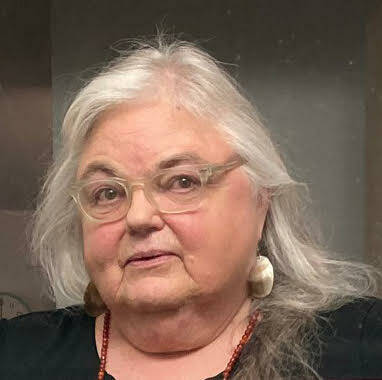
By Peggy Sue McRae
Journal contributor
I suspected a link between knitting and cognitive brain health when I watched my mom go through an inspired knitting phase at the beginning of her mental decline. It seemed like she was knitting to save her life, and in some ways, she was. My sisters combed thrift stores for yarn just to keep her supplied. She created a steady stream of lap-sized pieces. They had stripes, patterns and fringe and made good doll blankets. Quirky and beautiful, I still have a bag full of them.
It turns out that scientific studies are showing how our brains light up when we use our hands. Ideally, this is with both hands working together in repetition, crossing over right to left and left to right. These elements are what determine the positive effects of knitting on the brain. A Mayo Clinic study on aging found that people engaged in craft activities such as knitting, woodworking or ceramics, if they began in midlife and continued through their 80s, were “45% less likely to develop mild cognitive impairment.”
Using both hands, bilateral hand coordination engages both hemispheres of the brain, repetitive rhythms activate your parasympathetic nervous system and the tactile feedback from the materials you are working with helps to regulate emotions. Getting into “the flow” with hands-on activity calms the prefrontal cortex, quieting our mental chatter. Researcher Dr. Kelly Lambert at the University of Richmond has done studies using hands-on activities to modify brain chemistry naturally as an alternative to using pharmaceuticals. Working with your hands will light up your brain and help regulate your nervous system.
There is also the life-enhancing satisfaction of creating something beautiful and useful with your hands. As a reaction to the industrial revolution and a decline in traditional craftsmanship, the founders of the arts and crafts movement in nineteenth-century Britain valued handmade crafts, natural materials and functional design over mass-produced manufactured goods. A key influencer of the movement, artist and designer William Morris, said, “Without dignified, creative human occupation, people became disconnected from life.” Morris may not have had the brain science, but he knew from his own experience the value of handcrafted work. We may well look to the champions of this historic arts and crafts movement today as we encounter the challenges of artificial intelligence, or AI.
If you are ready to start knitting and seek inspiration and camaraderie, drop-ins are welcome at the Knitters and Crafters group that meets at the Mullis Center on Thursday evenings from 7-9 p.m. Check the Mullis Center webpage (mulliscenter.org) for other activities and workshops.
To view or purchase local handmade arts and crafts, don’t miss the Mullis Center’s Holiday Artisans Market, Saturday, Nov. 22, from 10 a.m. to 3 p.m.
Sources:
Mayo Clinic: Research on crafting activities and cognitive decline in aging adults https://www.aan.com/PressRoom/Home/PressRelease/1363.
Ted Talk: Improving our Neuroplasticity, Dr. Kelly Lambert, https://www.youtube.com/watch?v=gOJL3gjc8ak.