

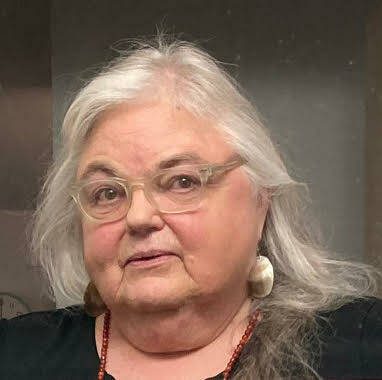
By Peggy Sue McRae, Journal contributor
As a person who writes for a senior audience, I pay attention to what publications aimed at seniors feature. One thing I’ve noticed is how often these publications feature seniors engaged in some form of extreme sports. Eighty-six-year-old runs marathon! Ninety-two-year-old skydives! Seventy-seven-year-old takes on rock climbing challenge! Not to diminish anyone’s accomplishments, but I can’t help wondering, if teenagers are getting depressed because it looks like everyone on social media is having more fun than they are, what about seniors? What about when it looks like everybody in the AARP magazine is better dressed, in better health and having more fun than I am?
Hence, I was slightly skeptical when my exercise buddy, my sister Sally, said she was sending me a page out of AARP featuring Tai Chi instructor, 88-year-old Young Lee. While Lee, in her red satin Tai Chi outfit, is definitely better dressed than I am and is obviously a more accomplished Tai Chi practitioner, what won me over was her story. Lee retired from her tech job in 1999 with a ruptured disc, Lyme disease and vertigo. That’s when she signed up for a Tai Chi class at her local senior center in Edgewater, Maryland. Through Tai Chi, Lee was able to restore her strength, her stamina and improve her overall health. Now she teaches Tai Chi. “Tai Chi helped me recover,” said Lee. “I want to give that help to others.”
Following my heart surgery in March, I knew I had a big hill to climb to regain my strength and stamina. A few years ago, I took a class through our public library called “Aging Mastery” from the National Council on Aging. For the class, we were given a packet including a DVD called “Tai Chi Easy.” I didn’t use it at the time, but Tai Chi Easy sounded about right for my cardiac rehab. The first exercise is slowly raising both arms and slowly lowering them, repeating the movement in rhythm with the breath. Easy, and I was surprised by how instantly calming this simple exercise could be.
Tai Chi Easy’s Dr. Jahnke says, “This combination of body movement, postural adjustment, deepening of the breath, clearing of the mind, paying less attention to the past and the future and more attention to now, is kind of like a magic formula discovered thousands of years ago for health maximization.” Once you learn the forms of Tai Chi, they are practiced in a continuous flowing motion. As martial arts legend Bruce Lee explained, “It’s a kind of slow form of exercise … you push it out but all the time you keep the continuity going, bending, stretching, everything. You just keep it moving. … Running water never grows stale so you got to just keep on flowing.”
Just lately, I’ve noticed small improvements in my strength and stamina. I attribute this to my daily practice of Tai Chi. The AARP photo of Young Lee is now pinned on my wall for inspiration.
Sources:
AARP, July 2025, Crouching Tiger, Hidden Health Benefits by Thomas Ferraro
Tai Chi Easy with Dr. Roger Jahnke, National Council on Aging, ncoa.org/AMP