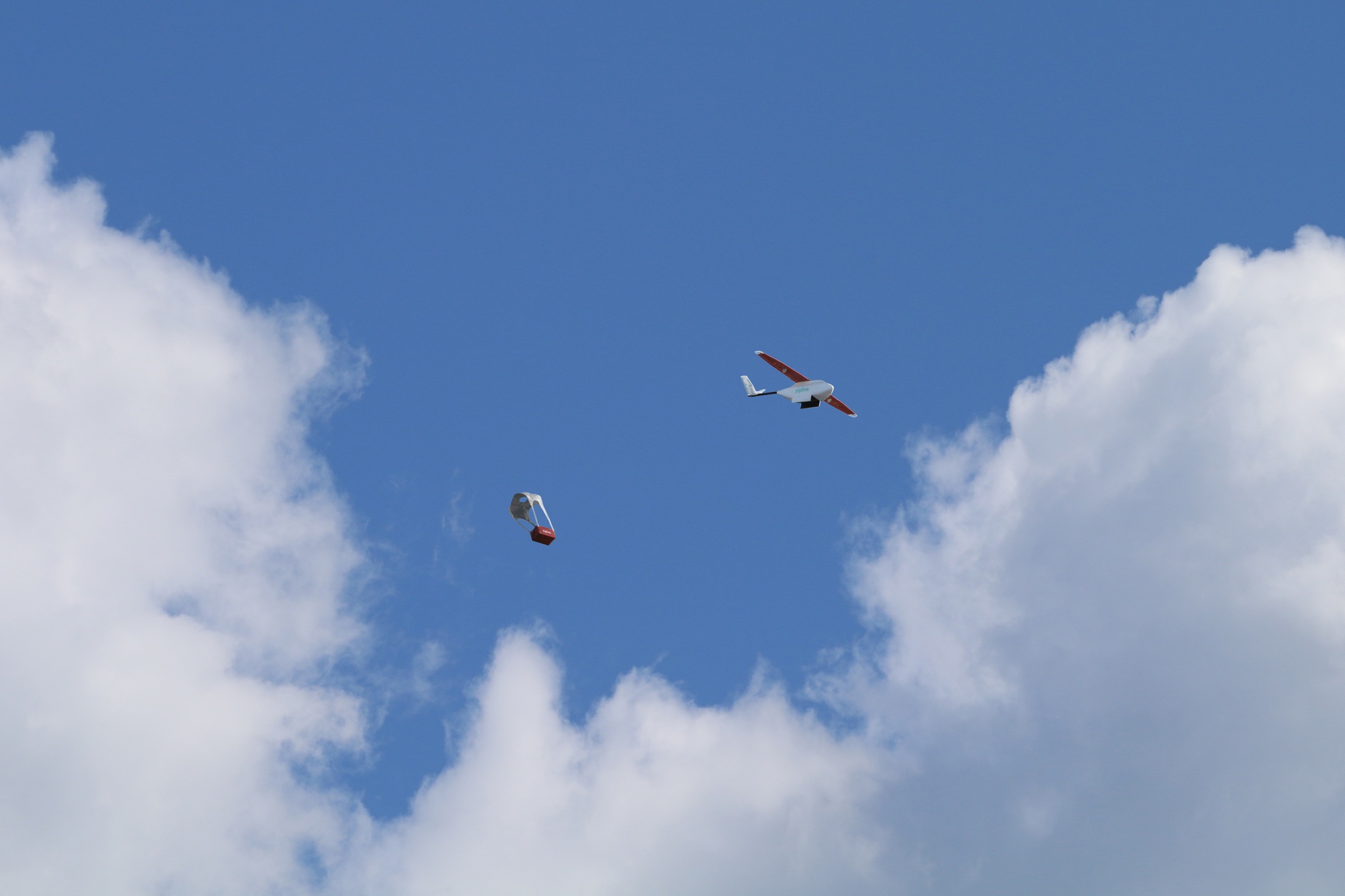
The San Juan Islands have been chosen to test a new emergency medical supply delivery system using drones.
The program is pending Federal Aviation Administration approval, which is expected to be issued within the next six months.
Zipline is a drone company based in California and partly owned by Microsoft co-founder, and Lopez Island homeowner, Paul Allen.
“We began looking for high needs populations to serve across the country, and initially focused on indigenous populations to serve, and the San Juan Islands were one of those areas,” said Justin Hamilton, a spokesperson for Zipline, referring to the nearby American-Indian reservations.
Zipline is partnering with Ellumen, ASD Healthcare and Bloodworks Northwest to deliver lifesaving blood, medicine and medical products to rural/remote communities in Maryland, Nevada and Washington, including American Indian reservations and their surrounding communities. According to Hamilton, if testing is successful the drones could become a permanent fixture of the islands.
Zipline’s original mission was to deliver blood to remote areas of Rwanda. The country was chosen specifically because of the harsh rainy season, which washes out steep mountain pass roads and limits medical supply access. It also has one of the highest rates of deaths related to postpartum hemorrhaging in the world. The program is expected to be up and running in a few weeks, according to Hamilton.
“We will be able to make deliveries across the country in emergency situations in about 30 minutes,” said Hamilton.
During meetings with White House staff and the U.S. Department of Transportation, Zipline staff was alerted that several isolated parts of the United States lacked access to emergency medical assistance and needed solutions to this issue.
“After the FAA regulations [regarding the rules of drone use] came out, we originally thought we were several years out from bring this life-saving technology to the states,” Hamilton said. “But, after talks with the White House and Department of Transportation, we found out that they were actually looking for really compelling use cases for drone technology in the states.”
According to the FAA website, “Under the final rule, the person actually flying a drone must be at least 16-years-old and have a remote pilot certificate with a small UAS (Unmanned Aircraft System) rating, or be directly supervised by someone with such a certificate. To qualify for a remote pilot certificate, an individual must either pass an initial aeronautical knowledge test at an FAA-approved knowledge testing center or have an existing non-student Part 61 pilot certificate. If qualifying under the latter provision, a pilot must have completed a flight review in the previous 24 months and must take a UAS online training course provided by the FAA. The TSA (Transportation Security Administration) will conduct a security background check of all remote pilot applications prior to issuance of a certificate.”
However this regulation does not cover Zipline drones because they aren’t directly controlled by a human being. Instead of being controlled by a man on the ground with a remote control, the drones will fly along pre-programed routes, which according to Hamilton is safer and more effective than direct line human control. While details of flight patterns and mainland home bases have yet to be determined, Hamilton said the concept is that the drones would be stationed at medical supply warehouses on the mainland and deliver supplies to the islands along pre-programmed routes.
“Zipline is the world’s first drone delivery service and we’re dedicated to bringing critical medicine to the world’s most difficult to reach places,” Keller Rinaudo, Zipline CEO said. “We’re very excited about bringing this lifesaving technology to help transform health care on the San Juan Islands.”