By Eva Schulte and Carl Weimer
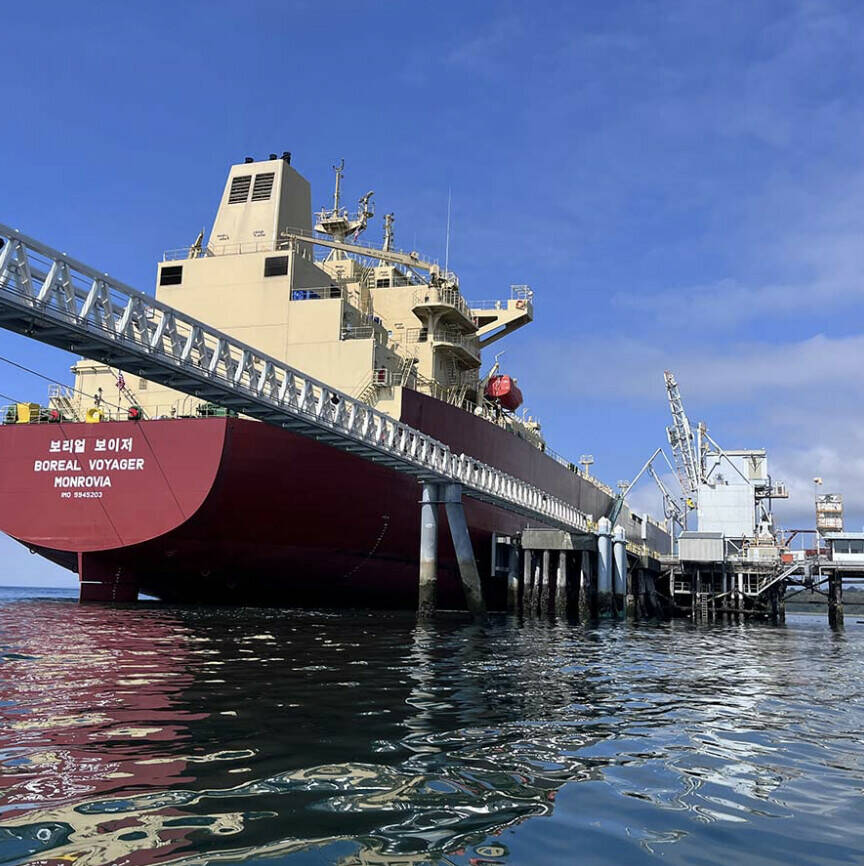
On Jan. 28, the Whatcom County Hearing Examiner will hold a hearing to determine whether a major expansion to a liquefied petroleum gas terminal near Bellingham was done illegally. AltaGas submitted applications for 31 existing and unpermitted expansion projects at their ALA Energy Ferndale terminal that pose major health, safety and environmental consequences for coastal communities, facility workers and the broader Salish Sea. In addition, AltaGas is planning for two new projects that, on the surface, appear beneficial for the environment, but in reality, enable further expansions without addressing potential impacts.
The piecemeal way the company expanded the amount of fossil fuels it ships, as well as its decision not to seek legally required permits to avoid environmental review, is an egregious breach of public trust.
Here’s how this debacle unfolded:
Between 2016 and 2021, the Whatcom County Council enacted temporary moratoriums designed specifically to prevent major fossil fuel expansion at Cherry Point terminals, including AltaGas’ ALA Energy Ferndale Terminal.
The intent was clear: Prevent industrial facilities from quietly transforming into high-volume import and export hubs that would increase climate, environmental and safety threats. Once AltaGas’ permitting omissions came to light, Whatcom County promised its residents that any further permitting at the terminal would include an Environmental Impact Statement, or EIS. Unfortunately, in a series of missteps, this promise was broken.
When Canadian corporation AltaGas purchased the Ferndale terminal in 2014, its communications to shareholders stated that it planned to expand the terminal into a major export hub by increasing shipping capacity from 3,000 to 30,000 barrels of propane per day. Yet these major expansions were never disclosed in anything AltaGas submitted to Whatcom County.
AltaGas advanced 31 projects at the terminal that, taken as a whole, significantly expanded its operations, ignoring and contradicting the intent and purpose of the county’s moratorium. AltaGas built these projects during the moratorium without seeking permits or disclosing their true intent.
In 2021, the Northwest Clean Air Agency discovered that the company had grossly underreported emissions of health-harming volatile organic compounds by more than 443 tons. NWCAA fined the company $4 million.
AltaGas’ abysmal track record at Cherry Point should have bolstered the need for a hard look at the projects’ multitude of environmental consequences.
Instead of enforcing its own rules, the County may approve the expansions. This could triple the quantity of imports and exports at the terminal to 76,000 barrels per day. Under Washington’s State Environmental Policy Act, an expansion like this should require an EIS to evaluate the significant environmental and safety risks, including potential explosions, increased ship and rail traffic impacts and air and water pollution.
In addition to increased air pollution, the ships that export liquefied gases increase underwater noise that can disrupt spawning herring and marine mammal communication and foraging. More traffic also increases the risk of ships striking whales, vessel collisions, petroleum spills, degraded water quality and loss of critical habitat in the Salish Sea.
The Cherry Point herring population was once one of the most important forage fish nurseries in the Salish Sea, serving as important prey for endangered salmon and orcas. Since industrial development at Cherry Point has expanded, the herring population has crashed, and no spawning has been seen there in the past three years. In a region already struggling to recover endangered species, ignoring expansion impacts on the environment is highly irresponsible.
In 2015, AltaGas began storing propane in a single-walled tank built in 1977, originally used to store butane. Outdated tanks are more likely to leak propane, which the company now stores and transports in vast amounts, increasing explosion risk.
These are only some examples of the kinds of environmental risks that Washington residents have a right to have evaluated transparently and lawfully as part of an EIS that should have been completed before expansions occurred. Coastal communities, terminal and neighboring refinery workers and the Salish Sea deserve better. Whatcom County must enforce its own laws, require an EIS for the terminal expansions and hold AltaGas accountable for years of deception, endangerment and noncompliance.
This story originally appeared in the Salish Current and was published here with permission. To learn more, go to https://salish-current.org/.