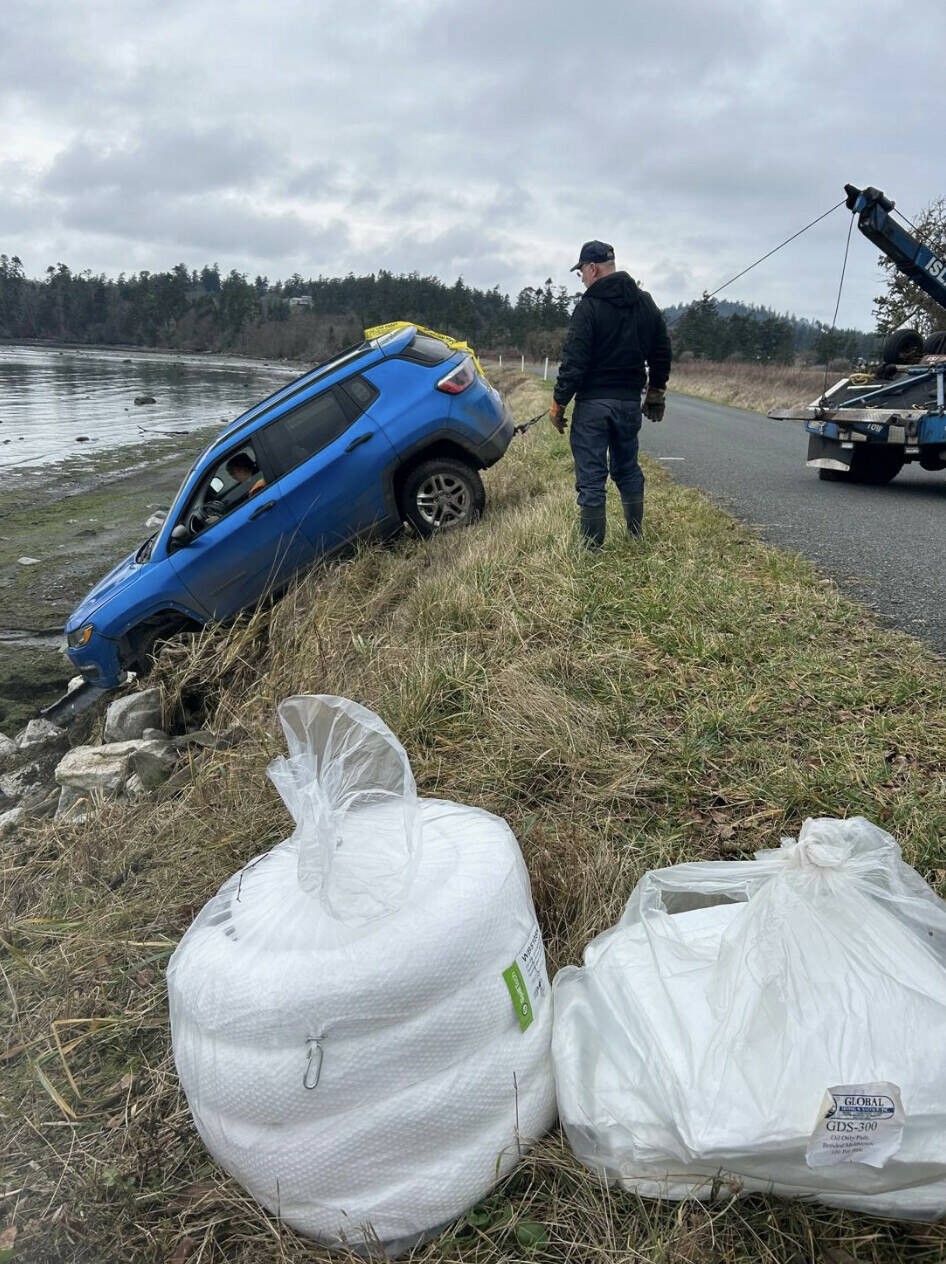
Submitted by Bill Symes and Elaina Thompson.
One day in 1985, oil and oiled birds began washing ashore on the west side of San Juan Island. Arresting and then remediating the resulting damage to shoreline and wildlife required action within the first few hours of the spill — but necessary equipment and teams to use it were located on the mainland, and would not reach the islands for 24 hours or more. The oil slick left a trail of damage that was much worse than would have been the case had resources been immediately available.
That episode taught a hard lesson: In the first critical hours after oil shows up in local waters, the islands are on their own. To fill this crucial first-response gap, a group of islanders created Islands’ Oil Spill Association, directed by Lopezian Julie Knight for many years. IOSA acquires equipment and trains volunteers to implement initial spill remediation in real time, and to support follow-on cleanup operations by federal and state agencies and private contractors. It is one of the very few organizations of its type in the world, driven by the local knowledge and dedication of its volunteers.
Over the last 40 years, IOSA has responded to almost 1,000 marine oil pollution incidents in and around the San Juans. Today, a staff of two, Executive Director Elaina Thompson and Deputy Director Rick Winings, lead a team of more than 50 response-trained volunteers.
The best way to appreciate the protection that IOSA offers to the islands and their shorelines is through accounts of callouts over the last few years. The photos and captions here briefly describe a few of these incidents. The title in each section is a link to a more extensive online account of the events and of IOSA’s contributions to spill mitigation in each case. These stories can also be found online at www.iosaonline.org/news.
IOSA and the community
In an area like San Juan County with over 400 miles of shoreline, IOSA isn’t a luxury, but a continued critical service to our community. IOSA arose as a volunteer-driven response to a community need. As IOSA begins its fifth decade of service, community support remains essential to maintaining its rapid-response capabilities and training programs. To learn more about IOSA’s mission or to volunteer or make a tax-deductible donation, visit www.iosaonline.org or call 360-468-3441.
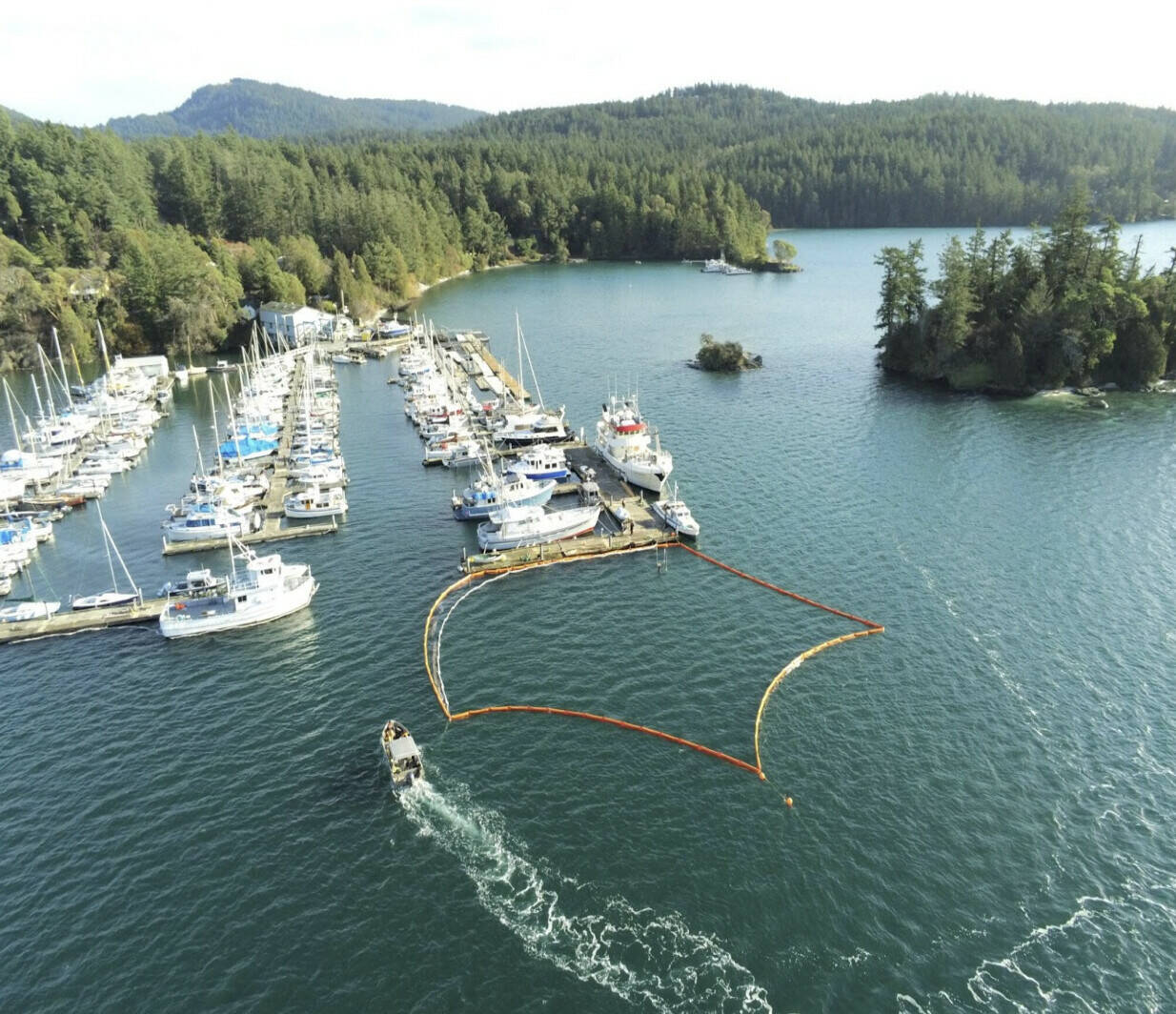
Contributed photo. Nov. 18, 2023: The former Army tug El Capitan sank at its moorings in West Sound. Previous work on this abandoned vessel had removed most of the fuel, but there were still caches of petroleum products aboard that leaked into the Sound. IOSA responded immediately by providing on-site information to the USCG and other agencies and surrounded the sunken vessel with containment boom within a few hours of the sinking. The IOSA boom remained in place until the vessel was raised and salvaged seven months later.
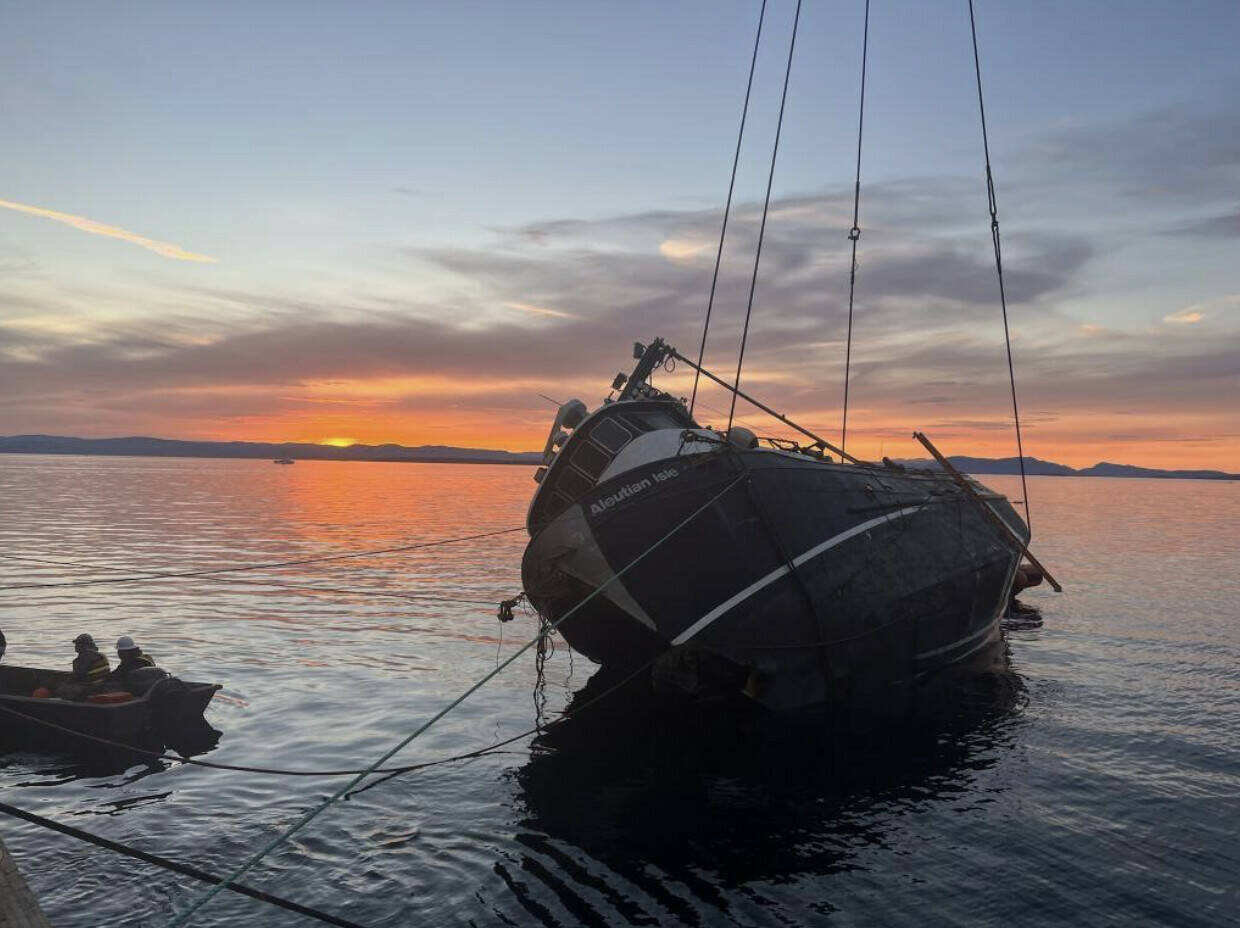
Contributed photo. Aug. 13, 2022: The 58-foot fishing boat Aleutian Isle sank off the west side of San Juan Island, taking 2,500 gallons of diesel and a mass of nets and rigging down with it, generating a 1,500-foot slick right in the migration path of the Southern Resident orcas. IOSA was first on the scene, provided early reports to USCG and other agencies and supplied vital equipment to the massive multiagency multicontractor cleanup operation that followed.
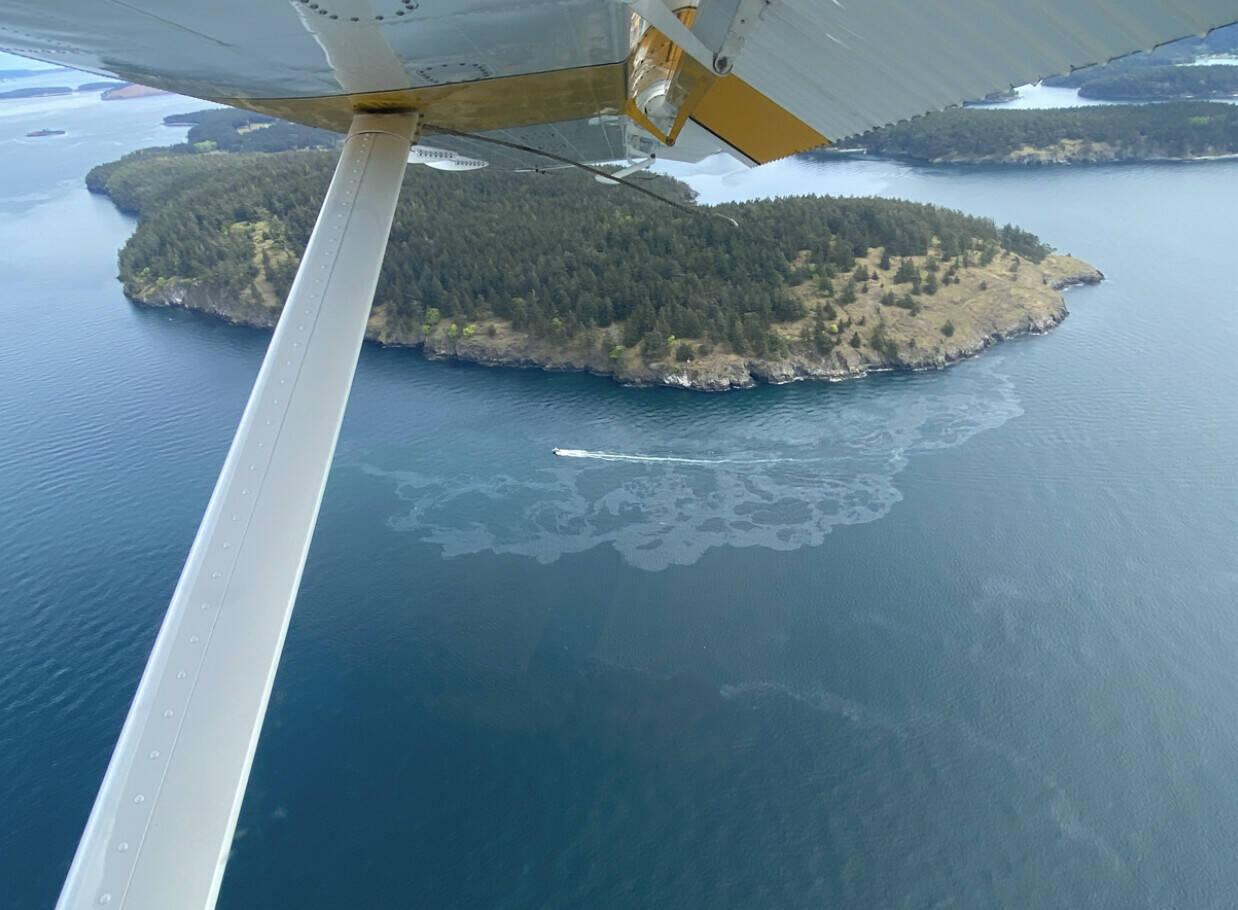
Contributed photo. May 2, 2024: In a late-night asleep-at-the-wheel incident, the fishing boat Chief Joseph grounded and sank at Henry Island, west of Roche Harbor. The skipper and dog were rescued, but a diesel slick quickly developed and spread along the shoreline. IOSA was on the scene early the following morning and helped to locate and buoy the wreck, after which contractor divers sealed off fuel vents to minimize pollution. Seven days later the vessel was raised and towed away on a barge.