No Feeble Eagle
Published 4:04 pm Tuesday, June 16, 2015
 By Peggy Butler
Special to the Journal
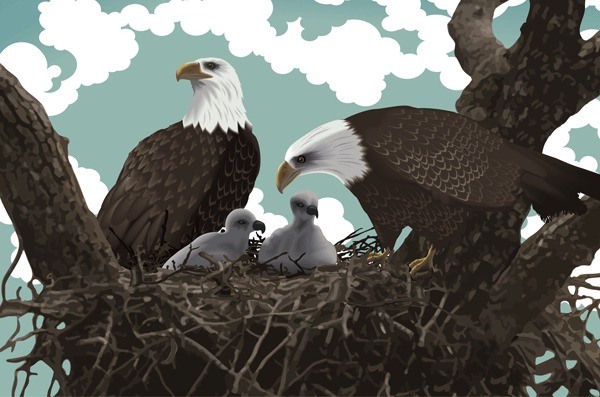
Inside a giant nest at American Camp Historical Park, two growing young eaglets share an ever more cramped space. Bertha has done it yet again. Bertha, so tagged by park rangers, is a female Bald Eagle – and according to a log kept by rangers, she has made American Camp her nursery site for the past 20 years.
She normally produces two eggs annually. Each egg may weigh more than a quarter of a pound – as much as three times the weight of a chicken egg. Little Bill, her current mate, shares the duties  of a parent, such as helping to incubate the eggs, guard the nest, and hunt. Before Little Bill was Big Bill, who apparently is no more, as eagles mate for life.
A spotting scope near the entry to the ranger station points toward the bulky bathtub-size nest, which is well hidden unless you know where to look. Eagle’s nests may weigh over a ton. Inside the nest, the eaglets, now about two months old, jostle for space. Watch them stretch their wings, stand on the edge of the nest, and even crouch over the side where they shoot a walloping amount of whitewash into the branches below. They have become “nest trained.”
Sometime in the next weeks they will venture from the safety of the nest and perch on nearby branches, exercising their wings and their courage to prepare for the first big flight. This venturing onto new branches is called ‘branching.’ Who knew that “branching out” was an eagle term?
To initiate the first solo flight, parent birds motivate the young cannily. They stop feeding them. They may fly over the nest of hungry eaglets dripping the aroma of fresh meat. Sorry. No meal tonight! Perhaps they will circle the nest exhibiting the thrill of free flight. The eaglets, who gain as much as a pound every few days during the first few weeks, begin to lose weight. This actually helps them become more flight ready when they eventually launch.
Bertha and Little Bill’s chicks are expected to “fledge” – leave the nest and fly off to fend for themselves – around mid July this year. You will want to visit the viewing site before then, because experts estimate that many Bald Eagles do not survive the first flight – err – attempted flight. If the eaglets live through the crash landing, the parents will supply food to help them rebuild strength and continue flight school until they become the airborne hunters they were born to be. However, as many as 40% will not survive the first year.
But Bertha and her “Bills” have been replenishing the eagle supply in the San Juan Islands. One study reported approximately 7,000 nesting pairs of Bald Eagles in the continental United States. San Juan County has at latest count 154 pairs. This is a “believe it or not” fact: Our own San Juan County has the highest density population of any county in the continental United States – of nesting Bald Eagles, that is.
Go Bertha!