Finding home: In search of island roots
Published 1:30 am Wednesday, July 22, 2026
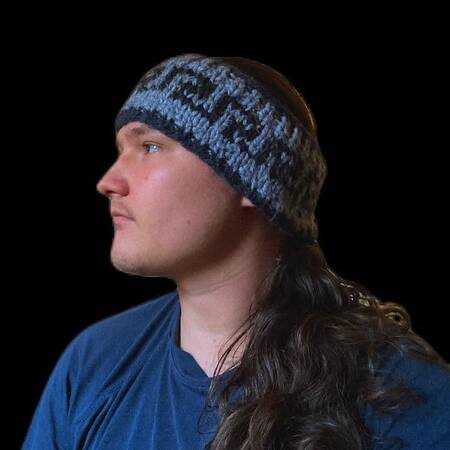
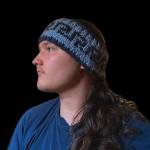


At 22, Jesse Tjernell has already spent six years chasing ghosts — not out of fear, but out of love. His search has taken him through newspaper archives, church registries and late-night scrolling sessions on ancestry websites, all in pursuit of a single question: Where do I belong?
Tjernell’s last name comes from his father, a third-generation Swedish American whose great-grandfather immigrated from Harmånger, in the province of Hälsingland, Sweden, in 1903 and eventually settled in Washington. But it is his mother’s side — rooted for generations on San Juan Island — that has shaped the course of his adult life. His mother, Jackie Lynn Roberts, died when Jesse was 8. His father passed away a few years later. By 11, he had lost both parents and was raised by family friends he now calls his adoptive parents.
“That kind of kicked off a lot of finding where I belong, trying to find who I am and finding my people,” Tjernell said. “I lost everything. I wasn’t really close with anybody else.”
He knew only fragments: that his great-grandmother, who lived to 103, had spoken occasionally of native lineage tracing back to San Juan Island. At 15 or 16, he began searching online, eventually finding the Mitchell Bay Band census rolls compiled in the early 1900s by federal agent Charles Roblin, who had been sent to determine which island families qualified for tribal enrollment. There, among the entries listing blood quantum, he found his family’s name.
“That’s the only reason I was able to find, like, oh, I belong there,” he said.
Josiah French Feld, vice president of the nonprofit PKOLS and a member of the W̱SÁNEĆ (Saanich) people, with ties to PḰȺ̧OLWEȽ (Mitchell Bay), has since become one of Tjernell’s closest allies in this work. He says that certainty traces back to something Tjernell’s grandmother once told him.
“He’s very convinced in that,” French Feld said. “He believes that — because his grandma told him — you have indigenous blood.”
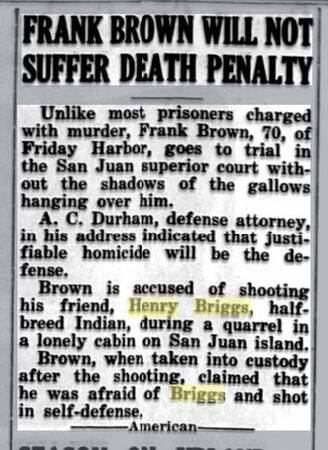
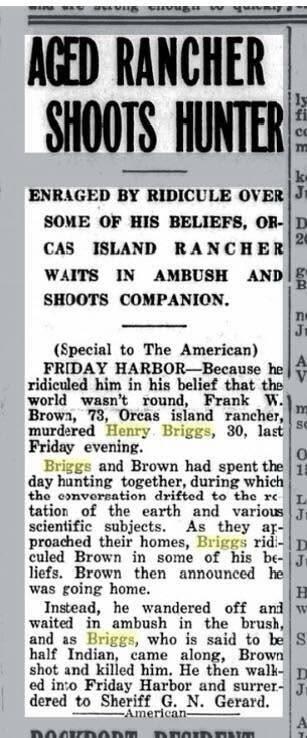
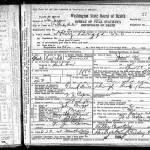
What followed was years of piecing together a family history that had been deliberately buried. Tjernell traces his native lineage to Mary Briggs, known as Seamt-Nott, who married early San Juan Island pioneer John Briggs in the 1850s. Their son, Henry Charles Briggs, would become the family’s most haunting chapter.
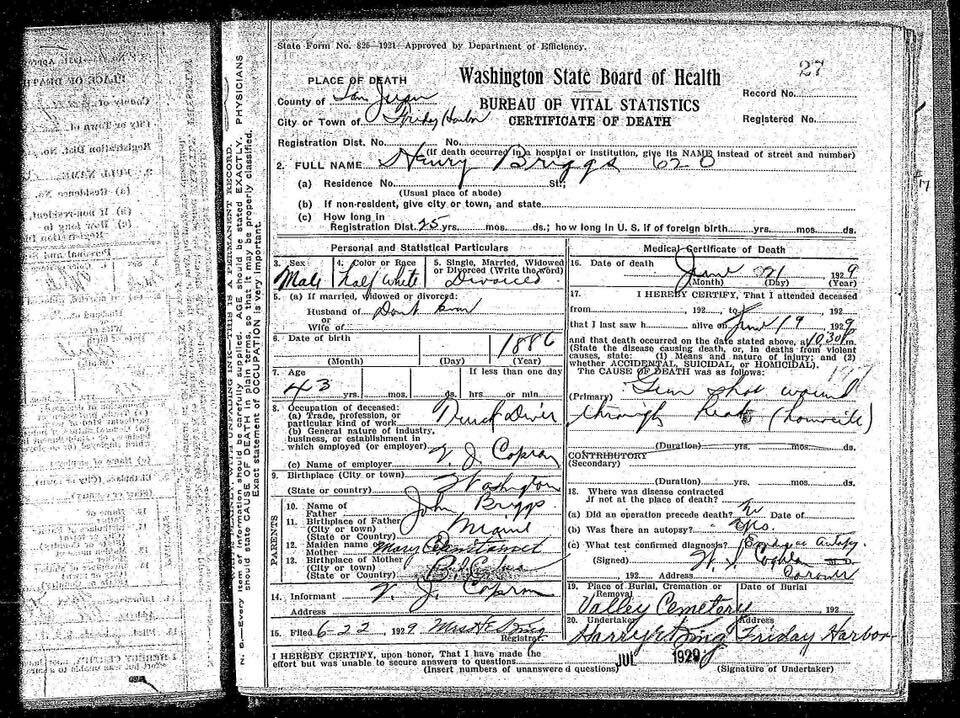
In 1929, Henry Charles Briggs — described in old newspaper clippings as a fisherman and hunting guide, and by his family as an imposing man well over 6 feet tall — went on a hunting trip on Orcas Island with an elderly rancher. An argument broke out, reportedly over the shape of the earth or a card game. The rancher shot Briggs in the back of the head and later claimed self-defense.
“It makes me sad that a guy can get away with a murder like that, basically on the context that he shot an Indian, and Indians don’t matter as much,” Tjernell said. “That hurt.”
Henry Charles Briggs’ death left his children orphaned. His daughter, Leona Martha Briggs — Tjernell’s great-grandmother, then 10, was sent to live with her mother’s French-Canadian relatives on Waldron Island, who, according to family accounts passed down to Tjernell, treated her and her siblings as outsiders, housing them in a woodshed and feeding them table scraps. Leona left the islands as a teenager, eventually settling near Puyallup and spending much of her life avoiding any mention of her native heritage — reportedly avoiding the sun and covering her skin so she would not tan, fearful of what showing her heritage might cost her.
French Feld says the pattern is a familiar one among island families with native ancestry. “The story — after being shamed for being from here for so long — ends up … the narrative is just very generic. We’re just from the city, we’re part Indian, blah,” he said. “But when we come back to the homeland here, we immediately feel so connected, like how Jesse feels.”
That silence rippled through generations. Tjernell recalls being told as a teenager, when he pushed back against doubts about his ancestry, that he might simply be “Asian” rather than native — a dismissal that only strengthened his resolve.
“What else should a 22-year-old be doing,” French Feld said, “but searching for his identity through something his grandmother told him?”
French Feld also points out how solitary that search has been. “No one’s gonna support you on this. This is your own thing,” he said. “No one’s gonna carry you and do the research on their own, because it’s not gonna benefit them — it’s not their mom, it’s not their grandma.”
That solitude extends across an international border. Despite tracing relatives to Nanaimo and Saanich communities in British Columbia, Tjernell has yet to make an in-person connection with that side of the family — a link French Feld says remains unmade simply for lack of a way to get there. The research has also meant sorting through competing accounts of the islands’ past. “He’s going through kind of like that collaboration with … the Lopez interpretation and the San Juan interpretation of history,” French Feld said. “It’s helped me for sure talk about it, because not too many people want to talk to me about this.”
His breakthrough came in late 2024 at an event at Lime Kiln State Park, where descendants of the Mitchell Bay people gathered. There he met French Feld, whose family held historical documents and maps pinpointing where Tjernell’s ancestors once lived along Mitchell Bay Road — near the site of a small village once called Pequailwith (PḰȺ̧OLWEȽ), meaning “place of ancient wood.”
“When I found out this spot is where my family lived — there’s a place on Mitchell Bay Road named after my family, and a lake where my great-uncle used to log that’s named after us,” Tjernell said. “It’s just an amazing feeling.”
Tjernell is not seeking formal tribal enrollment, a status he says was denied to his ancestors when a 1916 attempt to affiliate Mitchell Bay families with the Quinault Indian Nation fell through for lack of kinship ties. Instead, he measures belonging differently.
“I don’t need a card to tell me who I am,” he said. “I’m just Jesse from the Briggs family, descended from Seamt-Nott, and that’s who I am.”
For now, his focus is on supporting the French Feld family’s efforts and drawing the rest of his relatives back into a history many spent decades trying to forget. French Feld, who has watched Tjernell navigate the weight of that search up close, doesn’t mince words about what it’s taken. “He’s a really strong individual, man,” French Feld said. “Most kids would have jumped off a bridge or [eaten] too many pills or something. He’s going for it. He’s like a warrior. He has the stamina for it. He might not be the strongest, but he’ll freaking keep paddling for real.”
“If I wasn’t doing this, all of that — who we are, where we come from — I would be lost,” Tjernell said. “I don’t do it just for me anymore. I do it to give my family the chance to have that connection again. At the end of the day, it’s about the whole family — I just happen to be the one on the front lines.”