Woolly bears in the Place of Peas
Published 1:30 am Sunday, July 12, 2026
By Russel Barsh
Director of Kwiaht
The lupine-covered dunes at Cattle Point, Tl’ikweneng (the “Place of Peas”), are not only home to two of the islands’ scarce butterflies, but also to one of our showiest and least common moths: Ranchman’s tiger moth, Arctia virginalis (Arctiinae). The Salish Sea is the northernmost extent of their Pacific coastal range, which extends as far south as the Bay Area. Their populations tend to be associated with lupines such as the Seashore Lupines of Cattle Point and Silver Lupines (Lupinus albifrons) in California. Like these native lupines, the distribution of Ranchman’s tiger moths is extremely patchy. The largest Salish Sea population is on San Juan Island’s dunes.
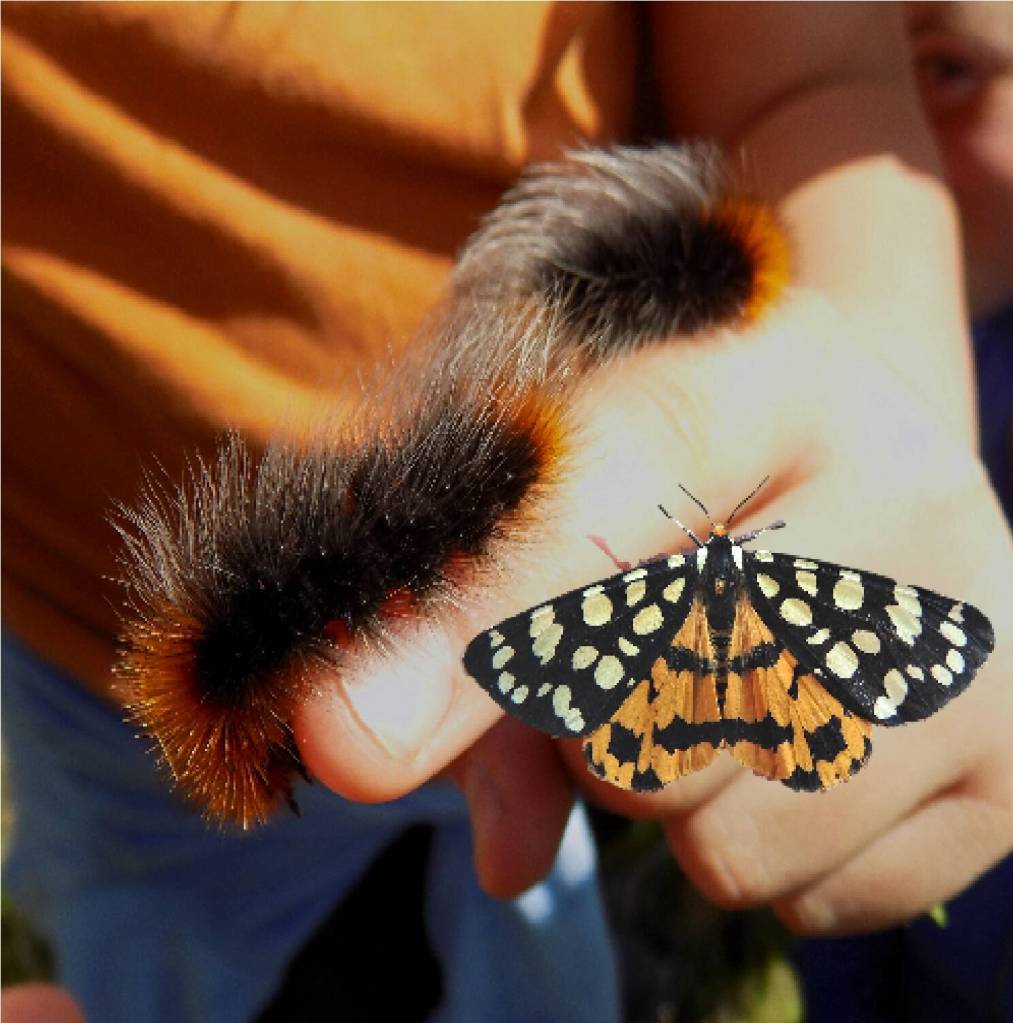
Ranchman’s moths fly as early as March in our area, congregating at high points along the dune crest at night to find mates and lay their eggs in the dense carpet of lupines. Tiny caterpillars emerge within a week or two, munching the leaves of lupines, nearby herbaceous plants such as Sea Rocket, cleavers and thistles, and even leaf litter as they grow larger and conspicuously hairy. Like all of the Arctiid tiger moths, Ranchman’s larvae are “woolly bears” — indeed, their scientific name Arctiinae is derived from the Greek word arctos (“bear”), implying something fat and hairy! Ranchmans take first place in this regard, with especially long, silky, often gray-tipped hairs.
The function of hairiness in Arctiid caterpillars appears to be discouraging predation by birds and ants. Once woolly bears have spun themselves into silken cocoons to pupate, however, they are vulnerable to being eaten by birds and deer mice until they emerge as adult moths. They can minimize predation by burrowing into the leaf litter before pupation, and as Richard Karban reported in a recent publication, wetter spring weather increases plant growth and helps woolly bears and pupae evade predators.
Adult tiger moths emerge and fly in July. They are nonfeeding, so they do not seek nectar and devote themselves solely to reproduction, sticking close to their dune habitat. Some Arctiid moth species retain the alkaloids and histamines from plants they eat as larvae, making them at least distasteful if not toxic to predators. Ranchmans do not retain lupine alkaloids, but they are brightly colored as adults, nonetheless, in common with other tiger moths: a warning to birds and rodents. (“Tiger” moths are named for their bright colors rather than ferociousness. Adults have no mouths, and they cannot bite or sting.)
Like other Arctiid tiger moths, Ranchmans have a tympanic membrane that can produce ultrasonic clicks similar to those deployed by echolocating bats. When bats approach, tiger moths start clicking, jamming the bats’ targeting sonar and sowing confusion. This capability must come in handy for the Ranchman’s moths at Cattle Point, where our research has found high numbers of larger, moth-hunting species such as the silver-haired bat (Lasionycteris noctivagans).
Ants and parasitoid Tachinid flies remain controls on the abundance of Ranchman’s tiger moths at Cattle Point. Ants, in turn, are regulated by the dunes’ emerald green to bronze tiger beetles (Cicindela tranquebarica), which feast on ants both as larvae and as adults, and are most often found in the same dry sandy habitats as Seashore Lupines and Ranchmans. Tigers that eat ants that eat tigers!