Solar debate on Decatur sparks conversation about cooperative governance
Published 1:30 am Tuesday, February 17, 2026
By Darrell Kirk
Staff reporter
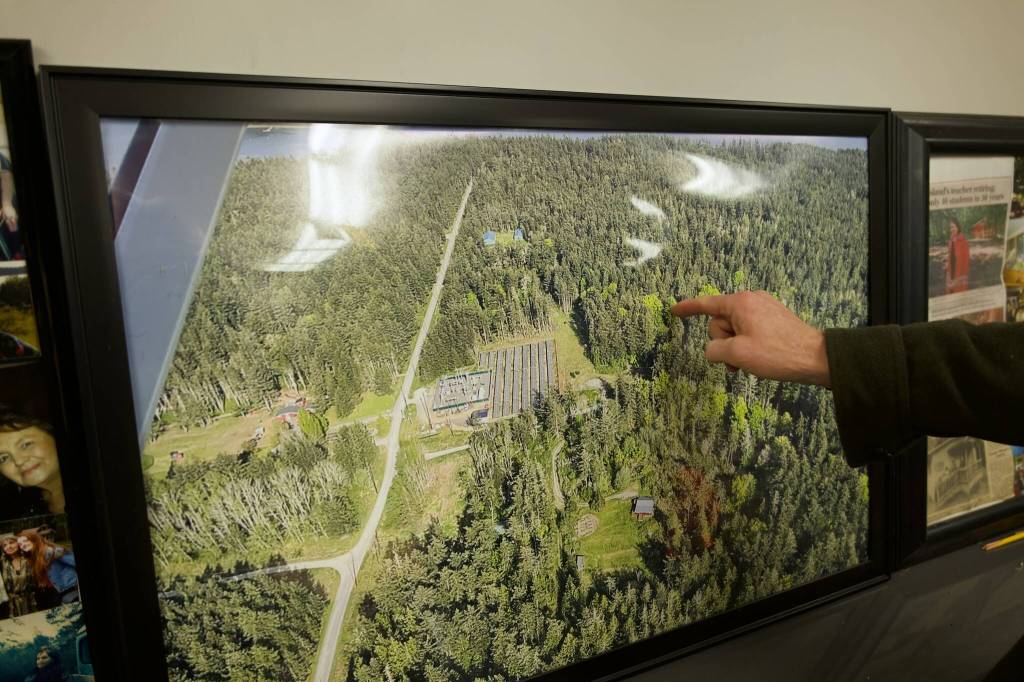
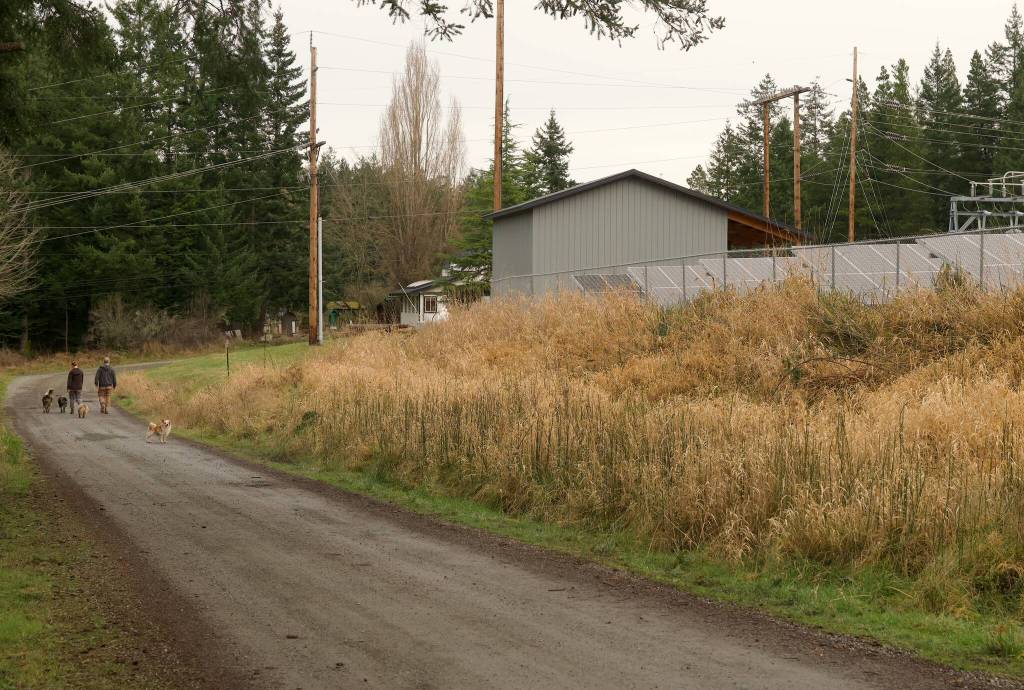
When OPALCO, the Orcas Power & Light Cooperative, announced plans for a second solar farm on Decatur Island, it reignited a fundamental question facing cooperatives nationwide: How do member-owned utilities balance technical requirements for renewable energy infrastructure with member input on project siting?
Two perspectives on energy planning
OPALCO frames the solar expansion as essential to the islands’ energy security. Washington’s Clean Energy Transformation Act is rapidly shutting down coal plants, and decarbonization efforts are expected to nearly double electricity demand as residents shift from fossil fuels.
“The climate emergency is accelerating,” OPALCO states in planning documents. “Reduced capacity increases the likelihood of rolling blackouts, especially during extreme cold and hot weather events.” To address this, the cooperative plans on creating community micro-grids, solar paired with battery storage, for critical services — requiring “up to a couple hundred acres, depending on how much local energy members will support.”
Some Decatur Island residents see the situation differently. Islanders had voted and bought shares in the first solar farm with enthusiasm. It was the second one — and the way it was communicated — that became contentious. When residents offered five alternative sites, they felt those suggestions were not given sufficient consideration. They describe this as part of a fundamental breakdown in communication.
According to Bill Patrie, a North Dakota-based co-op strategist and retired co-op developer with more than 50 years in cooperative economic development, the disconnect residents are experiencing is not a failure of individuals, but a symptom of a predictable cycle — one he has observed in cooperatives across the country.
The technical and economic context
OPALCO’s siting constraints are real. Generation ties — dedicated transmission lines connecting solar farms to the grid — cost approximately $1 million per mile to construct, with additional expenses for rights-of-way if the line crosses other properties. Since interconnection costs are borne by the developer, distance from substations directly raises the cost of power and threatens the viability of the project. This is why locating the second farm near the first on Decatur makes economic sense: the infrastructure is in place, the substation connection exists and incremental costs are far lower.
However, this logic creates a precedent that concerns some islanders: If substation proximity dictates placement across all the islands, future solar farms may concentrate in areas that are technically optimal but more visible and impactful to community character. Current county zoning further limits options — according to OPALCO, restrictions “make permitting for energy generation difficult to impossible on a full 80% of the land in the County, based on outdated models of generation.” The cooperative notes that “many San Juan County farmers and livestock growers support having solar on their farmland,” suggesting the opposition is not universal.
Residents concerned about scale point to an economy built on beauty. Patrie states the principle directly: “Your economy is based on the natural asset that you have in the beauty of your islands. There’s never a compromise — that’s a fundamental economic asset that you [never] compromise that for cheap power or for placing something ugly that wrecks that beauty.”
The cooperative lifecycle question
Patrie suggests the Decatur situation reflects a natural — and predictable — stage in cooperative evolution. “What happens in rural electrics and other cooperative enterprises, over time, they begin to mimic subconsciously what used to be their competitors,” he explains — language shifting from member service to business metrics, professional management and quarterly returns. “Remember the electric co-ops were started to serve their members because investors wouldn’t serve them.”
He describes what happens next: “After a while, three generations of management, there’s no vision of the future. They’re just getting through the day, balancing the budgets, providing the power — and the members themselves get disconnected.” He is careful not to cast blame: “The CEO is doing exactly what he should do. He’s at a co-op that’s reaching 90 years. This is the cycle.”
The antidote, Patrie argues, is co-creation — reinventing the cooperative’s shared purpose. “If they don’t co-create a new future and a new discipline to some attainable goal that requires some sacrifice, then they lose their significance and kind of fade away.”
Canadian scholar Daniel Côté has written extensively on this pattern, proposing that cooperatives must periodically “re-co-create” their vision. Patrie acknowledges this is rare: “It’s so hard to co-create a new future. There’s not too many that know how to do that.”
The core dilemma: Beauty versus infrastructure economics
The tension is financial. Placing solar farms in remote, less visible locations could trigger million-dollar-per-mile gen-tie costs, raising electricity rates for all members and potentially jeopardizing federal and state grants that OPALCO notes are “critical to keep project costs (and rates) down.” Yet, if cost-efficiency alone drives siting, installations will cluster near existing infrastructure — more visible, more central to island life and more impactful to the landscape that underpins the islands’ tourism economy.
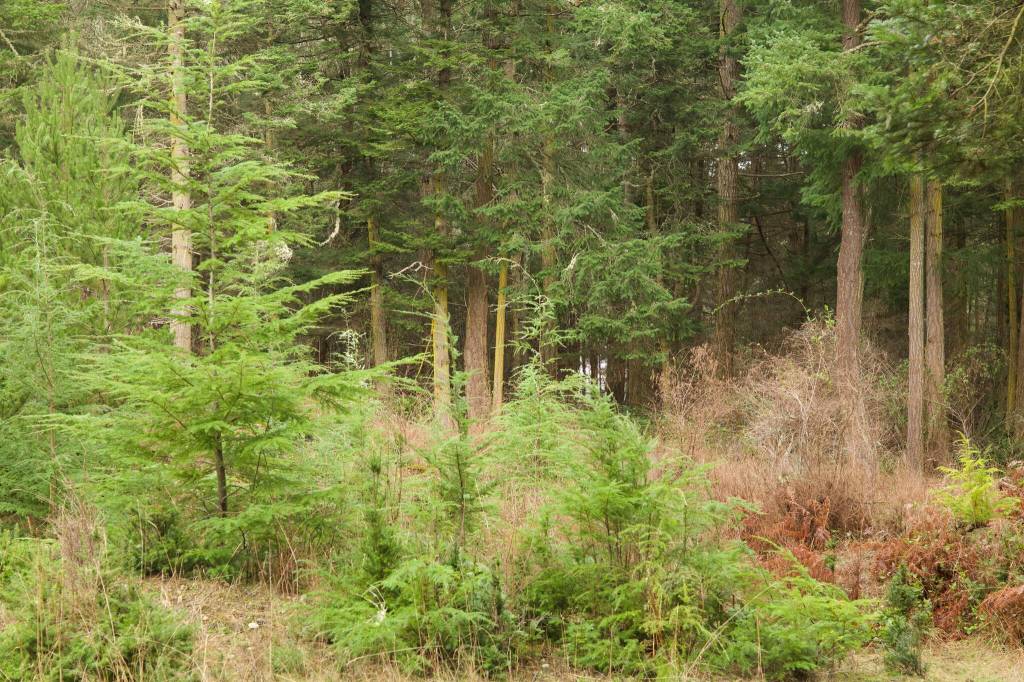
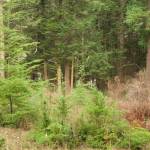
That dilemma deepened on Feb. 10, when Friends of the San Juans filed formal SEPA comments signed by Executive Director Eva Schulte, arguing that clearing more than 6 acres of healthy forest is counterproductive to the climate goals renewable energy is meant to serve, and urging OPALCO to site the project on already-cleared lands or impervious surfaces such as rooftops and sheds. The group raises concerns about harm to the endangered Townsend big-eared bat — mapped as potential habitat across all of Decatur Island. They also worry about soil grubbing to 3 to 4 feet across the entire site, inadequate replanting plans, and the absence of a public decommissioning and bonding plan. Their filing adds a critical dimension: Clearing healthy forest may undermine the carbon sequestration benefits the solar panels are designed to provide.
Tribal consultation under scrutiny
The tribal consultation process itself has been challenged on sovereignty grounds. Josiah French Feld, who identifies as part of an Indigenous family with deep ancestral ties to the San Juan Islands, argues the tribal consultation was fundamentally inadequate. “We need to stop pretending that consultation is reconciliation,” he said. “These quote-unquote tribes are sovereign nations — the consultation, it’s not even a handshake, it’s a box you check.” He also challenged the credibility of the five-tribe approval OPALCO has cited, suggesting it may reflect business council representatives rather than true community consensus: “It’s a nation-to-nation agreement here on cutting [the trees on] this land — they’re sovereign nations with rights in the water, stewards of this land for thousands of years. It’s older than [Washington] State, way older than [San Juan] County.”
At an OPALCO town hall on Feb. 10, tribal citizen Tacee Webb delivered a sharp challenge to the cooperative’s tribal consultation process. Webb’s family has lived on Decatur Island since the 1860s — including Tlingit relatives — and she grew up on the property for 53 years. She described the island as historically known as Indian Island, a site of potlatches, burial grounds and artifacts. “I would not assume they [the five tribes] would give the blessing for a 20-acre clear-cut for an industrial solar expansion.”
Her central challenge concerned what the tribes had actually been told when OPALCO contacted them in March 2025 — whether it was framed as a 20-acre clear-cut or merely a minor expansion of an existing 3-acre project. “We were initially told it was a minor expansion,” she said, “and it wasn’t until later that we learned it involved essentially clear-cutting a sacred forest.”Having requested documentation of tribal agreement three times by email without response, and with OPALCO unable to produce it at the Town Hall, Webb announced she would independently contact each tribe and conduct her own cultural research study. She also urged OPALCO to include the Tlingit tribe in future consultations.
Project archaeologist Stacey Bumback, Pacific Northwest regional director for Environmental Science Associates, who led the tribal consultation study and was attending the town hall as a member — she lives on Crane Island — agreed to speak when asked by OPALCO management. She explained that early in the process, when the project was still in the conceptual phase, outreach was conducted to the five tribal nations OPALCO works with on a regular basis — the Swinomish, Lummi, Suquamish, Snoqualmie and Tulalip — as required under the National Historic Preservation Act and NEPA. Communication went simultaneously to tribal technical staff, Tribal Historic Preservation Officers and chairpersons, along with relevant information and proposed maps. She explained that the resulting reports could not be shared publicly under Washington state law, which restricts distribution of documents related to archaeological and cultural sites due to their historical misuse to locate and pilfer significant sites.
A forest that saved a life
For Webb, the forest OPALCO proposes to clear is not simply trees — it is living memory and irreplaceable Indigenous heritage. She was barely a teenager when her great aunt, Tlingit elder Alma Crosby, wandered into that very forest one winter and vanished. Search and rescue volunteers from Lopez Island searched for two days and found nothing. Crosby had survived by burying herself in the salal and earth, sheltering in the forest floor’s thick undergrowth. When Webb’s art teacher, Nancy Bingham, finally found her, Crosby’s body temperature had dropped below what survival charts said was possible — freezing, but breathing. The forest had kept her alive.
Webb’s connection to the land runs deeper than artifacts. She grew up on Decatur without a phone until she was 18, barefoot in the forest, going down the banks until she had scars to prove it, making clay pots from the mud with her great-aunt Crosby. The children of the island called themselves the Decatur Island Calypsos — named for a rare orchid-like flower her mother believed grew nowhere else on earth except in those very woods.
Those ancestors, she insists, are not gone. “There’s so many burial grounds all over the island. It’s not like our people are gone. Everybody wants to say that they’re gone.” For Webb, the forest holds the dead, the living and every story in between — none of which appears on a permitting checklist.
Finding a path forward
Decatur Island residents have already taken concrete steps toward collaborative energy planning. Last August, Bill Hurley and a group of Decatur Islanders developed a formal proposal for an Energy Security Advisory Committee and submitted it to the San Juan County Council to oversee OPALCO’s plans — including the expansion of Decatur Island’s existing solar array. The proposal called for a broad coalition of stakeholders, including island residents, tribal communities and OPALCO, to collaboratively evaluate threats such as aging undersea transmission cables and the risk of rolling blackouts within the next decade. The ideas received positive reviews from both OPALCO staff and the board, but ultimately could not gain traction as the effort required exceeded the group’s available time and personal energy.