Artist profile: Pamela Hoke of Windy Gallery
Published 1:30 am Tuesday, June 3, 2025
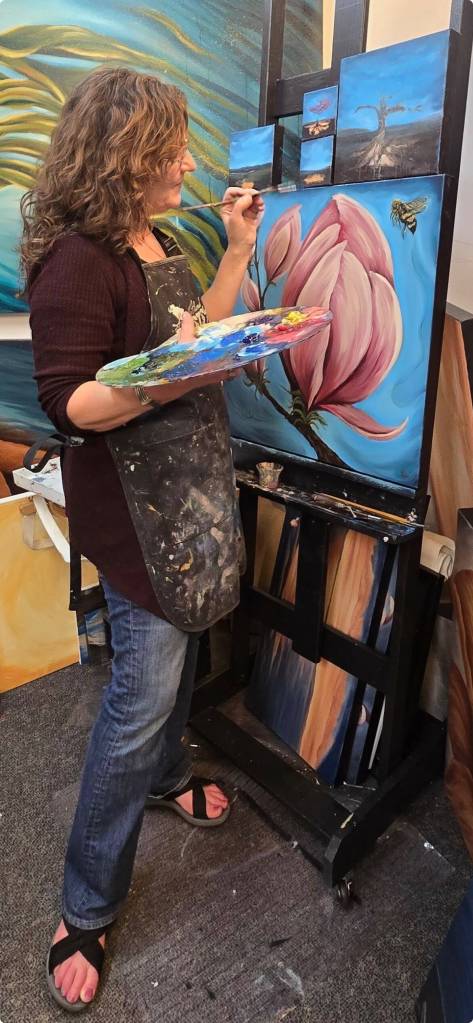
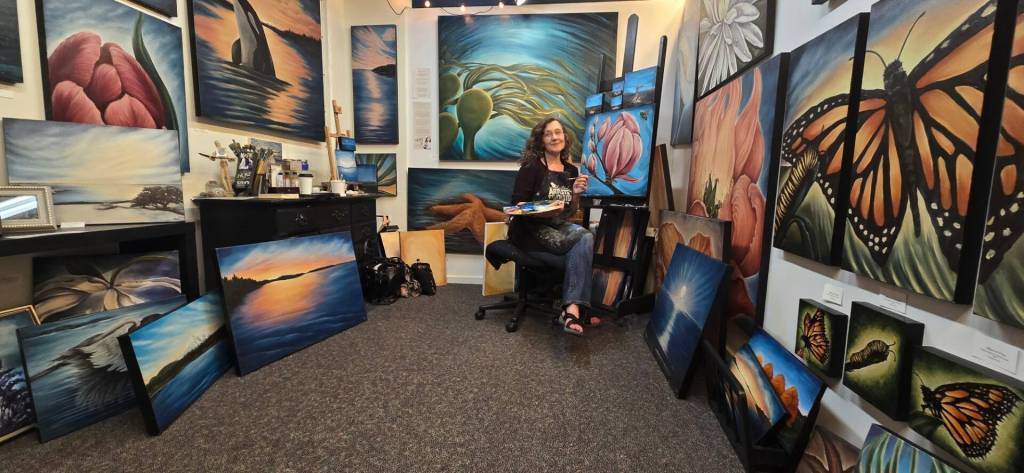
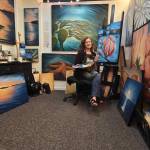
Pamela Hoke was sitting in Windy Gallery and Studios last week when a young woman walked in. Hoke, known for her floral paintings, was working on her latest piece by adding a bee to a magnolia. The visitor sat there in silence, watching the bee form on the canvas – not an unusual situation considering Windy Gallery has working art studios and encourages artist interaction.
After a few minutes, however, the woman unexpectedly said, “That is amazing. I have never watched someone actually make art.” Hoke was initially stunned. A passionate painter since the age of 10, an unstoppable doodler in class and a feverish consumer of all things Bob Ross as a girl, it was nearly impossible for her to comprehend growing up without witnessing art.
“My heart grieved for her,” Hoke recounted. But then, the painter asked the viewer if she’d like to stay. She showed her the palette and explained that all of her work has a story. “In this one,” Hoke shared, “the bee is patiently waiting for the pollen because the magnolia hasn’t bloomed yet. It represents those moments in life of waiting, even while you’re working so hard for something.”
The girl stayed and watched. Hoke later described that moment together as joyous. For her, art is connection. She described her process of painting as solving a puzzle, going on an adventure, starting a journey, exploring nature.
“I don’t do realism, or abstract,” she said. “My work is surreal because, to me, that shows how I experienced it and how I felt it. I find the right moment of where I felt the connection – with nature, or wildlife, or anything — and then I express it.” She described art as an “infinite form of communication.”
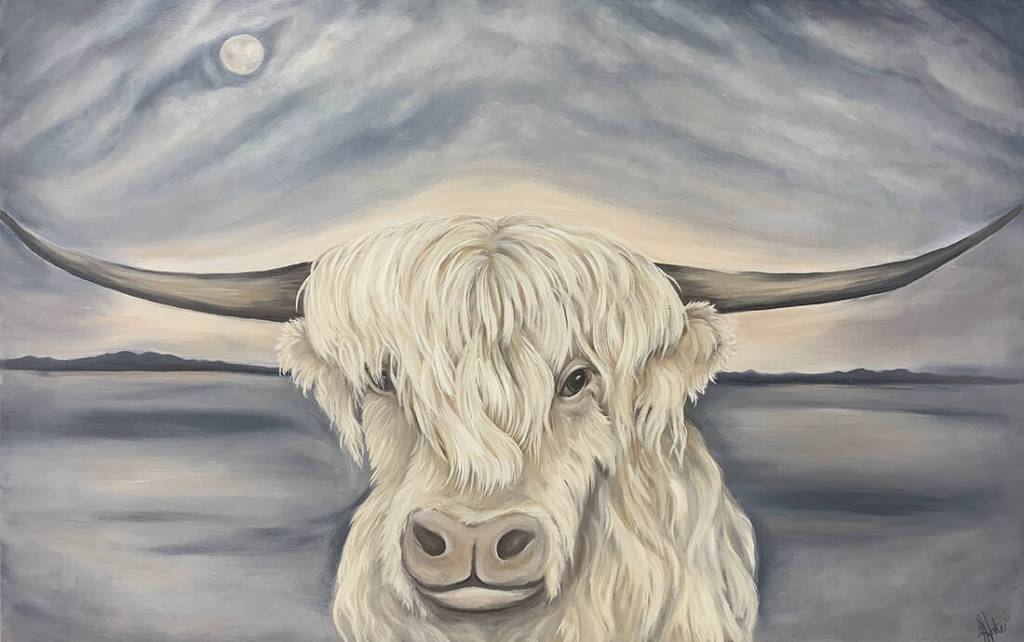
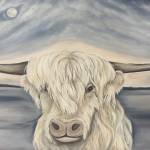
One of her more popular pieces is of an island cow who lived at Aurora Farms. Hoke fell in love with him the first time she saw him and got permission to sit with him. “He looked at me really weird at first,” she laughed. “Probably wondering, ‘What is this strange lady doing sitting here?’” But her patience paid off. With time, he became less nervous, even comfortable. And then in one moment, he gave her a look.
She started dreaming about that look and ultimately woke one night to a full moon after seeing the cow in her dreams and decided to paint “Island Moon Cow.” “That look was the moment I knew that cow trusted me.” Her choices in the piece — the moon, the softening of the colors around his face, but the clarity in his eye – capture her internal experience of that external moment.
The cow piece is a fitting example of Hoke’s work. She loves texture; raised areas of her art using the impasto technique (thick application of paint that can offer dimension), paint knife work in the front (once a Bob Ross fan, always a Bob Ross fan), and ultimately a softening of brush strokes in the background. The balance of continuous movement of the flowing strokes with other areas of peace and softness is always a focus of every piece, according to Hoke. For her, that balance represents life.
A nationally exhibited nature artist and author of the book, “Natural Self Discovery,” Hoke creates work that “reconnects people with the intelligence of the natural world and the sensory strengths we are born with.” Her art reflects natural rhythms and is dedicated to restoring humans’ connection to nature and themselves. She considers creativity to be vital to human well-being.
Hoke helps others with this reconnection through her various “artventures” and workshops she offers at places like Alchemy Art Center and in the courtyard of Windy Gallery and Studios. Scheduling information can be found on her website.
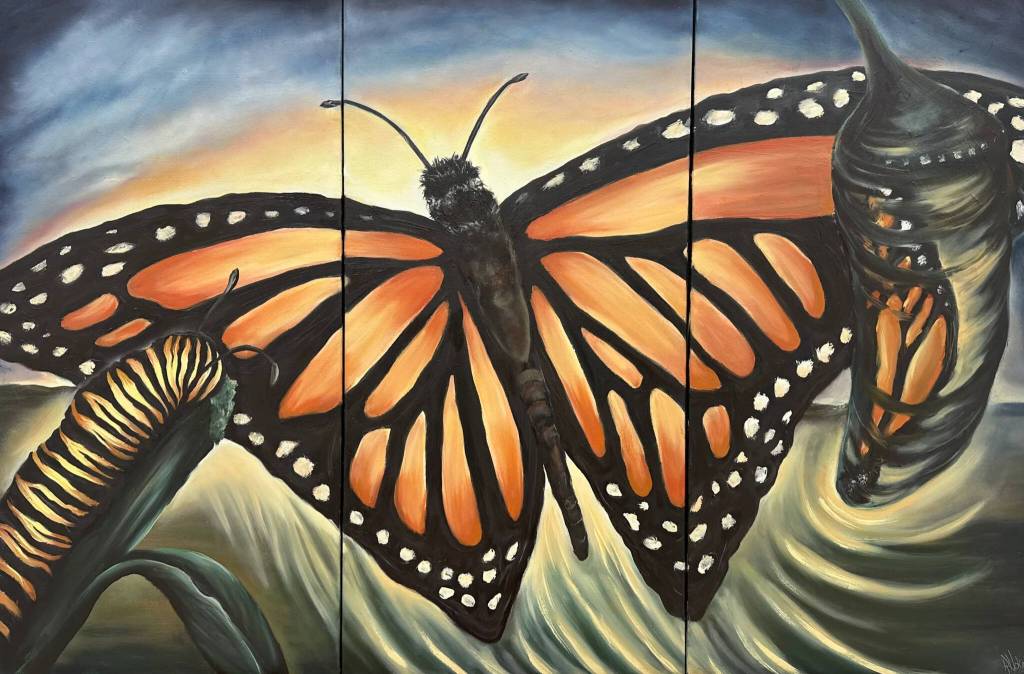
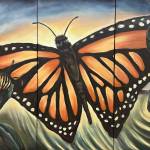
Another beloved piece of Hoke’s is the triptych “Monarch Transformation.” Showing all three stages of the caterpillar, chrysalis and butterfly, the piece represents her “pause, reflect, respond” philosophy. The caterpillar, who has no eyes, is in a state of assessing its situation and what is happening.
Discover more about Pam Hoke’s work at https://pamelahoke.com.
“The caterpillar has to sense its way into the messy part, the chrysalis,” she shared. “There’s a messy part of nature, of creation, of problem-solving. That’s the reflection, because honest reflection is messy. And then the response is the butterfly. We finally have eyes and wings, and now we can fly.”
Hoke’s philosophy feels very island-relevant to her because she believes everyone comes to the island with a specific journey or mission, even if we don’t know what it is. It’s hard to tell sometimes whether Hoke is giving her thoughts about life or art. But after spending time with her, it’s clear to see that for Hoke, the lines are blurred between where one stops and the other begins.
“Transformation happens when we let it,” she said. “Sometimes it’s happening, and you resist. But when you let go of resistance – that is when the best results happen.”