‘We’re still here’: Echoes of Senćoŧen draws community to Lime Kiln State Park
Published 1:30 am Tuesday, August 4, 2026
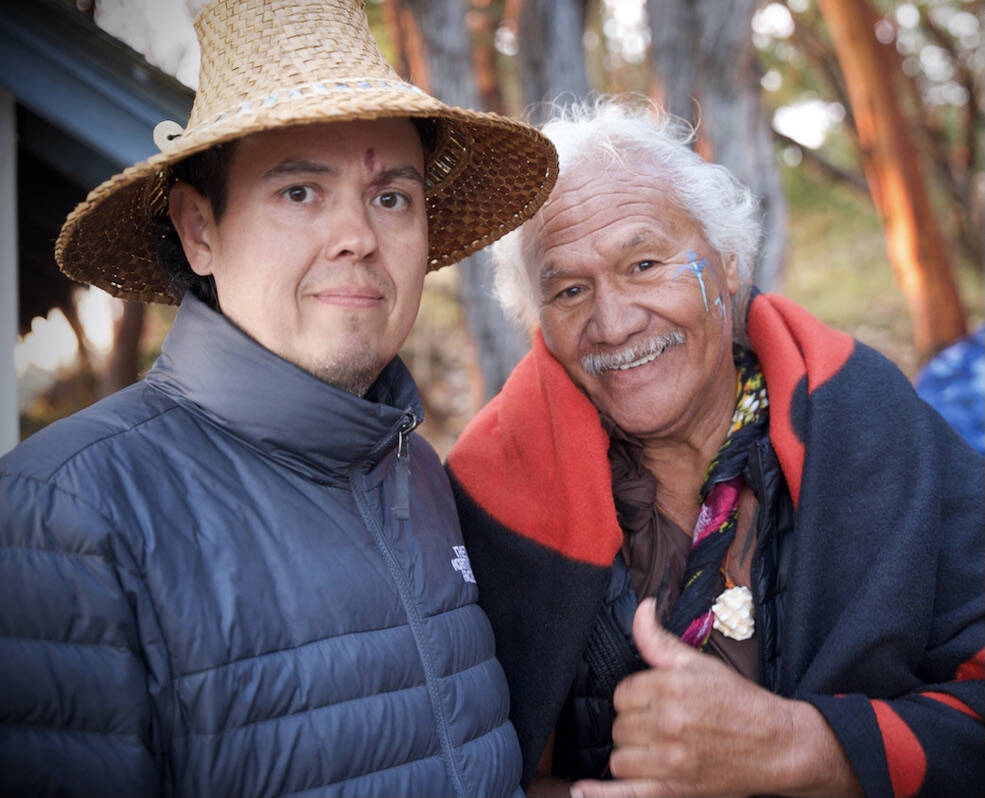
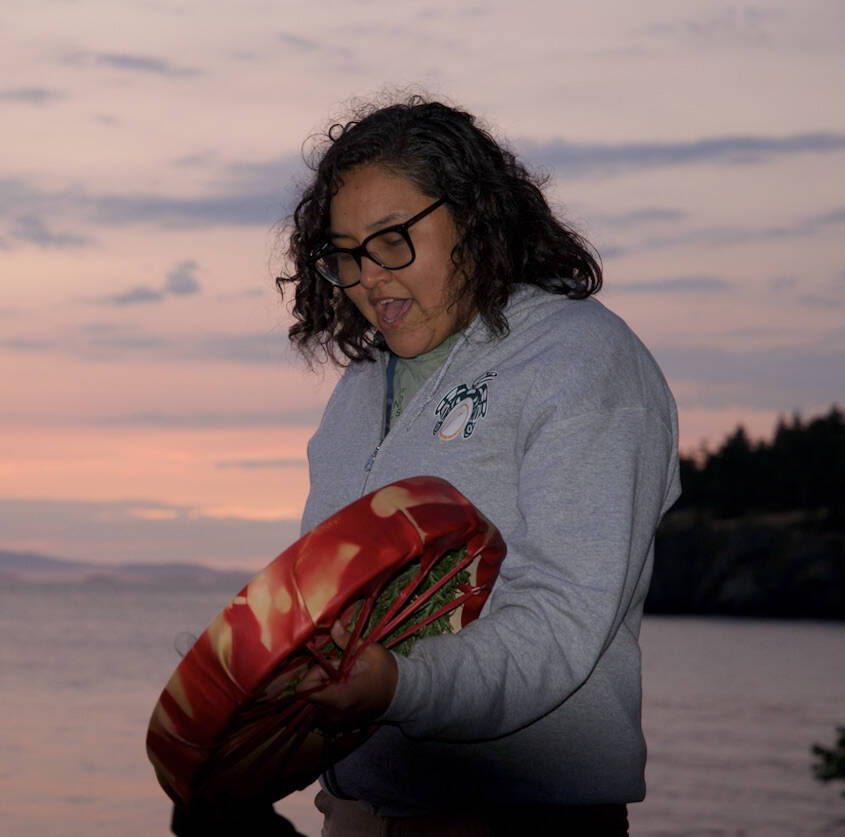
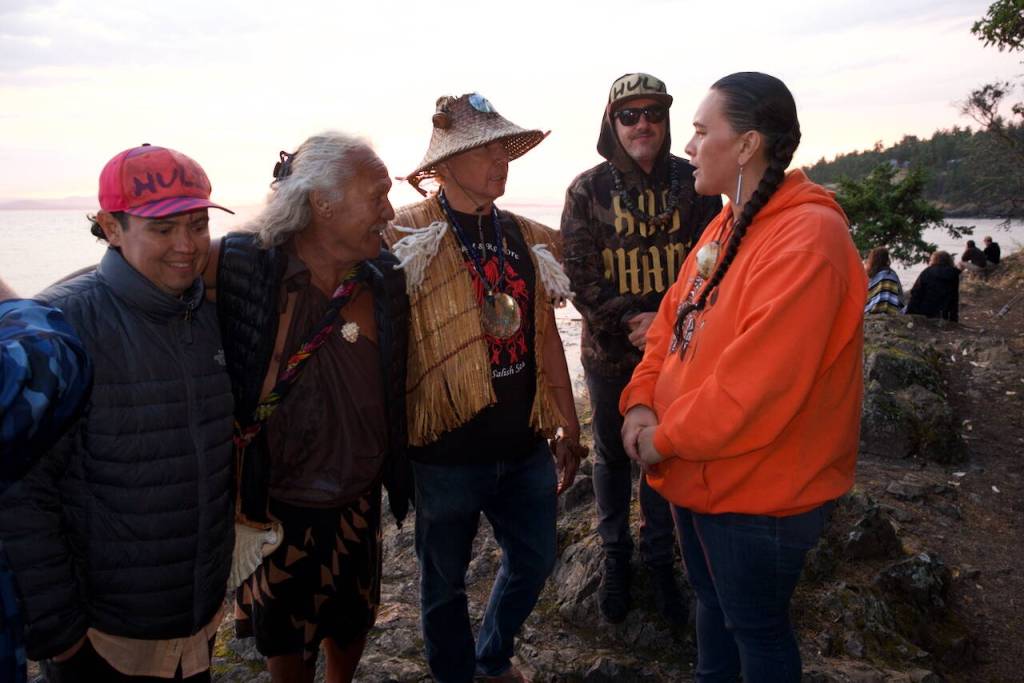
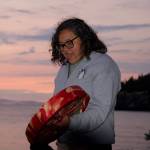
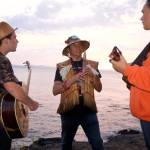
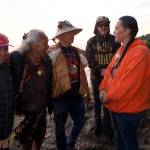
Community members, tribal leaders and visitors from across the border gathered at Lime Kiln Point State Park on San Juan Island on July 23 for the third annual Echoes of Senćoŧen gathering, an evening of song, story and food organized by Josiah French Feld through his organization PKOLS pq̕áls, with support from the Friends of Lime Kiln Society and Protectors of the Salish Sea.
The evening opened beneath a sudden burst of lightning, thunder and rain, but the crowd held its ground, staying put through the storm rather than heading for cover — a fitting start to a gathering built around resilience and presence.
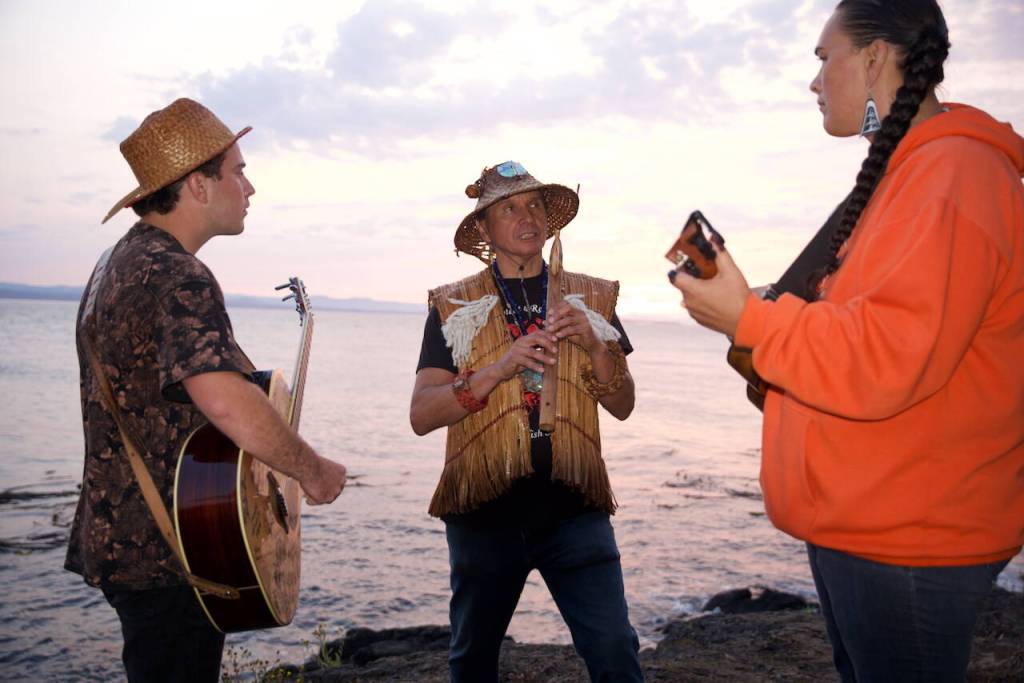
Music and stories were carried first by Paul Chiyokten Wagner, a W̱SÁNEĆ tribal member and award-winning Native flutist, who told the story of Skichu, a mer-woman, reminding listeners to answer “Ines,” a storytelling tradition to ensure everyone is listening. Midway through the story, a bolt of lightning and a crack of thunder punctuated the telling, prompting Wagner to remark, “The Creator seems to agree,” to the delight of the audience. Wagner also delivered extraordinary whale sound imitations during the telling and led the audience in creating their own whale calls, drawing them further into the story. He spoke of restoring the ancient forests and salmon runs of the Coast Salish lands, noting that salmon numbers have fallen to 2-5% of historic levels and old-growth forests to 2-3%, and he closed his portion of the evening with flute songs, including “Tree to Tree” and a piece on the sacredness of water.
Maka Gallinger, a Hawaiian advocate, singer-songwriter and performer, spoke about her family’s experience with colonialism in Hawaii and the ties between Hawaiian and Coast Salish communities. She led her family group, 808 Ohana, through songs honoring Queen Liliʻuokalani and Hawaiian sovereignty, and spoke of aloha — describing it as “the presence of Hā,” the breath, and a call to return to unity beyond religion, race or politics.
Virgil Sampson, a Coast Salish/Nez Perce artist born and raised on the Tsartlip tribe, also addressed the gathering, reflecting on his mother’s Nez Perce heritage and the powwow tradition she hoped to establish for their family. Sampson noted that he carries his father’s inherited name, tied to the fire of a secret dance, and that this was his first time visiting these islands despite their significance to his people’s travels for harvesting and ceremony. He emphasized that Coast Salish knowledge is passed down orally through elders rather than written notes, and that sharing these teachings carries a responsibility to help build understanding between peoples.
French Feld tied the evening to his own family history, recalling his great-grandmother Cecilia and her sisters, Mary Olsen and Mary French, who remained on San Juan Island.
Tiffany Joseph, whose family roots trace through Cowichan territory, shared traditional place names for the islands and waters surrounding the gathering, explaining that the San Juan Islands remain relatives of her people despite the border. She spoke of the ecological knowledge her ancestors held — including the cultivation of camas bulbs, once a food staple stewarded under women’s jurisdiction. Joseph, a descendant of the Thunderbird through her uncle Aaron, urged attendees to practice allyship rooted not in guilt, but in humility and care for the land.
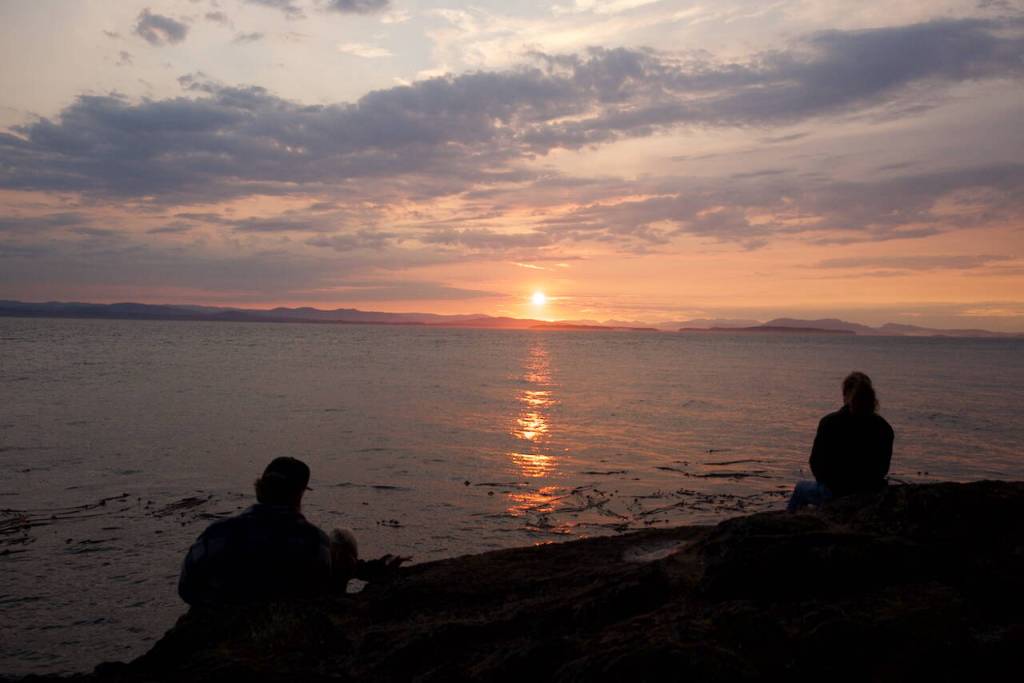
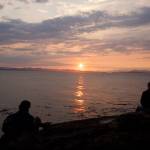
As the program wound down, the audience was greeted by a spectacular sunset over the water. The evening closed not with a formal ending but with an impromptu musical session, as Wagner, Gallinger and the 808 Ohana played together for those who lingered near the base of the lighthouse just above the Salish Sea that lapped just below.
True to the gathering’s theme this year — “We’re still here” — French Feld said the evening was meant less as a performance than as a family gathering, built on storytelling, song and shared food. The event remains free and community-funded, supported by local donors that French Feld described as central to making it possible.