Port Stanley Road wildland fire: Lopez brush fire renews call for preparedness
Published 1:30 am Friday, May 29, 2026
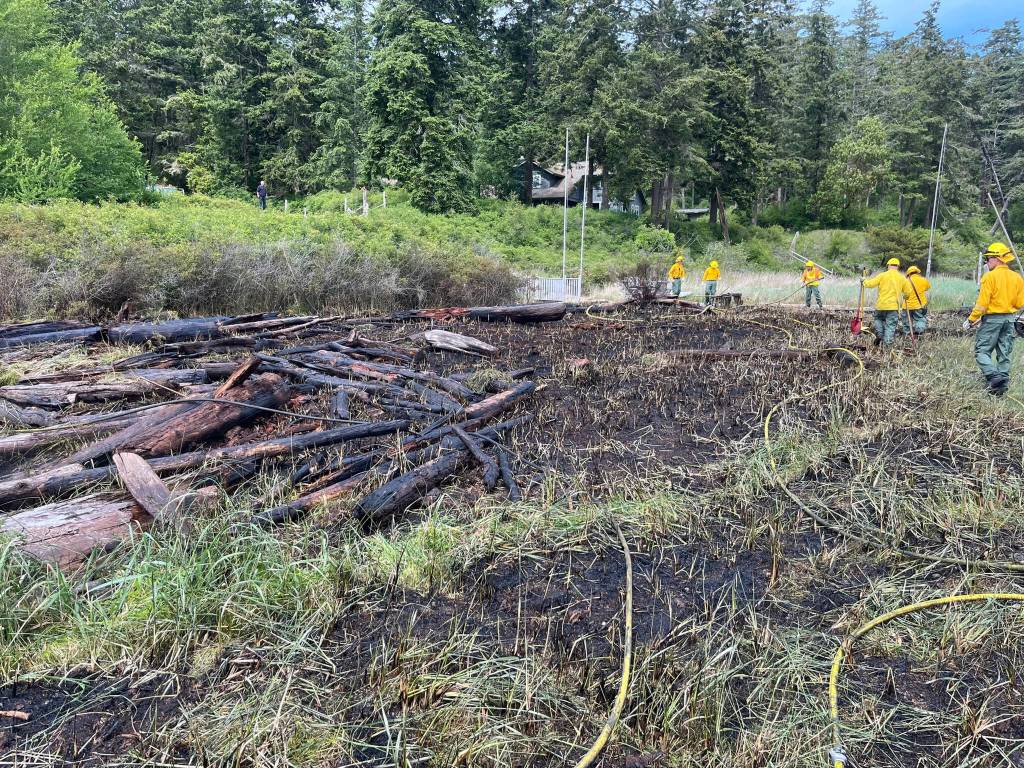
On Saturday, May 23, at 10:43 a.m., Lopez Island Fire and EMS responded to a wildland fire in the 1300 block of Port Stanley Road. According to the department’s press release, the first-in crew found “a wind-driven fire, in the brush and driftwood along the beach, moving rapidly towards neighboring homes.” The cause was one Fire Chief Adam Bigby said he sees all too often — “as is the case with most wildland fires in the San Juan Islands, this was a human-caused fire that started from an unattended burn pile that was assumed to be out.”
In an interview with the Journal, Chief Bigby filled in more details. The person responsible for starting the fire was attempting to put it out himself while his significant other and other bystanders on scene called 911. The wind, however, pushed the fire into the brush and grass along the beach, and it started heading toward the neighbor’s house. Bigby estimated winds at around 15 miles per hour. “He had a garden hose — he couldn’t do much about it,” Bigby said. “He was burning a burn pile without a permit when he shouldn’t have been.”
Lopez Island and fire response times
The outcome could have been very different had the call come in after dark. Bigby was direct about Lopez Island’s vulnerability when the sun goes down.
“The biggest thing is staffing and availability of our volunteers,” Bigby said. “We get lucky that our volunteers are available when they are.” Employers on the island allow their employees to leave work when a fire call comes in, and the station has paid staffing during the day.
That gap is one of the defining differences between Lopez and its neighboring islands. “The other islands [Orcas and San Juan] do have 24-hour station staffing — we don’t, we only have daytime at this point,” Bigby noted. For Lopez, the challenge is nighttime response. “Our volunteers do a great job, but they’re responding from home — they aren’t there at the station. Getting an engine on the road quickly really is time-dependent as far as what time of day the incident happens.”
As summer approaches, Bigby sounds the alarm
When asked about the coming fire season, Bigby sounded a broader alarm for the community as the island heads deeper into summer. Burn permits are shut down countywide at the end of May, but the weeks leading up to that cutoff still carry significant risk. “Burning in anything over 10 miles an hour wind puts you at pretty significant risk and can spread fire,” he said.
Conditions this year are more dangerous than many may realize. “It’s been a dry spring — people may not think that it’s been dry, but it’s definitely been dry,” Bigby said, warning that the risk only grows as summer sets in.
Bigby also pushed back on the idea that burn permits are merely a bureaucratic exercise. “The permit doesn’t just collect funds — it collects very little funds,” he said. “But it’s a good way for us to get the rules out there so people can follow good practices when they are burning brush and yard waste.”
For homeowners worried about wildfire risk, Bigby had clear advice. “The biggest thing to do is schedule a Wildfire Ready Neighbor visit with your local fire department or the conservation district,” he said. “Have the fire department come out and do an assessment and help you come up with a list of things you can do to harden your home.” He was candid about the limits of preparation: “There are no guarantees, but the more work you do at the beginning of the season, the better chance you have. If you do it right, there’s a good chance the wildland fire will just burn the brush around your home and leave your home standing.”
Finally, Bigby had a simple ask for every resident: “The island isn’t very large — if you see a plume of smoke, just call it in.” Even if it doesn’t turn out to be a wildland or structure fire, he said, it may be someone burning who shouldn’t be. “It allows us to go in and educate them to the dangers.”