The journey of oak restoration
Published 1:30 am Tuesday, April 21, 2026
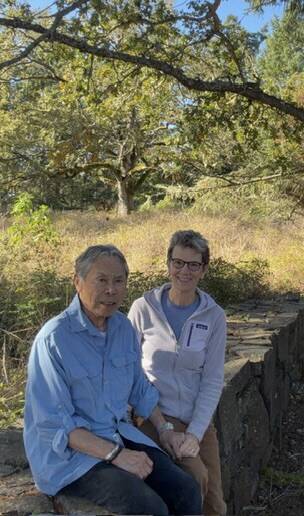
With their noble trunks and majestic leaves, Garry oaks are stunning trees. They also provide habitat for a diverse range of wildlife. Locally, there is only a small percentage of oak savannah left, which is why Shaun Hubbard and her husband, Harold Kawaguchi, have worked diligently for some 25 years to restore the oak habitat on their property. The work has been paying off, and in August of 2025, the Washington Department of Fish and Wildlife North Puget Sound Region recognized the couple with a “Landowner of the Year” award.
“Through thoughtful restoration efforts, [Hubbard and Kawaguchi] have created and protected invaluable habitat that supports a wide range of wildlife. Their property has become a haven for biodiversity and a resource for science. Thanks to the access they have provided and the welcoming, collaborative way they engage with partners, biologists and researchers have been able to conduct long-term studies on butterflies, red foxes, raccoons, and rare plants,” the 2025 Landowner of the Year Award statement read.
The award, which has been dispersed for many years, recognizes a landowner who has shown concern for fish and wildlife or fish and wildlife recreation, through such activities as planting trees, shrubs or crops specifically for wildlife; protecting unique habitat features; protecting threatened or endangered species; or improving public access.
DFW district wildlife biologist Kurt Licence met Shaun and Harold through the Landbank while looking for opportunities to monitor wildlife. “We walked around their property in awe of the mature oaks and plantings,” he said, adding that the couple was thoughtful, caring individuals who were clear standouts for the award.
Hubbard explained that when they had first bought the property, they did not know anything about oaks; however, Hubbard’s realtor and cousin, Lisa Lawrence, had fond memories of riding horses in the area. In those days, oaks were prevalent. After buying the property, their neighbor and retired forester Tom Pence began encouraging them to become involved in oak restoration.
“I just took a passion to it, I started learning about the plants and birds that depend on them,” Hubbard said. She began attending annual symposiums put on by the Garry Oak Ecosystem Recovery Team. The GOERT website, she added, is an incredible resource for anyone interested.
There is very little oak habitat left, according to Hubbard. Licence backed that up, telling the Journal the oak ecosystems have become very limited, and that loss is exacerbated by an abundance of deer who love seedlings. “It’s very hard to get more oaks,” he said.
Oaks also do not like to be crowded, and the island’s plethora of Douglas firs has a habit of crowding and overshadowing them. The local Indigenous people would do what is now called prescribed burning. The practice benefited the soil as well as supported prairies, wildflowers and oaks. Deer also came out of the forests to eat acorns, Hubbard explained, making them easier to hunt.
The lack of oaks has impacted everything from wildflowers to insects and birds. Western Bluebirds nest in cavities in the deciduous trees, but they are not the only bird whose existence is entwined with the oaks’ gnarled limbs. Wildflowers thrive in their shade, and the savannas surrounding them. Moths and butterflies benefit from the plants surrounding the tree, as well as the tree itself. The Duskywing butterfly relies on them during each phase of their life cycle, Licence said. During their chrysalis stage, Dusky wings wrap themselves in the leaf of an oak.
“It takes time,” Hubbard said of oak restoration work. “We certainly made mistakes along the way, like taking some of the firs out too quickly.”
In the beginning, when they removed firs, weeds sprang up at the introduction of sunlight. The couple learned instead to start slowly, removing limbs, at first, so light would not shock the soil.
“It can take up to five years, so it has to be a long-term vision, a long-term goal,” Hubbard said.
For those interested in Garry oak restoration, she recommends reaching out to the Land Bank and the Preservation Trust. The work, she warned, can be addictive. “I have cousins with property in the valley, and they are so excited about supporting them.”
Licence relies on landowners in his work of researching and monitoring wildlife. “These folks who take the time to focus on conservation are so valuable,” he said. Anyone interested in learning more about the habitat in their backyard, and how to become more involved in conservation, can visit https://wdfw.wa.gov/species-habitats/living/habitat-at-home.
“I feel lucky that we have this property, and we are able to be stewards of it. I know I won’t be able to stand in the shade of some of the younger oak trees, but it’s about the next generation,” Hubbard said.