Can swimming, barges and forage fish coexist?
Published 1:30 am Wednesday, April 8, 2026
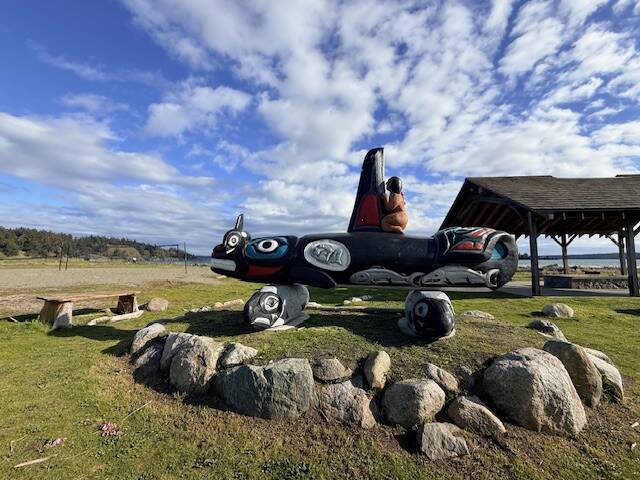
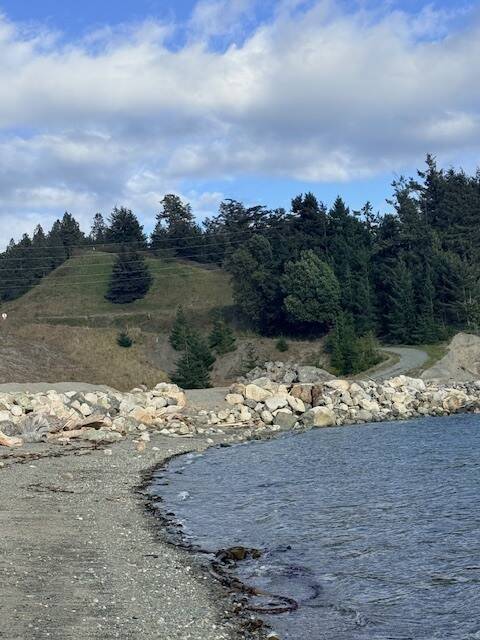

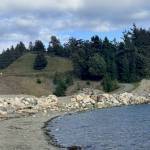
Polar bear plunges, cold water emersions, quick lunches on a busy day, barbecues or celebrations, Jackson Beach is one of the most accessible and well-used public beaches. Sand lance and other forage fish, it turns out, like it too, returning year after year to spawn, making it a prime location for restoration work.
“Surveys show Jackson Beach area as the highest concentration of Sandlance, which are important to Chinook,” Kimbal Sundberg, a technical advisory member of the Salmon Recovery Committee, said during the County Council’s citizens’ access period on March 23, in response to the Council’s January decision to cancel the restoration work. Having been involved in decades’ worth of studies on the area and involved in the recovery plans, Sundberg explained that the 2023 plans made a barge facility and restoration work compatible. “All the people I worked with understood this was going to be a barge landing in addition to what we were trying to do. Drawings submitted showed both. I was very disappointed when Council went with the temporary solution, but I think we can still get to a yes on this.”
Restoration work on Jackson Beach had been going on for over a year. OPALCO removed poles that they were no longer using, and creosote pilings were removed. To combat erosion, Environmental Stewardship Director Kendra Smith told Council during the Jan. 20 session, a design work grant was secured to help create a gravel berm and do some planting similar to work done on the North Shore on Orcas. Smith explained that it was possible to both restore areas of Jackson and keep the barge site, and that, as far as getting credit in the partnership with the Puget Sound Partnership Marine Mitigation Funding, removing armoring gets the county the “biggest bang for their buck.”
Colin Huntemer, Public Works director, advocated for a more immediate plan for erosion, moving large stones already on the beach to stabilize eroded sections around the landing.
“This is a one-of-a-kind area, critical for Public Works to operate. It is important that it remains fully operable and fully available,” Council Chair Justin Paulsen said, adding that the cost was not viable.
Smith noted that exploring alternatives would take additional time and resources when the resources for the environmental work had already been secured.
With the information provided, and erosion posing a threat, the Council agreed, Jan. 20, to cancel the restoration project.
The Marine Resources Committee wrote a memo to the Council, saying:
“This shoreline restoration project on County property was approved by previous County Councils and the County manager going back to 2020. The project restoration plans always recognized the western part of [the] site would remain as a barge landing site as it had been for decades and achieved both the County’s salmon recovery and retention of barge access goals. In April 2024 however, after the Army Corps of Engineers, Washington Department of Fish and Wildlife and local Tribes had approved the restoration projects’ permits, Council requested staff complete a public master plan for the overall site. At the time, many entities had come to the MRC and expressed interest in the site’s use (including kayak companies, the Port, a local aquaculture group, contractors looking for bulk delivery of products, and Public Works suggested preference for a hardened barge landing) and so Council made the request for an alternatives analysis and public master planning process to be launched in 2025 to help ensure optimal site use.
“To accommodate this request for project delay and site master planning, the MRC/CAG reallocated the approximately $500,000 in salmon recovery funds already allocated for the project to other local restoration and supported the use of Puget Sound Partnership marine mitigation funding (a replacement $500,000) for this site. This offered the County added flexibility, depending on the outcome of the master planning process.”
The memo added that the decision seriously erodes San Juan County’s hard-earned respect with our state and federal partners and tribes, and requested an opportunity to address the Council on March 23.
Besides Sundberg, several others spoke during the March 23 citizens’ access. Friends of the San Juans Executive Director Eva Schulte commented that the community is concerned by the quick process that happened with Public Works and the DCD, adding armoring to the shoreline in the barge landing area without a public process or proper permitting.
“In this case, we needed more community engagement, more time,” Schulte said.
That sentiment was brought up again, as MRC Youth representative Flora Vaught told Council, “Clear public process allows me, allows my peers to contribute. I respectfully ask that Jackson Beach be put through a full public process.”
MRC Chair Adam Parrott reiterated the concerns of the committee on the Council’s decision to cancel the project without public input or seeking input from the MRC.
“It was approved by the previous council … And the site has been identified as a vital site for the ecology of these fragile islands,” he said. “In the future, I implore you to use the tools in front of you. The MRC is dedicated to giving the council expert advice. I believe a compromise and solutions are still possible.”
Dr. Olivia Graham, University of Washington Marine Labs researcher and member of the MRC, told the Council the story of finding a bundle of eelgrass on Jackson Beach. Eelgrass in San Juan County has been declining more than in other regions of Washington state, so it was a treasure to find. Making it even better — discovering tubsnout fish eggs attached to the eelgrass blades.
“Jackson Beach is not just a recreation site. It is critical nearshore habitat, key for forage fish like sand lance,” Graham said, urging the Council to put the project through a full public process.
During the discussion, Council member Kari McVeigh spoke first, noting that she was told they were not able to do both and that the barge is critical. “Listening to Kimbal Sundberg, I want to know if there is another way to skin this,” she said.
Council member Jane Fuller withdrew her head nod to cancel the project. “I appreciate the work that has gone into it, and I appreciate the feedback. I feel we did not get enough information. We did not even get a presentation from the Environmental Stewardship Department … we just heard one part of the story.”
Fuller also noted that Vaught’s comments made her realize how important the public process is, particularly to the youth.
“Your communication does matter,” Paulsen said to Vaught, adding that the sticking point with him was the cost. “I’m willing to have a discussion, but ultimately… it isn’t the economy against the environment. It’s the economy against the environment against what’s possible. The numbers in this report are stark. It may literally bankrupt the county.”
Fuller responded that she would not advocate spending more than the County has. “[The cost was] in the contractor’s report, and we didn’t even have it presented to us.”