Q&A with candidates for public hospital board position 5
Published 6:07 pm Tuesday, October 13, 2015
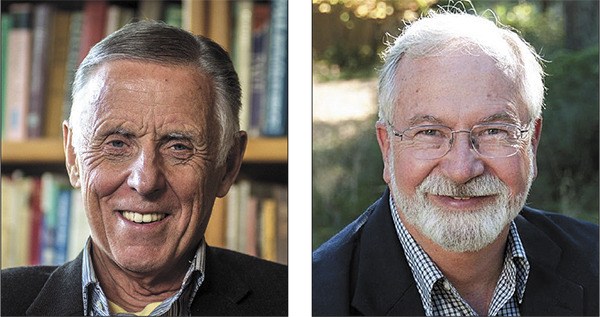
(Editor’s Note: Candidates were given a word limit to answer the six questions posed by the Journal, listed here. Responses have not been edited aside from AP style. Candidates are listed in alphabetical order by last name.)
1. Why are you running for the hospital district commissioner position?
William Hancock: I enjoy being able to improve other people’s quality of life.
That’s why I have agreed to serve as President of San Juan Rotary Club for 2016. Their motto is, “Service Above Self.”
Service to others is why I chose medicine as a career and eye surgery as my specialty. Each brief cataract or Lasik procedure I did brought dramatic improvement to my patient’s quality of life.
I founded Northwest Eye in 1975. At my retirement in 2008 we employed thirteen doctors and two hundred technical staff. As a managing partner I had three decades of on the job training in controlling expenses without sacrificing quality of patient care.
My combination of medical training and managerial experience is unique in this entire pool of candidates. District Commissioners don’t do hands on patient care but they frequently must communicate with people in front line patient care jobs. I have long experience in both positions. I speak the language of both groups. I’m ready to apply my combination of medical and managerial experience to the work of our Board.
Bill Williams: Through education and experience, I know what good health care for a community of our size and make up should look like. I hold a Master of Health Administration degree and have spent 30 years successfully managing hospitals and physician practices. People who know me consider me to be knowledgeable, practical and fair minded regarding resolving healthcare issues.
I want islanders to have good basic primary care, urgent care, emergency care, and EMS services at reasonable prices. I am running because I think I owe it to our community to look for areas where we can improve while at the same time preserving and promoting what is working well.
2. What is the role of the hospital board commissioner?
William Hancock: A commissioner’s responsibilities can be described in four categories:
Safeguard community health by assuring access to quality health services.
Set overall policy for district operations but do not attempt to manage day–to-day clinical policy or operations.
Stay informed on state and federal health care policy to be able to address current and future community healthcare needs
Work cooperatively with people holding a variety a views so as to produce thoughtful decisions.
Bill Williams: Under RCW 70.44.003, our Public Hospital District was established for the purpose of owning and operating hospitals and other health care facilities and to provide hospital services and other health care services for the residents of the district. RCW 70.44.060 grants a broad range of powers to the district.
RCW 70.44.040 details the election of commissioners, by citizens of the district, who exercise the powers granted to the district and who oversee the expenditure of public funds to carry out the purpose of the district. The role of commissioners is to utilize their powers to secure the best healthcare possible through the wise expenditure of public funds.
3. In this nonpartisan race there has been heated debate on issues like abortion and end of life directives, how will your beliefs on these subjects affect you in the non-partisan role as commissioner?
William Hancock: I have strong personal beliefs regarding these issues.
I also firmly believe that by seeking the office of commissioner I have pledged to be guided by a neutral and nonpartisan interpretation of current law and by respect for each person’s right to individual choice and responsibility.
There are officially six independent candidates running for three positions on the District Board. The reality is that our choices have been reduced to only four separately identifiable and independent candidates.
The group of candidates who fomented this “heated debate “ have started and fanned the fire themselves. They also clearly appear to have planned imposition their own secular beliefs upon the rest of us through a partisan sponsored effort to gain a voting majority on the District Board.
Approaching a situation from the context of personal anger will limit your focus to the narrow list of real or fabricated grievances. Anger blinds one to the broad range of possible positive solutions.
We cannot be well served by a voting block who have visibly tied their freedom of independent action to the direction of a person who’s public statements appear to be driven by long held and narrowly focused anger.
Bill Williams: Public officials must observe the rule of law. While my beliefs support laws on these subjects, it is irrelevant in that, I follow the law regardless of my beliefs. Anyone who cannot, should not be a commissioner.
4. Name three goals for your term as commissioner?
William Hancock: FIRST GOAL:The EMS Levy will be passed after our clear communication to the public of the community needs and benefits of all budget line items as defined by the new Chief and his staff.
SECOND GOAL:The Board will work quickly and effectively to heal the damage caused by this campaign’s focus on creating groundless and nonproductive partisan divisions.
We will unite our community in trust and support of our Medical Center by directing our efforts to deal with real majority community needs through new programs such as the EMS Paramedicine Program and The Veteran’s Choice Program
THIRD GOAL:The Public Hospital District BOARD will move to support its broad mandate to work constructively with all community health care providers by promoting success of the new San Juan County Community Health Consortium
This developing collaboration among the wide spectrum of community healthcare providers is guided by the recently completed Community Health Needs Assessment and Implementation Plan. Refocusing our efforts upon the real healthcare needs of our Community will be a pleasure.
Bill Williams: Build a sustainable, well managed EMS, to include the passage of a sound budget in 2016.Assure the district complies with all laws to include Washington’s Reproductive Privacy Act and that our citizens have direct access to providers under the Death with Dignity Act.Improve relationships and contracts with patient air transport providers.
5. What is your plan for transparent communication with the Hospital Board, the public and other entities of interest?
William Hancock: The Hospital Board currently reports to the District Board through required semiannual reports that include detailed financial statistics and performance measures such as patient satisfaction assessments and treatment outcomes. EMS communicates with the Board through similar detailed semiannual reports. The detailed reports from both of these agencies currently give the Hospital District Board sufficient material for transparent communication and effective oversight.
The Public Hospital District Board now video records each of its meetings. I suspect fewer people have the endurance to view these video records than the already too few citizens who come to view the proceedings in person. After sitting through hours of routine business public spectators they are finally allowed their three minutes of public comment.
By the simple measure of putting public comment first on the agenda the people with prepared statements could deliver them to the Commissioners, receive answers and then leave before the long list of routine business is handled.
Those who needed to hear discussion of an item on that day’s agenda before making their own comments would be free to stay and offer comments at the end of the meeting. This change of agenda format would show we value the public’s time and truly welcome them to our meetings as participants not just spectators whom we tolerate. In an additional effort to maintain open and responsive paths of communication I plan to convert my campaign website to a portal to receive and consider the public’s questions between the board’s monthly meetings.
Bill Williams: Washington’s “Sunshine Laws” RCW 42.30 and RCW 42.32, state that the actions and deliberations of public agencies must be conducted openly. Under RCW 42.30.010 the legislature declared, “The people of this state do not yield their sovereignty to the agencies which serve them. The people, in delegating authority, do not give their public servants the right to decide what is good for the people to know and what is not good for them to know. The people insist on remaining informed so that they may retain control over the instruments they have created.”
I believe the spirit of these laws goes beyond mere compliance. It is incumbent on agencies like our Public Hospital District to seek out means to inform, such as we recently did by video recording meetings so people who could not attend could keep abreast. The District website is also an important tool. I would like the District to periodically conduct town hall meetings to get input, answer questions, and check the temperature of the community.
6. What is one problem and solution for the district?
William Hancock: Increasing complexity of medical treatment has brought both increasing effectiveness and increasing costs.
Relentlessly increasing medical costs threaten our security and our dignity. Despite the assurances of solutions from some candidates there is no easy way out of this dilemma. Increasing efficiency of facilities use cannot by itself solve this problem. Enactment of the Affordable Care Act has unfortunately guaranteed progressive increase of costs for a majority of us.
The board should not only monitor how our tax dollars are spent but it must also encourage PIMC to fully explain all their charges to patients, to the hospital district board, and to taxpayers. Understanding the valid reasons why some costs cannot be reduced is necessary for the public to maintain trust in our hospital.
Bill Williams: A problem is the need to restore the public trust that the District works for the public. Many have characterized the District as an agent for PeaceHealth.
That is has a culture of defensiveness, isolationism, antagonism and paternalism. That it views the public as something to be manipulated through false or misleading information. That it does not seek public input and that it demeans people who ask questions or who express dissatisfaction or disagreement.
While these characterizations are not universal, they are far too common.I suggest the commissioners:Be willing to partner with the public and make them part of the major decision making process.
Give thoughtful consideration to dissenting points of view and that they ask for clarification and supporting evidence rather than immediately moving to a defensive posture. Set a tone for civil, respectful, communication where people can disagree over issues without being disagreeable.Avoid hidden agendas. Communicate directly without innuendo and inferences.Respect everyone and treat everyone with respect.
To read about the San Juan County Hospital District Board candidates for position 2, go here.
To read about the San Juan County Hospital District Board candidates for position 3, go here.