Through a combined effort, Western Bluebirds on the rise | Special to the Journal
Published 11:19 am Wednesday, November 12, 2014
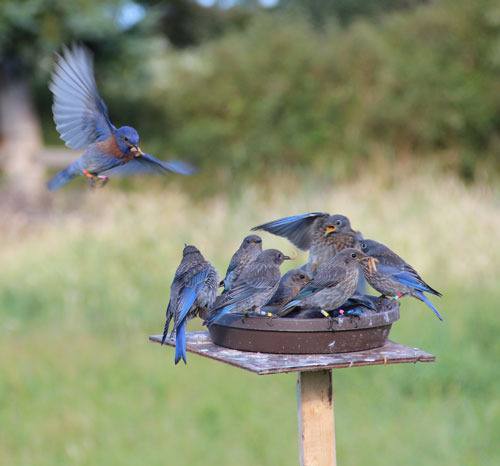
Late this past July, the last two Western Bluebird juveniles successfully fledged and the San Juan Islands Western Reintroduction Project wrapped up for another field season. As we now move into autumn, small flocks of bluebirds can still be seen roaming the island prior to their migration to southern wintering grounds. A partnership of the American Bird Conservancy, Ecostudies Institute, and The San Juan Preservation Trust, the goal of the project is to reestablish and monitor a viable breeding population of Western Bluebirds through a combined program of reintroduction, population monitoring and outreach. A big “thank you!” goes out to all who were involved this year; many folks helped out the project by hosting aviaries and nestboxes, reporting bluebird sightings, or allowing our 2014 field technician, Kelsey Green, to access their property to monitor nests or check and mark their nestboxes.
 The project, launched in 2007, experienced many successes in first five years. Due to extremely wet and cool summers of 2010-12, however, the population decreased, a pattern observed in other bluebird populations in the Pacific Northwest. To address this decline, this year the team executed emergency translocations of three family groups from larger populations near Corvallis, Oregon and Olympia, WA at Joint Base Lewis-McChord military installation. While there was some mortality during the season, the project also experienced success, as we happily watched many fledglings take flight. The overall success of these additional management efforts will be apparent next spring when the number of returning bluebirds is determined.
In addition to these efforts, a new phase of the project commenced this year: locating and cataloguing the existing nestboxes on the island. This assessment effort will help us evaluate the nest box program and pave the way to improve monitoring efforts in the years to come through volunteer participation. As most of the quality bluebird nesting habitat is on private land, landowner and community involvement is absolutely critical to the success of the project.
Western Bluebirds are thrushes, often identified by their bright blue plumage and distinctive call. Preferring open habitats for foraging, they can often be seen in areas with scattered trees, especially oak groves, and mid-story perches such as fence lines. On San Juan Island, bluebirds are often spotted on Cady Mountain and at American Camp early in the season as they migrate in, and most commonly choose nests in the San Juan Valley area. Calls from islanders who spot bluebirds are very helpful for monitoring purposes.
Contact Kathleen Foley, 378-2461 or kathleenf@sjpt.org, or Gary Slater, (305) 213-8829 or glslater@ecoinst.org, for more about the bluebird project, to report a sighting, or to see if your property is suitable for hosting a nest box.
By Kelsey Leigh Green
— Editor’s note: Kelsey Green came to San Juan Island in spring 2013 as technician on the Western Bluebird Reintroduction Project. She has a masters degree in geo-science from the University of Edinburgh, Scotland.