By Darrell Kirk
Staff reporter
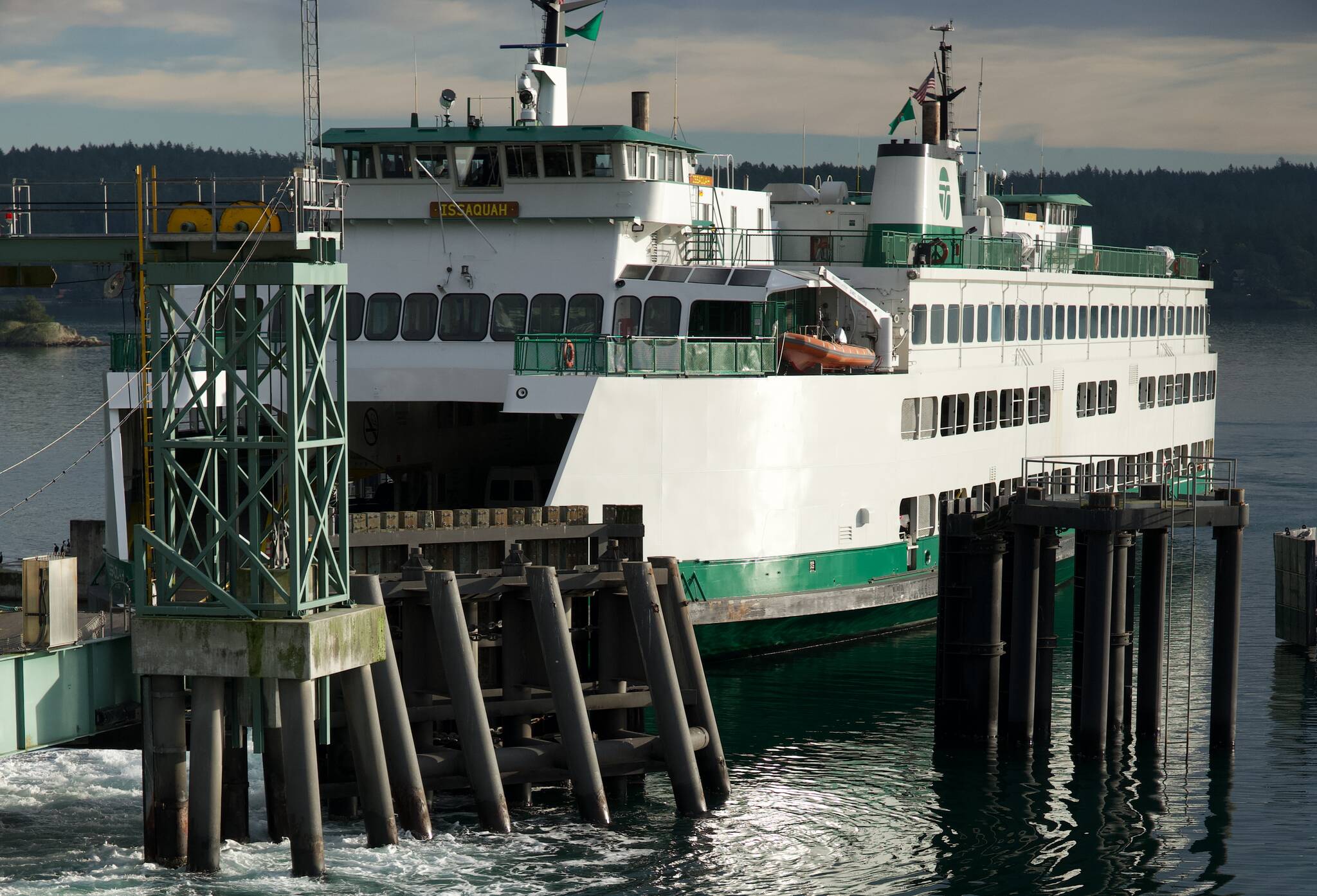
San Juan County residents should prepare for at least another decade of unreliable ferry service, canceled sailings and aging vessels despite Gov. Bob Ferguson’s announcement of $1 billion in new ferry funding, according to county officials and state transportation documents.
The stark reality: None of the three new hybrid-electric ferries funded by Ferguson’s proposal will serve the San Juan Islands, and the first replacement vessel won’t arrive until 2030 at the earliest.
“It’s safe to say that we have yet another decade of very concerning service levels across the Washington State Ferry system, not just San Juan County, but across the system,” San Juan County Council member Justin Paulsen said in a recent interview. “There is no quick fix.”
The billion-dollar investment that bypasses the islands
Gov. Ferguson’s supplemental budget proposal, announced Dec. 19, includes $1 billion for three new hybrid-electric ferries and an additional $150 million for vessel preservation, according to a story in the Seattle Times. While the investment represents a significant commitment to the state ferry system, the San Juan Islands will see no direct benefit from the new construction.
“None of those ferries will come to us,” Paulsen explained, describing the billion-dollar figure as potentially misleading for island residents. “It’s for the fleet. The boats that are currently under contract in Florida and the proposed additional vessels are just going to replace boats in the fleet.”
Washington State Ferries needs to build approximately one ferry per year — or one every other year — for decades to catch up with the retirement schedule of aging vessels. The state is currently five boats short of optimal fleet size and continues to fall behind, according to Paulsen.
Why San Juan routes are last in line
The new hybrid-electric ferries being built in Florida by Eastern Shipbuilding Group require extensive shore-side charging infrastructure and are designed for shorter routes — neither of which describes San Juan Islands service.
“Our routes are super long,” Paulsen noted. “We have the longest route in the Washington State Ferries fleet. So all of our routes require that the boats run for a very extended period of time.”
The islands face a double disadvantage: They lack the electrical infrastructure to support ferry charging, and even if that infrastructure existed, the battery capacity wouldn’t sustain the long interisland runs. Infrastructure improvements will be prioritized for the Seattle metro area, where shorter routes allow the electric systems to function efficiently.
According to information on the Washington State Ferries website, WSF is undertaking an ambitious program to convert the nation’s largest ferry system to hybrid-electric power by 2040, which will involve converting six existing vessels and building 16 new hybrid-electric vessels, along with adding shore charging systems at 16 terminals. As the biggest contributor of greenhouse gas emissions among Washington state agencies, WSF currently burns approximately 19 million gallons of diesel fuel annually to serve nearly 20 million passengers, and this $6 billion electrification program aims to drastically reduce greenhouse gas emissions while saving millions in fuel costs and reducing operations and maintenance expenses. The Wenatchee, which completed its conversion in July 2025, now operates as North America’s largest hybrid-electric passenger vessel, demonstrating the feasibility of the technology, with the first of three newly contracted 160-auto hybrid-electric ferries expected to enter service as early as 2030.
Some argue that it might take until 2040 for hybrid ferries to serve the San Juan Islands.
Ancient vessels define the “new normal”
The ferry fleet serving San Juan County represents a floating museum of maritime history — and not in a good way. The Tillikum, built in 1959, is 67 years old. The Kaleetan and Yakima, both dating to 1967, are each 58 years old. Together, these three vessels have accumulated 180 years of service life, despite ferries being designed for a 30-year operational lifespan.
“When the Tillikum was manufactured, they were manufacturing the Edsel in the car world,” Paulsen observed. “I ask people, look around at your roads and tell me how many people are driving an Edsel as their daily driver. No one is driving an Edsel. So we essentially have an antique that San Juan County is dependent on for our daily service.”
This December, the Kaleetan suffered catastrophic engine failure and was out of service for the entire month before returning to the San Juan Islands run.
When disruptions occur — and they will continue to occur — there are no reserve vessels available. “Currently, anytime a boat goes down, it means somebody is going to lose service,” Paulsen said. “That’s the only way to deal with a breakdown right now.”
According to Washington State Ferries data, the average age of the fleet is 35.6 years. The system has built only one boat in the past 11 years, while the fleet has collectively aged by 231 years during that time. WSF will need to build 15 boats over the next 30 years just to retire existing vessels when they reach 60 years old, per WSF information on its website.
Maintenance funds: A stopgap measure
The $150 million in preservation funding announced by Gov. Ferguson is specifically targeted at the state’s oldest boats, including the Tillikum, Kaleetan and Yakima, as mentioned in the Seattle Times story. This investment aims to keep the aging vessels operational until replacements eventually arrive — potentially into the 2035-2040 timeframe.
“If a fourth boat is delivered in 2035, the Tillikum will be more than ready for retirement at 76 years old,” the Seattle Times reported, and the preservation money adds to $282 million already allocated for vessel maintenance and is dedicated to work over the next six years.
Exploring alternative solutions
Faced with a decade of service challenges, county leaders are pursuing creative alternatives to the large-ferry model that has dominated Washington State Ferries planning.
“I truly believe we need to think smaller, faster and more easily implemented,” Paulsen said, expressing support for the Mosquito Fleet bill in the state Legislature. “When we talk about marine transportation, all we ever talk about on the transportation level is big ferries that cost three hundred and fifty million dollars apiece. I think we now have to look at alternatives that allow us to continue to do the same work just in different ways.”
County leaders unite for ferry solutions
San Juan County Council member Jane Fuller is spearheading a new County Leaders Ferry Caucus, bringing together elected officials from all ferry-served counties to promote regional solutions “for our marine highway system,” Paulsen explained.
The inaugural meeting is scheduled for early January and will include representatives from Kitsap, Jefferson, Island, San Juan, King, Skagit, Whatcom and Pierce counties — essentially any county that borders Puget Sound. This represents the first-ever coalition of county leadership focused on ferry issues, Paulsen iterated.
The group may explore options under legislation like the Mosquito Fleet Act to develop solutions that don’t compete with Washington State Ferries but could help relieve system stress.
Preparing for the next decade
For San Juan Islands residents, the message from county leadership is clear: Adjust expectations and prepare for continued disruptions.
“The new normal is not the service level we had 10 years ago,” Paulsen emphasized. “If there’s any vessel disruption at all, it is fairly safe to assume that your travel plans will likely not go as planned.”
The $1 billion investment, while substantial, represents merely “treading water” for a system that is already years behind on its vessel replacement schedule. Even with three new boats, the state will need to retire roughly that many vessels before the new ones arrive, leaving the fleet size essentially unchanged, Paulsen explained.
One recent evening illustrated the challenges, when Paulsen arrived at the Anacortes terminal, the late boat was so overloaded due to an earlier cancellation that even reservation holders couldn’t board. He parked his truck and walked on.
“This is the situation we’re in,” Paulsen said simply. “This is the new normal.”