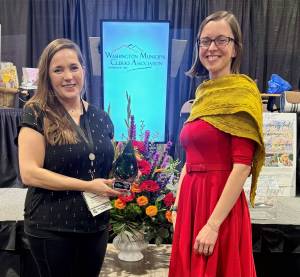
Connection between food and housing
Published 1:30 am Saturday, July 23, 2022


The connection between two critical county issues, housing and local food was discussed on June 28 during the regular San Juan County meeting, as the Food Systems Team presented their initial findings.
“The challenges are real, and they are significant,” Caitlin Leck, coordinator for the team told the Journal after the meeting.
Other members of the Food System Team included Learner Limbach (Orcas Food Coop), Steph Coffey (San Juan Islands Agricultural Guild), Kristen Rezabek (San Juan County Department of Health), Kate Mikulak (WSU Extension Ag Program Coordinator), and Faith Van De Putte (ARC coordinator). The group was formed in 2019 when the San Juan Agricultural Resource Committee realized there was a need for a coordinated food systems plan.
Leck said she became interested in agriculture as a child because her grandmother always had a vegetable garden. In college, she learned about permaculture. Permaculture is a method of landscaping and development that imitates the closed loop zero waste system of the natural environment. Leck became hooked, and today is assisting to create a food systems plan that provides a shared framework to guide collaborative decision-making in San Juan County and the region.
“In the conventional economic model, capitalism, protecting food systems doesn’t make much sense On paper, it doesn’t look like the dollars are there,” Leck said, adding that she and Limbach had to learn how to translate their questions to the data crunchers they were working with in order to glean the information they were looking for. “It was almost like we were speaking two different languages.”
The team collected responses from 83 businesses and individuals, including from 53 farms, 25 food related and 14 ‘others’. Those sales account for 1.3 million dollars annually and employ 500 people. There are also 101 job openings, and they could easily add 320 jobs over the next three years. However, according to these responses, 290 employees have left or were not able to be hired due to a lack of housing. The respondents indicated that within three years, 274 units are needed. Should the housing gap be filled, these respondents felt they could grow their businesses by 50 percent. Over half of them said they would increase their hours, while just under half said they would hire more staff.
One of the biggest takeaways from the assessment, Leck said, was that the demand was there for locally produced food, but the supply was not. Limbach told the county council that the Orcas Food Coop has been unable to keep some local products in stock.
For him, the biggest surprise from the data was the sheer volume. “It’s an enormous amount of information to sift through and distill down,” Limbach said. “A number that stood out to me was the amount of food that we import to feed the county, which we estimate to be about $93 million annually. That’s in addition to over $40 million that is spent by residents to buy food off-island. Of the $138.4 million in total food spending, only about 3.7% ($5.1 million) is produced in the islands. That’s a $133 million annual gap and that number is growing.”
In their report to the team, those data crunchers noted that “Based on this research, there is sufficient demand to support local production, but there is not enough supply to fill the demand. We recommend focusing on supporting supply-side infrastructure to boost the agriculture sector of San Juan County.”
The lack of housing is a large part of that infrastructure.
According to Josh Monaghan of Monaghan Consulting, 43 percent of the farmers in his study cited the lack of housing for employees as a reason they were unable to increase their business. Another 30 percent expressed the belief that the lack of housing caused them to reduce hours of operation, production and or revenue. Only 10 percent of the food systems of owners said lack of housing did not affect their businesses.
Monaghan told the Journal later that the feedback he received from that they would like to see more renter wanted and less help needed signs.
“Housing has lots of dimension to it. There are different ideas out there that I wouldn’t have thought of, and it was interesting to see the perspective of different business owners,” Monaghan said.
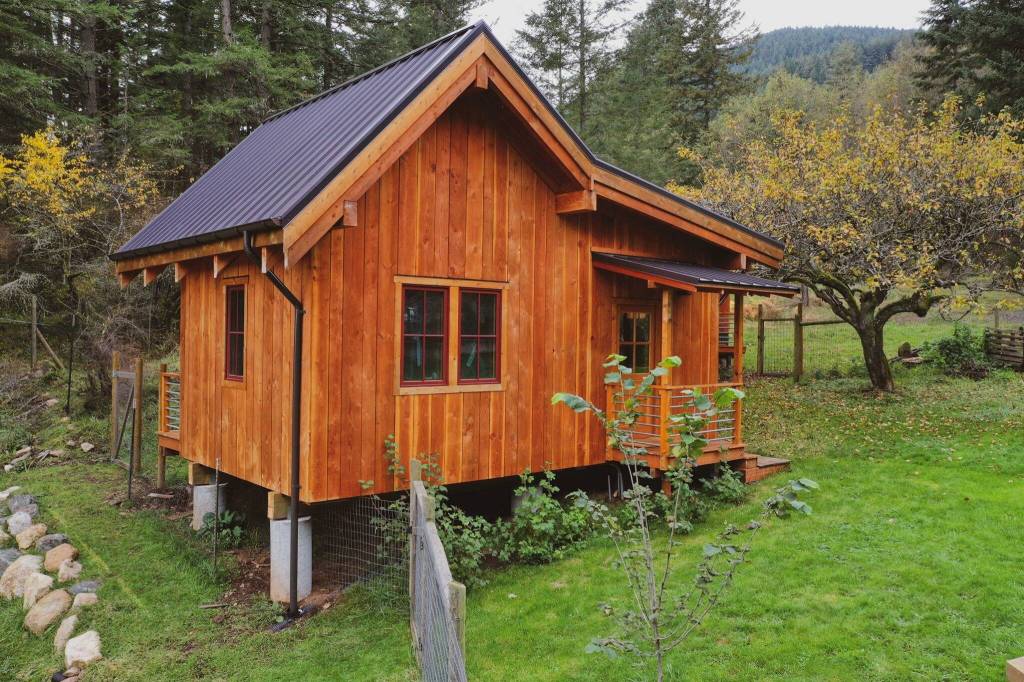
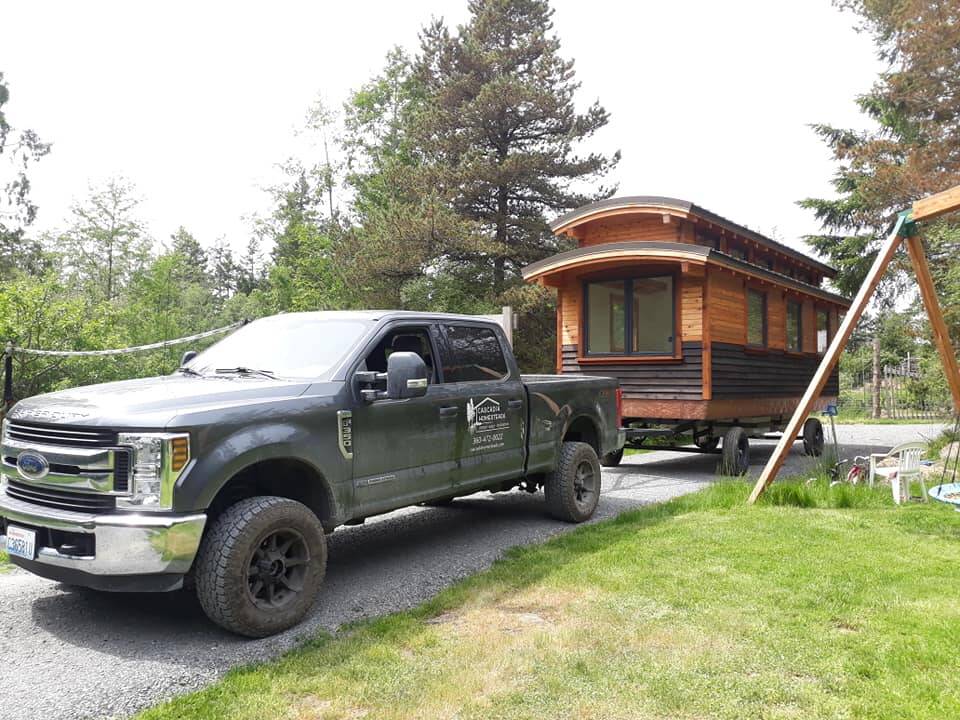
Clusters of tiny houses within walking distance of multiple farms is one idea, or similarly, allowing a few tiny housing, or a duplex on individual farms. In the duplex situation, perhaps half of the duplex could be short-term worker housing while the other half could be a long-term rental.
“Farmers are more willing to envision taking on the burden,” Monaghan said.
Marcy Montgomery, who is on the board of the Agricultural Guild, Makers Guild and actively involved in food access, told the Journal that farms really are the missing piece, the land, and their need is usually short-term, during the growing and harvesting season. Grocery stores on the other hand need more workers all year round.
Clusters of tiny houses could be funded by a non-profit that could work in partnership with farmers could be a real option. However, tiny houses are not for everyone, Montgomery said, there needs to be a variety of options.
“If in twenty years from now, we lost all our farmers, who will know how to maintain the farm, and grow the food? How do we preserve the farm?” Monaghan asked.
“We have a good chance here. We have the will, we are just looking for the mechanism,” Monaghan said. “This can’t just be a quick bandaid that won’t work five years from now.”
The data collected from the housing portion of the study should be available to the public in the fall, Monaghan said. Leck said the full assessment report will be posted on the agricultural guild’s website around June of next year.