The salmon are back and all is OK | Clowns, performers and San Juan Islands’ boaters travel 100 years into the future with the Aqua Chautauqua
Published 1:30 am Saturday, August 8, 2026
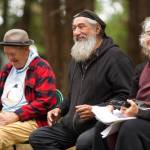
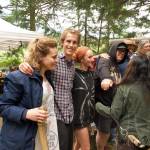
What will the San Juan Islands look like in 100 years? With this question, the Aqua Chautauqua opens every performance. It is, the players tell the crowd, the year 2126, and everything is OK — the salmon are back, the water runs clean and the archipelago from the San Juans to the Canadian Gulf Islands has learned to live within its own means. This summer, that traveling premise sailed to its final stop, made last weekend on Gabriola Island, and the ragtag flotilla of boaters from Orcas, San Juan, Lopez and Lummi islands, along with clowns, musicians and environmentalists who carried it from island to island, came ashore for the last time with a message about salmon, service and the invisible line running down the middle of the Salish Sea.
The Chautauqua — a “New Old Time” circus revived from traveling tent shows of a century ago — spent weeks hopscotching between Cortes, Denman, Hornby, Quadra and Gabriola islands, all on the Canadian side of the border. At its core, the Chautauqua’s mission is to bring joy to the communities it visits, offering a free circus show, a community potluck, workshops and — most importantly — a service project: a project of direct need to the community, and directed by the community. The show itself never crossed into the San Juan Islands; instead, boaters from Orcas, Lopez, San Juan and Lummi islands sailed north to support the tour through the Gulf Islands, meeting the troupe at each stop. Performers arrived by sailboat, ferry or the Chautauqua’s surplus bus, sleeping in tents and eating potluck meals. No one on the tour is paid.
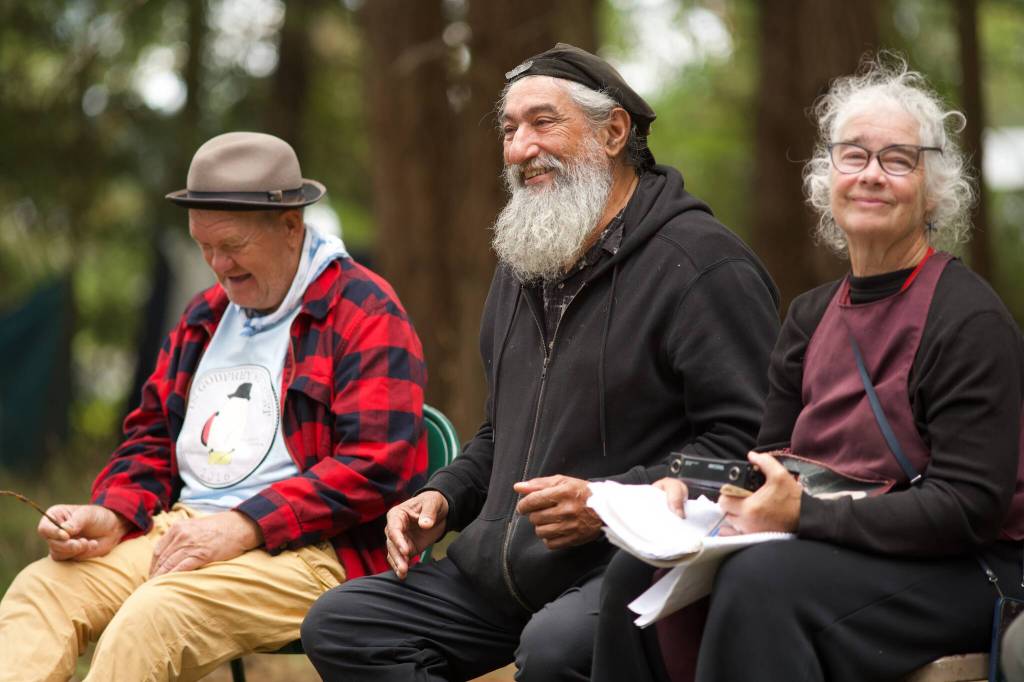
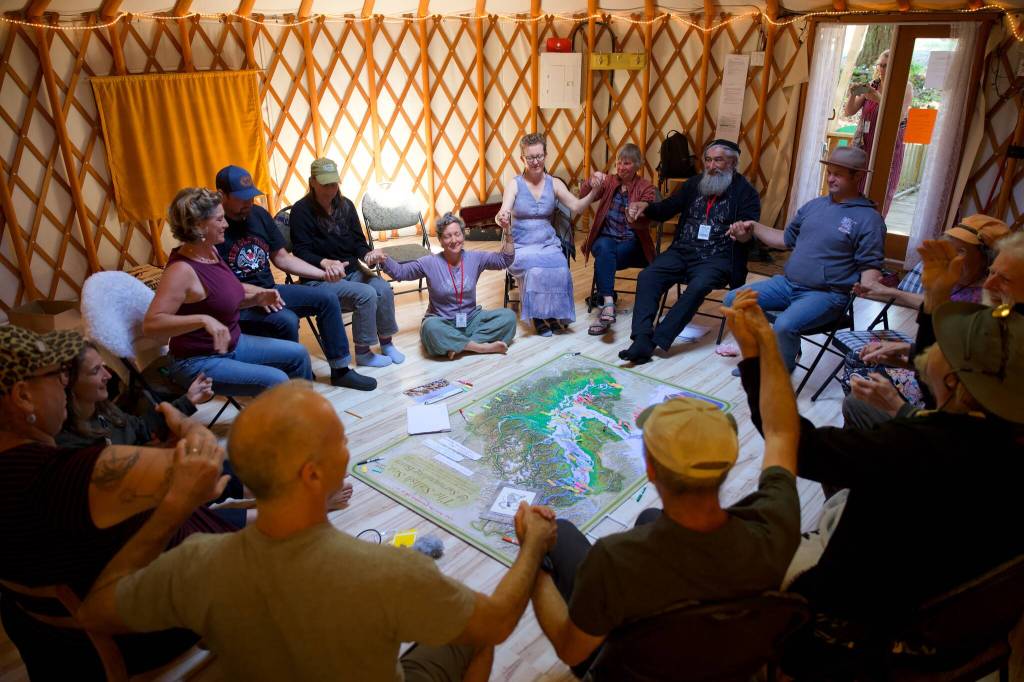
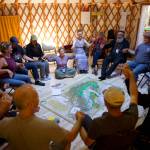
The Environment Workshop, held at the Gabriola Commons park, brought together environmental activists, community organizers and Indigenous partners from across the Salish Sea region — including Gabriola, Salt Spring, Orcas Island and beyond — to connect, share knowledge and inspire collective stewardship. Gathered in a yurt around a large map of the Salish Sea, participants marked their home communities and local watersheds with post-it notes, then took turns describing conservation successes and ongoing fights in their own regions, from land trusts and affordable-housing initiatives to pipeline battles, while emphasizing the importance of centering Indigenous knowledge and relationships to the land.
For Ross Newport, who led and organized the delegation of boaters supporting the Aqua Chautauqua, the fictional 2126 describes work already underway on Orcas Island. “I live at the base of a 2,000-acre mountain that was purchased with the land bank,” Newport told the group, describing that mountain — Turtleback, saved from development. Newport also praised the work of OPAL Community Land Trust. “When I think about the level of cynicism nationally, it’s nice to realize we are still marching forward.”
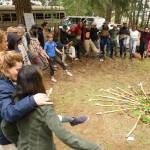
That marching forward happened across the international line as much as within any single community. Eric Morris, a fifth-generation Washingtonian who settled on Orcas Island in 1999, has traveled with the Chautauqua for roughly a decade and spent the last month sailing his own boat to support the tour, greeted by whales almost daily in the northern Gulf Islands and Desolation Sound. “Every island you visit, there’s wonderful people,” Morris said, describing the tour’s real purpose as bridging a border that, on the water, barely exists: “This Chautauqua is really a special symposium discussing the Salish Sea bioregion that we all inhabit … intended to bridge the invisible divide, or the invisible line, that somehow divides us.” He’s also the reason the giant inflated globes that close every show exist at all — a tradition born almost by accident when a fellow Odd Fellows lodge member asked to carry a 16-foot Earth ball in an April Fool’s Day parade in Eastsound. As the lodge carried the globe past the local school, “the entire school emptied out spontaneously,” Morris recalled. “Pretty soon, everyone was carrying and parading along with the Earth Ball.” That ritual, born on an Orcas Island sidewalk, now travels the length of the Chautauqua tour, hoisted overhead by children on every island alike.
For Rob Meyer, a retired Harborview trauma nurse who moved to Orcas full-time six years ago, and his wife Kim, a former kindergarten teacher who was also part of the Chautauqua, the tour’s welcome felt less foreign than expected because the island was already primed for it. “It’s not so different than the type of folk that are on Orcas,” Meyer said, describing the community as “a little, you know, fairly progressive, little alternative” even though he and his wife consider themselves “pretty traditional folk.” What struck him most was the tour’s service work — splitting some four or five cords of firewood, cleaning up a cemetery, building six picnic tables and mowing lawns for elders who were away on a tribal canoe journey. “That was a real privilege,” Meyer said. “I really enjoyed being able to help like that.” He called the finished picnic tables “beautiful,” adding, “they’re going to last for 40 years” — “a constant reminder of that day.”
Closing out the workshop, Paul Magid, a founding member of the world-famous Flying Karamazov Brothers and of the New Old Time Chautauqua itself, reframed the whole conversation in spiritual rather than technical terms. Stewardship, he said, shouldn’t be approached as a policy exercise but as a spiritual journey — the land itself, and the Indigenous people who belong to it, are asking outsiders to come into harmony with it. The real work, he said, is changing hearts — of politicians and ordinary people alike — so they understand that where they live is something they’re part of, not something set apart from them.
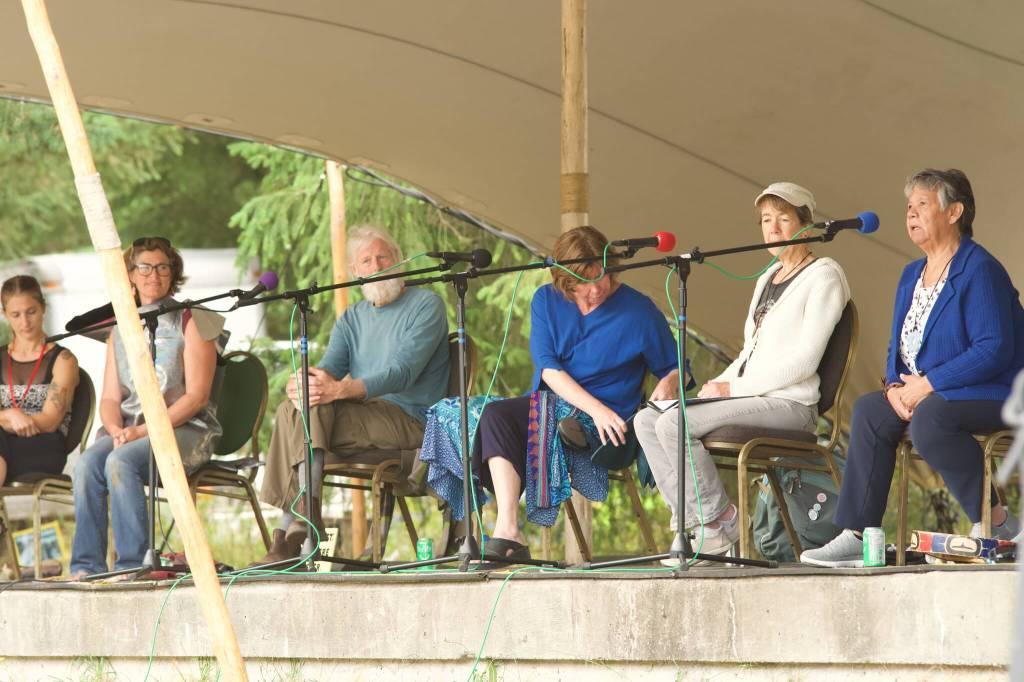
The workshop, led by Robin Jenkinson, a Chautauqua supporter from Salt Spring Island, fed into an afternoon Salish Sea Stewardship Panel on the main stage, featuring notable local experts and Indigenous leaders — including Geraldine Manson, C’tasi:a, a respected Snuneymuxw Elder; Michael Mascall of the Quadra Island Conservancy and Stewardship Society; and Susan Yates, an elected Islands Trust trustee — and moderated by Jenkinson, and Reid Byg, a Chautauqua aerialist and political ecology professor at the University of Alabama — reflecting the Chautauqua’s broader mission of pairing serious environmental advocacy with celebration and community-building.
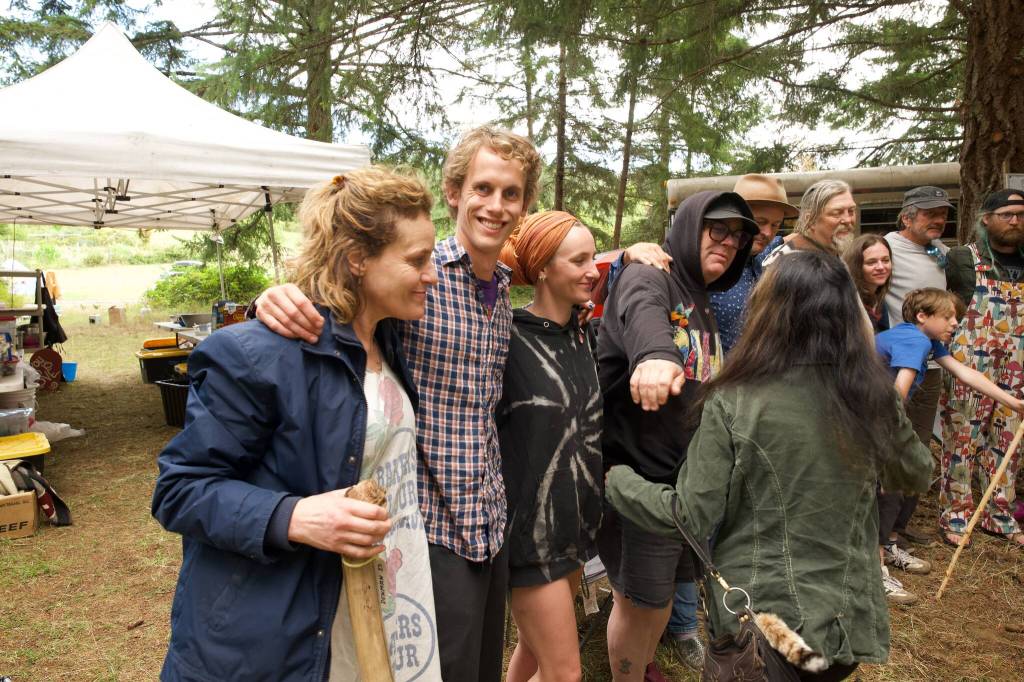
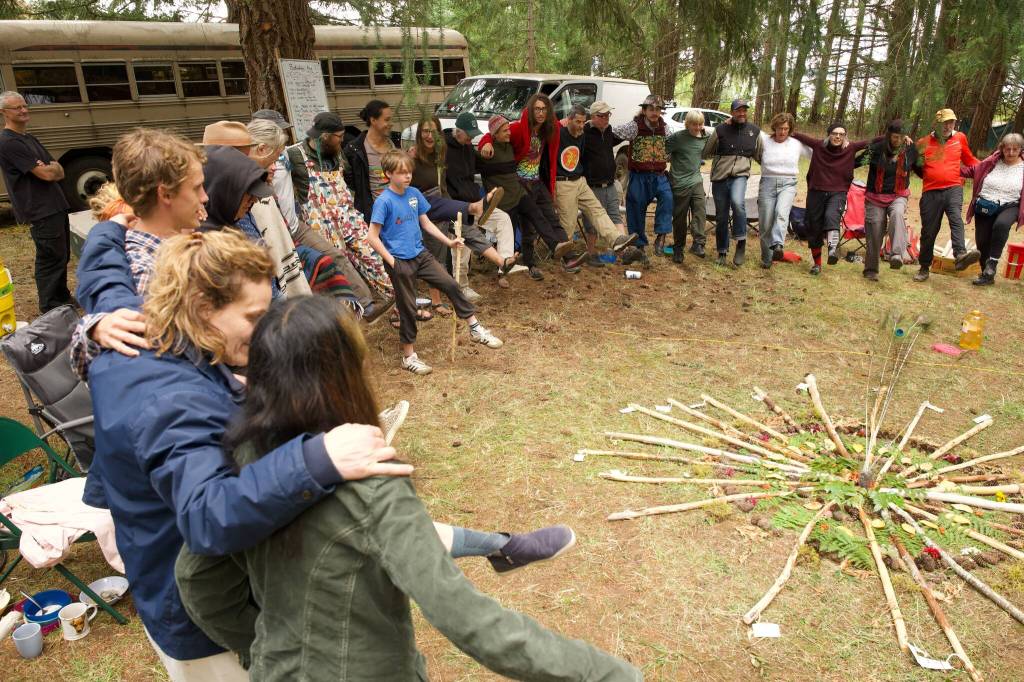
After weeks at sea and performing, holding workshops and sharing meals together with citizens throughout the Canadian Gulf Islands, the Aqua Chautauqua reached the end of the tour, and on that final morning, held an emotional closing circle. Amid many tears, performers and clowns spoke of feeling deep gratitude for one another and a shared hope of carrying that spirit back into their own communities. Others talked of growing the Salish Sea community further still, extending the tour’s cross-border reach south to the Puget Sound and drawing more Canadians in to help “make us one people as much as possible.” Kristen Crowley, Paul Magid’s partner and, alongside him, one of the tour’s key organizers — responsible for the immense task of provisioning and feeding dozens of traveling performers for weeks on end, as well as general trip planning and troubleshooting — spoke of the San Juan Islands boating contingent that supported the Chautauqua: “I don’t know really where to start. I want to thank the boat people for this very big gift. Which feels like an eagle feather to me that I hope I can continue to honor and earn. And that I will be able to understand the full depth and importance of what you’ve shared. So I feel very humbled and honored by it.”