Islands rise to the challenge: Early childhood education fights for its future
Published 1:30 am Tuesday, June 9, 2026
As state and federal funding shrinks, San Juan County school districts and nonprofits are finding creative ways to ensure every child has a chance to learn before kindergarten — but advocates warn the clock is ticking.
The stakes could not be higher. Research cited by the Washington State Association of Head Start and ECEAP shows that at-risk children who do not participate in a quality early childhood program are five times more likely to be arrested repeatedly by age 27. The Washington State Institute for Public Policy found a $13,030 return for each child who participated in the state’s Early Childhood Education and Assistance Program, known as ECEAP.
Yet across the San Juan Islands, access to early childhood education remains uneven, costly and increasingly threatened by budget pressures at every level of government.
Orcas Island: A nonprofit fills the gaps
On Orcas, a homegrown solution has been quietly transforming outcomes for young children since 2014. The Early Childhood Education Initiative, or ECEI, was founded by local early childhood centers and is fiscally sponsored by the Orcas Island Community Foundation. Funded entirely by grants and community donations, ECEI targets working families who earn too much to qualify for state assistance but still cannot afford the high cost of preschool.
According to information on the ECEI website, kindergarten readiness on Orcas has increased by 20%. In 2025, 96% of the 30 students assessed were found fully prepared for kindergarten — the largest gains seen in student literacy, described as a key element of future school success.
“The need is still there,” said Ethna Flanagan, San Juan County ECEAP coordinator and early learning manager and an ECEI member.
Amber Paulsen, executive director of Kaleidoscope and one of the member schools that make up ECEI, summed it up simply: “ECEI really is just that safety net for families that have run out of options. I can’t imagine what our Orcas community would do without the ECEI support.”
San Juan Island: Creative solutions under pressure
On San Juan Island, the school district tackled the early-learning gap head-on just two years ago by launching a Transition to Kindergarten program, funded through the state’s Office of Superintendent of Public Instruction, alongside an ECEAP-funded developmental preschool. Together, the programs serve 29 students.
Dr. Becky Bell, director of early learning for San Juan Island School District, described the challenge candidly: “ECEAP doesn’t cover the cost of staffing, facilities, everything. It’s just a set amount per student.” To bridge the gap, the district has partnered with Skagit Head Start to use a former Head Start building at a favorable cost and written grants — including a $30,000 private grant for the coming school year. Bell is also the superintendent of the Shaw Island School District.
The payoff is already showing. Teacher Summer Clark, who leads the ECEAP classroom, noted that she began the school year with one student on an Individual Education Plan and ended it with seven — children identified early and now receiving tailored support. “If we’re not able to get eyes on these students, they are spending their kindergarten year trying to figure out how to support this child. We’re just losing time,” she said.
Bell credited careful planning for the district’s ability to maintain its programs even as other districts across the state lost slots. “We were really careful about asking for the right number of slots going into it,” she said. “A lot of good communication, a lot of coordination — and always thinking about what we need to do now to get us in a good spot for next year.”
Lopez Island: Doing more with less
Rebecca Hope, executive director of Lopez Children’s Center, described a Lopez Island early childhood landscape that has had to be creative and relentless in pursuit of funding. As the only licensed program on Lopez Island accepting both state subsidy options — ECEAP and Working Connections Child Care — Lopez Children’s Center has pursued an aggressive grant writing strategy to stay afloat. Recent wins include $169,000 from the Department of Commerce for expansion of child care slots, $50,000 in complex needs funding through Department of Children, Youth, and Families for children with IEPs and challenging behaviors, and a $15,000 arts grant.
Hope was candid about what Lopez lacks compared to Orcas. “There’s no robust backup system that’s local the way that Orcas does. That private funding network is not existing really here, at least in a formalized fashion.”
Looking ahead, Hope said Lopez Children’s Center received a $160,000 Department of Commerce grant for construction pre-planning, positioning the program to expand when community need demands it. She added that infant care remains entirely unavailable on both Lopez and Friday Harbor — a gap she hopes to one day fill.
What comes next
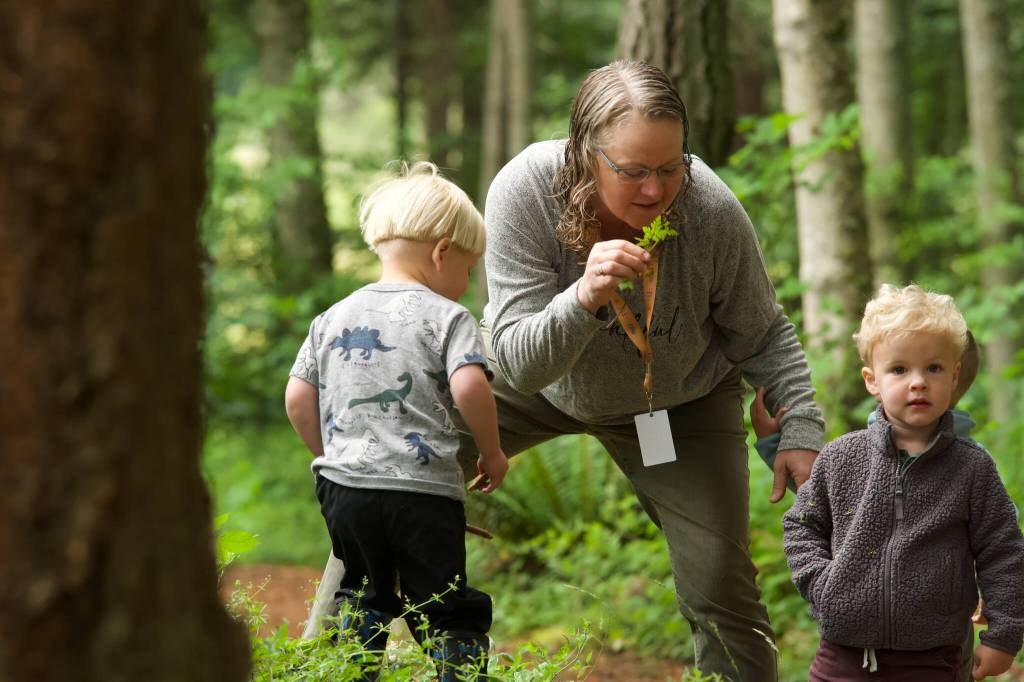
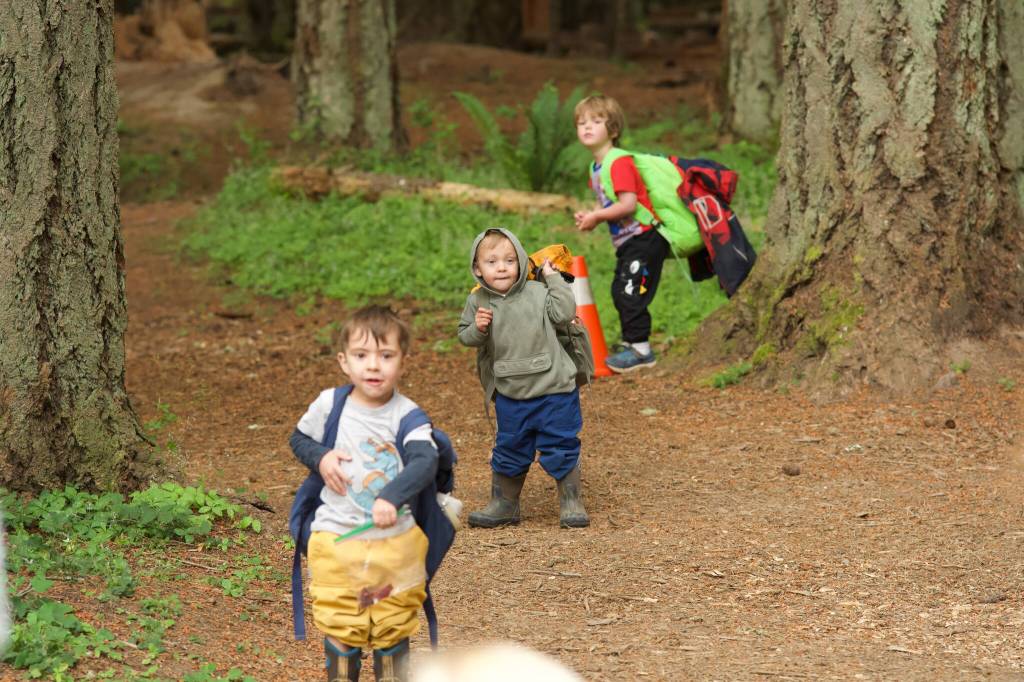
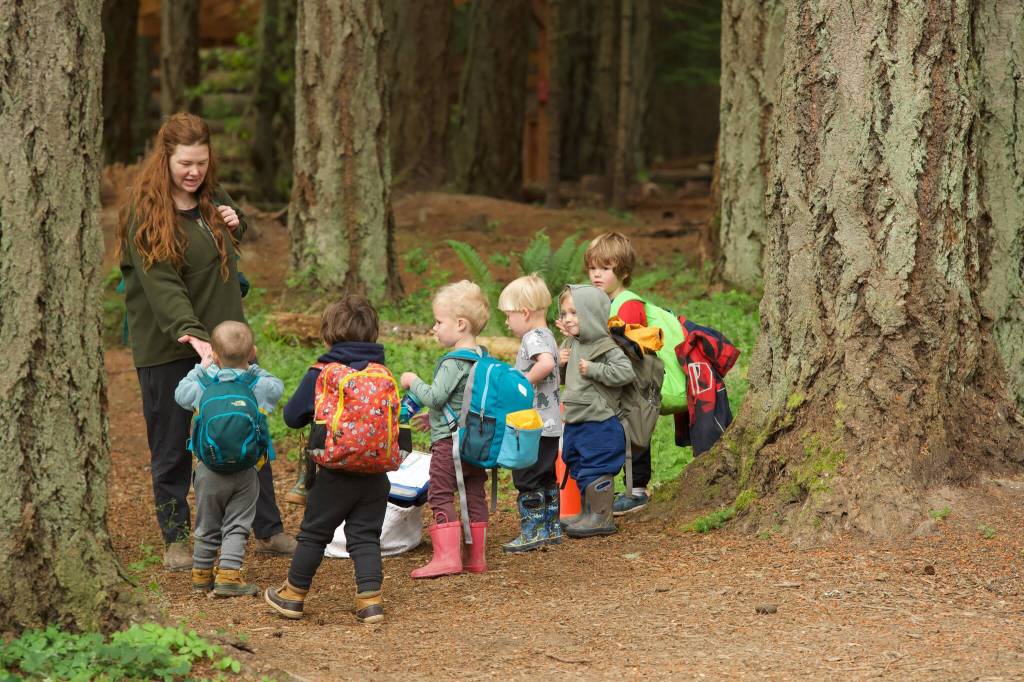
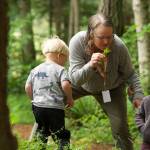
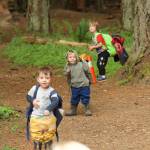
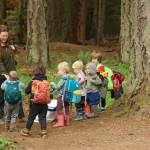
One possible model for expanding access came from Paulsen of Kaleidoscope, which operates a licensed outdoor nature-based program on Orcas Island. “I always encourage outdoor programming because you don’t have to have the bricks and mortar. You just need to have some nature.” Paulsen noted that because the program is licensed, it can serve all families through ECEAP, Working Connections and ECEI — making it accessible beyond just those who can afford to pay. On the question of cost, she pointed to startup costs as the key difference: “It’s the startup [cost] that really has significant change.” Programs can operate on borrowed land or even public land, she noted, and San Juan County now recognizes outdoor nature-based programs in code as a viable licensed option. In an interview with the Islands’ Sounder in September, Paulsen mentioned that Kaleidoscope was the first licensed outdoor nature-based program in Washington state.
Bell estimated that roughly 60% of San Juan Island children currently receive some form of preschool before kindergarten — progress, but still leaving many behind.
Sarah Werling, a transition-to-kindergarten teacher with nearly 20 years in San Juan Island early-childhood education, put it simply: “If we invest in these students now, before they even enter kindergarten — getting children services, getting parents connected, familiar with the school environment — imagine the power by the time they enter grade school.”