Hearing examiner rules that no EIS is needed for Shaw Public Works
Published 1:30 am Tuesday, May 19, 2026
Hearing Examiner Gary N. McLean issued a 31-page decision on May 6, regarding an appeal of the San Juan County Community Development Department’s issuance of a Mitigated Determination of Non-significance of the proposed site of an Essential Public Facility on Shaw Island. While he ruled that the County does not need to complete an Environmental Impact Statement, the Determination of Non-Significance does need to be amended.
“This Decision does not revisit, disturb or adjudicate the County’s policy determination that the proposed Public Works facility is an Essential Public Facility,” McLean wrote, stating the appeal is granted in part and modified by his decision.
Background
Public Works Director Colin Huntemer has told County Council that without an operational space on Shaw Island, staff have no restroom facility or staging area for Public Works projects. Huntemer worked with the County Council to purchase property on Neck Point. Lynn Bahrych, Shaw resident and member of the Shaw Island Alliance, pointed out that the County owns a concrete building near the Shaw Community Building that could be converted into a bunkhouse with a restroom. The Shaw Island Alliance is a group, in part to uphold the Shaw Subarea Plan, which they feel the Public Works facility, as proposed, does not comply. Public Works has applied for an Essential Public Facility designation on the site, allowing them to use the property for equipment and material storage, administrative offices and serve as an emergency service facility, saying in their application, “All these activities meet the definition of an Essential Public Facility in San Juan County code.”
The County also would like to rezone the area to rural industrial. Bahrych told the Journal that such a designation, according to County code, opens the door to permitting concrete batch plants, bulk fuel storage, commercial composting, garbage transfer, wrecking and salvage yards, and treatment of sewage and sludge, all potentially sited in the middle of a residential neighborhood.
The San Juan County Department of Community Development granted Public Works a Mitigated Determination of Non-Significance on the EFP application, potentially moving the project forward. The Shaw Island Alliance appealed the determination to the hearing examiner. Increased traffic, ground and water pollution and burning were all cited as concerns by the Alliance.
The decision
McLean clarified multiple times throughout his decision that the County did not necessarily do anything erroneous, and did not need to complete an Environmental Impact Statement; the MDNS should be amended. “The County took a sufficient ‘hard look’ at the proposal for the purposes of issuing a threshold determination at this stage,” he wrote. He also clarified that the MDNS does not authorize construction, clearing, grading, operation or final design of a Public Works facility.
McLean wrote frequently that he found the neighbors’ concerns compelling and deserving of weight, and addressed them one by one.
Drainage and groundwater, stormwater and materials storage, McLean explained, are central issues that require more detailed review before any operational use begins. “Public Works yards commonly involve vehicles, equipment, aggregate materials, road spoils, shoulder pullings, woody debris, and other materials that can affect stormwater quality if improperly stored or handled,” he stated. The County’s proposed modifications already include stormwater Best Management Practices; however, while appropriate, it is incomplete on its own. “It should be supplemented by a requirement for a stormwater management plan addressing siltation from exposed soils, runoff from materials storage areas, equipment staging areas, reclaimed chip seal, aggregates, ditch spoils, shoulder pullings, woody debris and any other materials proposed for storage or handling.”
Burning was another concern vocalized by individuals testifying. Those activities, McLean wrote, should be described in the land use permit application, including where they would occur, how they would be managed, and what permits would be required.
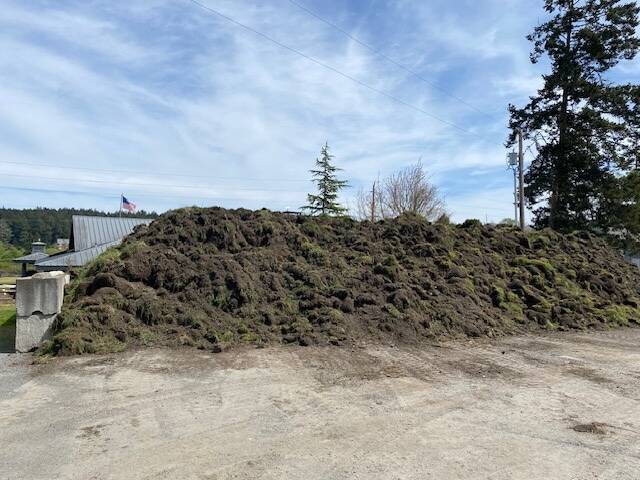
Impacts on public parking at the Shaw Community Building, adjacent to the Public Works proposed site, were also mentioned. Parking has been disrupted due to a temporary soils/spoils collection bin. “The supplemental email states that the original plan was to haul spoils immediately to the newly purchased Neck Point property, to avoid impacts to the Community Building parking, but that due to ongoing litigation or mediation on that property, it was unavailable, McLean wrote after reading evidence regarding the matter. The incident does not prove that the MDNS is erroneous, McLean writes, but it does support the “central factual premise supporting a partial grant of the appeal: operational details were not fully defined when the MDNS [was] issued and future review must be structured and enforceable.”
Bahrych told the Journal later that she hopes the material can be moved away from the Community Building by the 4th of July, when islanders are planning on celebrating the nation’s 250th. A storage spot currently exists, she said, along Indian Cove Road, where the County owns a large unimproved parcel that could easily be cleared for this material storage, well away from any houses or community buildings.
Hazardous waste is prohibited on the site, according to the County code. McLean noted that materials not classified as hazardous may also create stormwater or sediment issues. Therefore, reclaimed chip seal, shoulder pullings, ditch spoils, crushed aggregates and woody debris may require an evaluation for runoff, sediment, petroleum residues or other site specific concerts depending upon their source and location.
Any site-specific redesignations, such as to Rural Industrial, should focus “Not only on hypothetical RI uses, but also on specific Public Works construction yard and materials handling activities.”
As to water supply, PFAs testing and sewage capacity, the decision requires the site’s well water be tested, and that the County complete an evaluation and inspections of the existing onsite sewage system.
Addressing appellants’ concerns over the proximity to residential properties, McLean found the concerns legitimate and wrote that they should be addressed in a later project review. The County is required to plant trees that should be at least 15 feet tall.
Huntemer, clarifying he was only speaking for himself in his role at Public Works, told the Journal, “My initial reaction was that everything he says is what we would be doing anyway.”
He added that there will be multiple SEPA requirements and project permits to complete for the facilities’ operations.
Bahrych responded to the Decision saying, “This excellent decision will give the County good guidance considering future requests to redesignate rural lands for intense industrial use.”
“This strikes me as a well-founded and well-supported decision,” Shaw Island Alliance attorney Kyle Loring said, commending the thought and thoroughness McLean put into the decision.
Both parties have 21 days from the date of the Decision to appeal. If appealed, it would go to Superior Court.