Cancer patients fly free with the San Juan Eagles
Published 1:30 am Tuesday, March 31, 2026

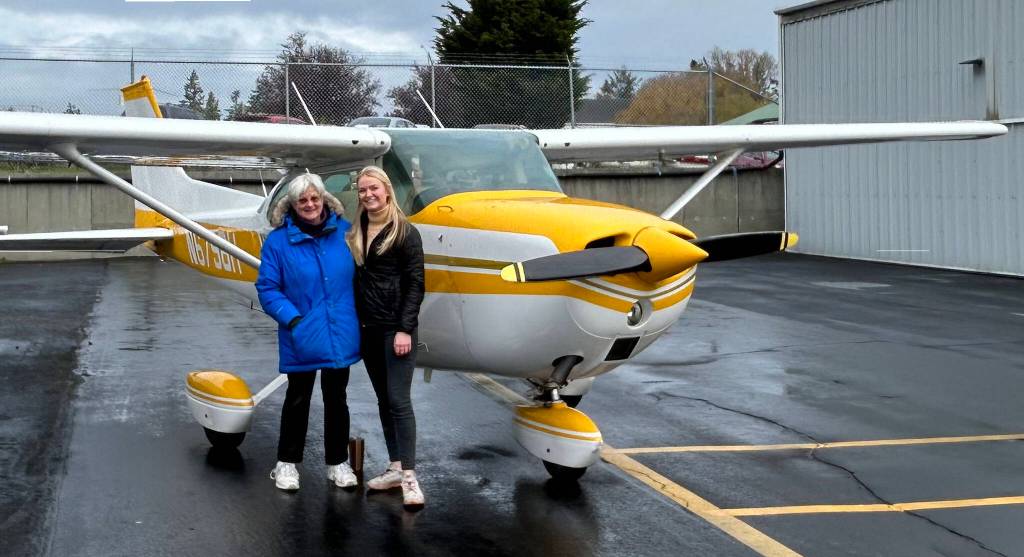
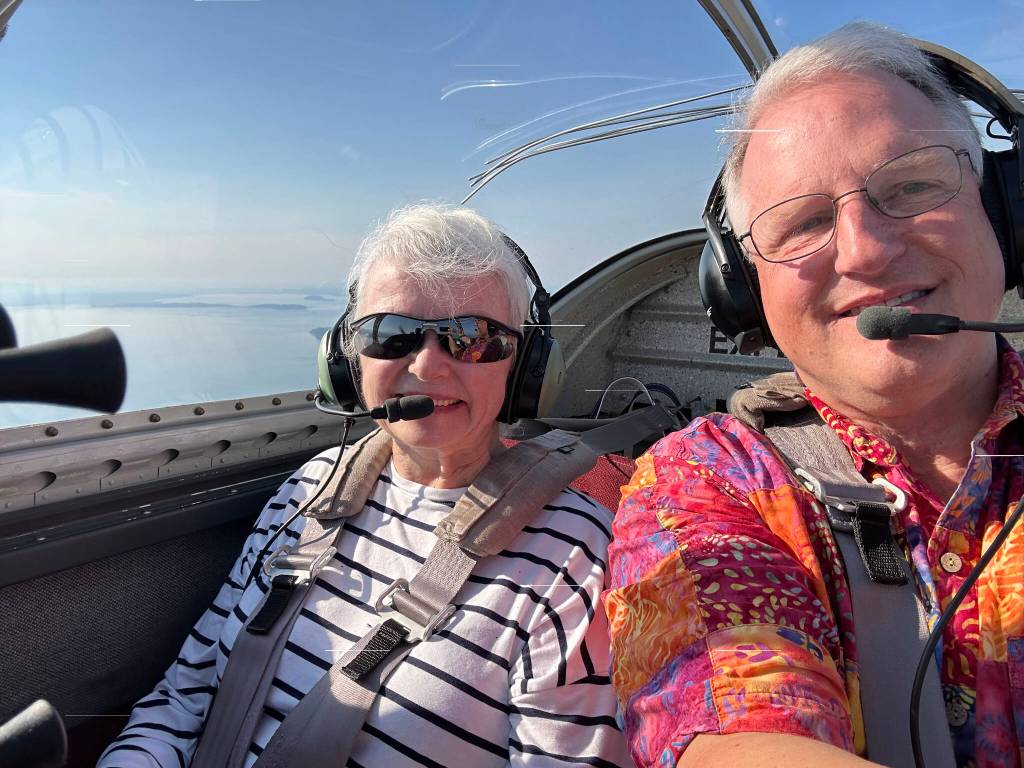



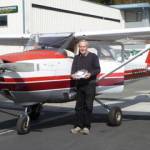
Everyone seems to have a different name for the officially designated San Juan Eagles — Silver Eagles, Flying Eagles, Flying Angels, even just the Eagles in many cases — but regardless of the name, this sweet-smelling rose is a universally beloved group of volunteer pilots helping save island lives. They fly patients to the mainland for cancer treatments at no cost, often personally driving them back and forth between the airport and the medical center as well, turning what could be a cost-heavy, stress-intensive experience into an exciting adventure.
Local Teddy Deane flew with the Eagles (he calls them the Silver Eagles) in 2013 during treatments for prostate cancer.
“It made lemons into lemonade for me,” Deane said. “I flew with two breast cancer patients five days a week from Friday Harbor Airport. Skagit Hospital scheduled all our treatments at 1 p.m., so we left at noon, took a Toyota (donated by the dealership) from the airport to the hospital and back. Our pilot was always waiting for us and we flew home by 3 p.m.”
The patients would get a bowl of miso soup from Ernie’s cafe on their way out — no payment would be taken for either lunch or the flight.
“The only payment we made was baking them some cookies occasionally,” Deane said. “The pilots were the most kind and considerate people I have ever met, and I will never forget the experience. We had a lot of adventures along the way; sometimes they would ask us if we wanted to fly over Deception Pass, the tulip fields in Mount Vernon, or our own houses. Every trip was a joy, and I will always cherish their generosity, skill and good humor.”
In lieu of cookies, Deane wrote and dedicated a song, “Silver Eagles,” to the pilots who helped him.
“I wrote ‘Silver Eagles’ as a tribute to the pilots who transported me for 36 flights because I didn’t have anything else that I could give them that would express my gratitude (cookies didn’t seem like enough),” he shared. “The song appeared on my last CD released in 2015. I also performed it for a special national recognition ceremony for the Eagles. Dr. John Geyman put the lyrics in his book about flying; he was one of the [founding] members of the Eagles.”
The other San Juan Eagles’ founder, Vicky Thalacker, grew up 2 miles from a Naval base and decided from a very young age that she would learn how to fly.
“We could watch the [Blue Angels] from our front yard,” she said.
Years later, as a pilot living in Friday Harbor with her own plane, she had a friend who needed to travel to Mount Vernon daily for chemo.
“I took her over several times in my plane,” Thalacker remembered. “I’d drive her to the hospital and return her to her home. She eventually passed away, but in the meantime, I knew that this would be my calling.”
She found out there was a group of pilots on Orcas who flew patients to Bellingham and spent the next year researching how they did it. Thalacker found the names and addresses of all the pilots in Friday Harbor, wrote to each one and asked them to join her.
“There was great support from all of them,” she said. “The Eagles were formed, and we are still flying patients today.”
Twenty-eight-year-old Elsa Willows is the current coordinator of the Eagles and has been flying with them since she was only 25. She recently took over the coordinator position from Marc Islam, whom she met through fellow Eagle (and her grandfather), Dennis Willows.
“My grandpa has been a pilot his whole life,” she said. “He introduced me to the Eagles. I was at the airport a lot through my pilot training, and they were very much a resource for me during that time.”
To obtain a commercial license, pilots need 250 hours of flying, which can be expensive for new fliers. Some members of the Eagles are willing to lend their plane to training pilots they trust, who can then log hours toward their license and transport cancer patients to the mainland for the Eagles.
“Everyone wins!” Willows said.
Her grandfather, Dennis, hopes more people can know about the Eagles so they can use their services, given how difficult cancer treatments can be logistically for islanders.
“Many people having regular treatments of radiation or chemotherapy face weeks of daily commutes,” he told the Journal. “They find each trip by car and ferry can easily take all day, with just enough time to eat and sleep at home before doing it again. Flying is a preferred time, energy and financial option.”
Mark Burkholder spoke fondly of the Eagles when remembering some of his last trips off the island during his wife’s treatments.
“It was the best part of our cancer experience,” he said. “Not only was it a lifeline in terms of the time and money it saved us, but it was such an infusion of excitement and adventure. To get to feel like you’re hopping in a little airplane and getting airdropped in like a paratrooper feels like the correct level of response for something so serious.”
Burkholder remembered that they also found comfort in being around people who knew what they were doing. Similar to how he felt with the oncologists, being around the pilots’ capable confidence felt soothing at a time when everything around them felt out of their control and scary.
“It was a different pilot every time, and every single one of them was so capable and so sharp,” he said. “You crave being around people who are capable like that during those times.”
Soon, the San Juan Eagles will partner with San Juan Airlines to transport patients off the island, even in more difficult weather. With the smaller planes and recreational pilots, sometimes the weather minimums are higher for the Eagles than they are for the professional pilots flying commercial craft day in and day out.
“Our minimums are the FAA’s minimums,” Jason Douglass, owner of San Juan Airlines, explained, “which makes us a more viable option in a lot of cases. We are happy to take medical patients for the Eagles if we aren’t at capacity.”
This means that on days when the weather would typically cancel an Eagles flight, San Juan Airlines will likely be able to step in.
“I live in Friday Harbor. We are an island-based business, even though our main operation is in Bellingham,” Douglass shared. “We’re always happy to serve the community, that’s why we are here. In any capacity, we can do that; we’re happy to help. And this seems like a good way for us to be able to do that.”