Highly pathogenic avian influenza confirmed in San Juan County birds; first HPAI-related human death recorded in Washington
Published 1:30 am Monday, December 8, 2025
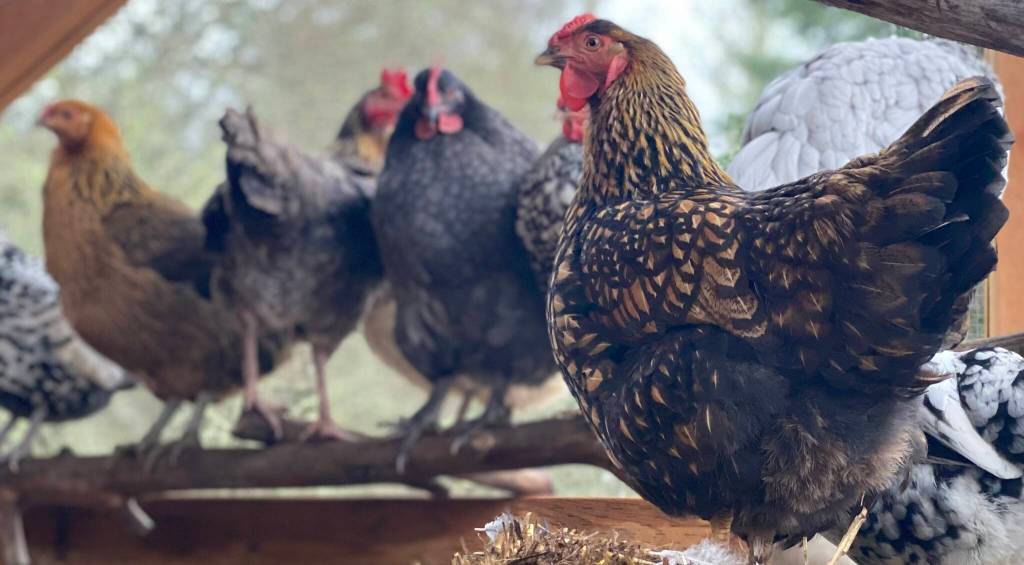
A backyard flock and a wild gull tested positive for highly pathogenic avian influenza in San Juan County in November, the same week the first human infected with the H5N5 bird flu strain in Washington died. San Juan County flock owners are at heightened risk of their birds being infected, and the Washington State Department of Agriculture is recommending they double down on biosecurity. The SJC Disease Prevention Department is encouraging folks to be careful with their backyard flocks and not touch sick or injured wild or domestic birds.
The first human globally to test positive for the H5N5 bird flu variant was a Grays Harbor resident who owned a backyard flock exposed to wild birds. Their flock tested positive for avian influenza and then, later, the owner did as well. The patient was “an older adult with underlying health conditions,” according to the Washington Department of Health. They died from complications of the bird flu on Nov. 23.
“The risk to the public remains low,” the DOH said in a release about the death. “No other people involved have tested positive for avian influenza. Public health officials will continue to monitor anyone who was in close contact with the patient for symptoms to ensure that human-to-human spread has not occurred. There is no evidence of transmission of this virus between people.”
San Juan County’s local health department echoes a similar sentiment, that the risk is relatively low to humans. When asked what new information we need to know, SJC Health Officer Dr. Amy Harley said nothing has really changed.
“The messaging from public health has been the same since this has been going on for over a year now,” she told the Journal. “We want people to protect their backyard flocks, avoid contact with wild animals, and we continue our routine activities of closely monitoring human influenza disease year-round. From a public health standpoint, things haven’t changed. We’ve always wanted people to take these sort of hygiene and common sense precautions seriously.”
The WSDA told the Journal that personal details about the cases are illegal to release, but it doesn’t matter because the recommendations for the county are the same regardless of where and who had the infected flock.
“We cannot release flock-specific details such as exact locations or producer identities,” the WSDA said in an interview. “In Washington, that information is protected by law, and WSDA is legally prohibited from disclosing it. These safeguards are designed to ensure flock owners feel comfortable reporting illness quickly, without concern that their private information will become public — which is essential for an effective disease response.”
They also said that flock owners in the county should definitely be confining their birds right now in order to minimize their contact with wild birds.
“We strongly recommend keeping birds in covered coops or runs where they are protected from wild waterfowl and their droppings,” they said. “Securing feed and water, limiting outdoor access, and reducing unnecessary movement of people and equipment on and off the property are all key steps.”
Other biosecurity measures, such as changing shoes when entering coops or houses, can help reduce the chance of migratory wild bird droppings from spreading the infection to domestic flocks or their owners. Full biosecurity recommendations can be found on the WSDA’s bird flu webpage, which is continually updated.
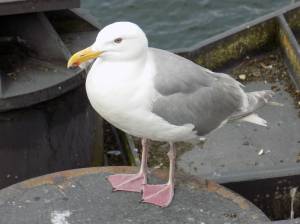
Madrona Murphy, a botanist working with Kwiaht, confirmed that the wild bird referred to in the County’s press release was a gull on Lopez. She took the sample and sent the bird to the state for testing.
“In the case of the gull on Lopez, the finder had contacted Wolf Hollow, who then put them in touch with us, and I went out and collected the gull for sampling,” she told the Journal. “WDFW then sent us a mailing label and submission form for us to send it to the veterinary lab at WSU Pullman. The results are then shared with WDFW, DOH, WSDA, APHIS, San Juan County Public Health and we share them with Wolf Hollow. Right now, there are more wildlife samples from San Juan, Lopez, and Orcas at the lab awaiting testing.”