Robert Salgado: SJC’s new fire marshal brings decades of experience to island communities
Published 1:30 am Monday, January 19, 2026
By Darrell Kirk
Staff reporter
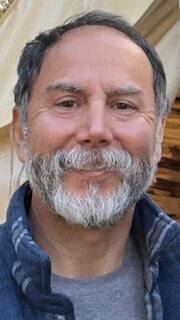
Robert Salgado didn’t take the typical path to becoming a fire marshal. The journey began in Southern California as a municipal electrician, responding to electrical fires in the middle of the night alongside Los Angeles County firefighters. Those late-night calls sparked a calling that would span nearly 40 years.
“I would get called out in the middle of the night by the fire department to respond to electrical fires or electrical hazards to secure the scene,” Salgado recalls. “And just got to know the guys there and they got me all motivated in the fire service.”
Today, as San Juan County’s fire marshal, Salgado brings a unique combination of skills: certified fire marshal, certified building inspector, journey-level electrician, 18 years as a part-time firefighter and EMT with San Bernardino County, 15 years as an OSHA safety engineer investigating workplace fatalities and degrees in both fire science and occupational safety and health.
“We’re definitely excited to have Robert join the public safety team in the county. He comes with a wealth of knowledge,” said Fire Chief Chad Kimple, who previously served as the county’s fire marshal for about three years before Salgado.
“He comes out of California, where codes and laws are usually more restrictive, so he’s got lots of experience working with firefighters, business owners, community members, and advising government bodies on best practices for enforcing code,” Kimple said. “He’s a very personable guy.”
What does a fire marshal do?
Salgado’s role involves interpreting and applying federal, state and local fire protection codes. He reviews construction plans for fire sprinkler systems, fire alarm systems, apparatus access for fire engines and hydrant placement. He responds to suspicious fires as the County’s fire investigator, reviews burn permits, inspects commercial burn sites and conducts annual fire safety inspections at schools and restaurants.
“My role as a fire marshal in this county is unique in that we don’t have our own fire investigators. So I am the fire investigator for the county,” Salgado said. “I’ll respond to it. And these will be both structured fires and wildland fires.”
Island challenges
The San Juan Islands present distinct challenges. Unlike California’s freeway-connected metro areas, reaching properties here might mean four-wheel-drive off-roading up steep hillsides or waiting for ferry service between islands.
“As a county employee, I have a four-wheel-drive truck. So I may need to negotiate steep roadways and four by four off road just to get to certain properties,” Salgado said. “People live amongst the woods there on hillsides.”
Response times add complexity. When a fire occurs on an island other than Orcas, where Salgado lives, he must rely on the County boat, sheriff’s boat or ferry system. “Nothing is timely on my end, unless it happens here on the island that I live on,” he acknowledged.
While the islands’ subtropical climate makes fires less common than in California, the potential for catastrophic wildfire exists. “When humidity starts dropping to about 15 to 10%, the fuel moisture in the vegetation drops significantly,” Salgado said. “If that happens here on the islands, and there’s a start somewhere, you know, a spark or some sort of heat source, and you got low humidity, you get a wind influence, you could have a catastrophic fire.”
Creating defensible space
Salgado encourages homeowners to create defensible space by clearing vegetation back from their homes. When wildfire threatens, and fire crews must perform structural triage, accessibility and defensible space make all the difference.
“If they see one, it’s like, hey, we can’t even get to it. The roadways … they’ve let all the vegetation overgrow,” Salgado explained. “The house is surrounded with all kinds of combustibles. You know, patio furniture, firewood laying up against the house, trees hanging over on the rooftop. They’re just gonna say that’s a loser.”
Conversely, a property with wide driveways, cleared overhead trees, no combustibles around the home and trimmed vegetation becomes a property fire crews can protect and defend.
One person, one county
Regarding the hiring process, Kimple noted that “Robert definitely was leading the pack in experience and his wealth of knowledge around code and working with all walks of life and knowing how to navigate hard conversations. He really came out on top.”
But Kimple also emphasized the challenging nature of the position, noting that the county fire marshal’s office is in need of more support. “They’re an office of one employee, and a lot of people don’t know that,” he said. “They’re not tied to any fire department. They work under the purview of the county, specifically under the director of community development.”
“And it’s hard, it’s a lot to do with only one person. Robert needs some additional help,” Kimple explained. “It is very difficult for Robert to field phone calls and emails and be in the field to do all the inspections or investigations.”
Salgado put this in perspective by comparing his office to typical fire prevention bureaus in California. “When I was with the city of San Diego, we have 50 inspection personnel or deputy fire marshals in our fire prevention bureau,” he said. “San Juan County, I have no staff, it’s just me. I’m doing all of that.”
Kimple acknowledged the staffing situation frankly: “I wouldn’t quite call it failure, but it’s not the ideal situation on the current staffing. But I know Robert is hitting the ground running and he’s keeping it afloat.”
Finding community
Despite the workload challenges, Salgado expresses genuine enthusiasm for the San Juan Islands community.
“I think the people here, aside from being nice, everybody waves to each other,” he said. “Everybody takes a vested interest in their community. They take care of it like it’s their own. Everybody watches out for each other.”
His commitment to the islands is evident: “Every home, every neighbor and every acre of land matters. Because I live on Orcas and I like, the scenery on Orcas, I’m not gonna treat it any different as I treat all the other ones. Everyone matters the same to me.”
He’s found the same welcoming spirit among San Juan County’s fire chiefs. “I work very well and very close with all the chiefs on all the islands,” Salgado said. “The fire service is like a big brotherhood.”
For those considering volunteer firefighting, Salgado emphasizes that commitment and desire are essential. “The key thing is to have the desire and the commitment. Fire service always has this phrase: it’s a calling. It’s not for everybody,” he said. “It’s a dangerous occupation, whether it’s volunteer or full-time career. You’re gonna see things and do things that some people may never see or do in their entire lifetime. You’re gonna go into people’s homes and see them take their last breath. You’re gonna see people killed in collisions, people burned in fires. You’re gonna see the worst.”
But there’s profound reward in the work. “At the same time, you may contribute with your team to save people. And that’s the rewarding part of it,” Salgado said. “You came together for your community, for your neighbor. You risked life and limb to help another person. That’s the calling there.”
When not reviewing plans or investigating fires, Salgado embraces the outdoor opportunities that drew him to the islands, hiking twice weekly around Mountain Lake and fishing for cutthroat trout. “That’s the reason I picked Orcas,” he said.
For Salgado, the challenge of being a one-person fire marshal’s office covering an entire archipelago is offset by the community he’s found and the opportunity to apply his diverse expertise where it matters most: protecting the people, property and natural beauty of the San Juan Islands.