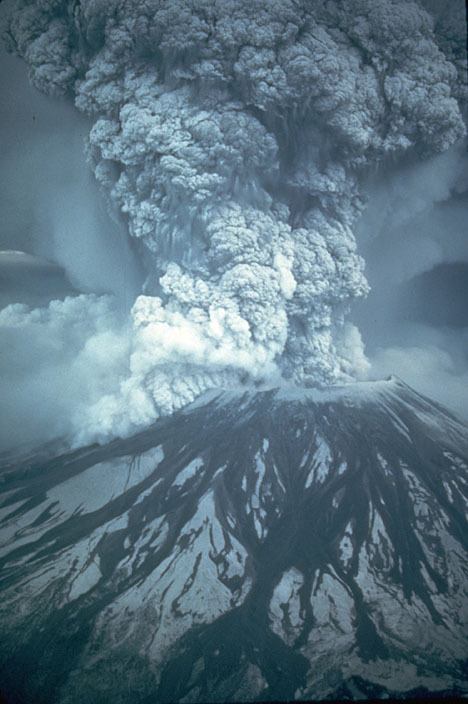
It was 30 years ago today … Mount St. Helens erupted May 18, 1980, at 8:32 a.m.
Published 11:06 am Tuesday, May 18, 2010
— This report includes a video of the May 18, 1980 KOMO News report on Mount St. Helens’ eruption, courtesy of KOMO News.
It was 30 years ago today … On May 18, 1980, at 8:32 a.m. Pacific Daylight Time, a magnitude 5.1 earthquake shook Mount St. Helens.
The bulge and surrounding area slid away in a gigantic rockslide and debris avalanche, releasing pressure and triggering a major pumice and ash eruption of the volcano. Thirteen-hundred feet of the peak collapsed or blew outwards. As a result, 24 square miles of valley was filled by a debris avalanche; 250 square miles of recreation, timber, and private lands were damaged by a lateral blast; and an estimated 200 million cubic yards of material was deposited directly by lahars (volcanic mudflows) into the river channels. Fifty-seven people were killed or are still missing.
“Mount St. Helens is still active, and the other volcanoes in the region are dormant, not extinct, so the risk to lives and property from volcanic eruption is very real and should not be taken lightly,” NW Insurance Council president Karl Newman said in a press release.
The Northwest has a wide variety of natural disaster risks: earthquake, flooding, freezing weather, landslide, tsunami, severe windstorms, volcanoes and wildfire. “Fortunately, you don’t need a completely separate disaster preparedness plan for each type of disaster. Put together a comprehensive plan that takes into account all of your risks,” Newman said.
The NW Insurance Council offers the following tips:
— Develop an effective disaster preparedness plan. Visit www.getreadynw.org.
— Develop an emergency kit that includes at least a four-day supply of drinking water and food you don’t have to refrigerate or cook. The kit should also contain first aid supplies, a weather radio, batteries, clothing, blankets, medicine, copies of your insurance policies and some basic tools. More disaster planning resources are available at www.redcross.org.
— Review your insurance policies to be sure you have the right coverage to meet your needs. Find out what your insurance will cover. Most homeowners insurance policies do not cover damage caused by earthquakes, flood, landslides or tsunamis.
— Develop a home inventory of your personal property. A complete inventory of your possessions will help you and your adjuster get through the claims process more quickly, including insurance settlements and/or tax deductions for losses. Don’t trust your memory. List descriptions, take pictures and include receipts when possible. Store your home inventory and insurance papers in waterproof containers offsite in a safety deposit box or with a friend. You can access free, downloadable home inventory software from the Insurance Information Institute
— Become familiar with your community’s disaster preparedness plans.
— Plan an escape route in the event you have to evacuate your home. Check with local officials for low points in the event of a flood or tsunami.
— Determine the location of the nearest official shelter. The Red Cross can locate shelters near your home and explain what you should take with you.
— Agree on a meeting place for your family in case local communications networks are offline. Also determine a virtual meeting place such as a voicemail box or online social networking site. Designate out-of-state contacts in case you can’t communicate locally.
— For more information on preparing for a disaster, visit www.getreadynw.org or contact NW Insurance Council at 800-664-4942. The NW Insurance Council is a non-profit, public-education organization funded by member insurance companies serving Washington, Oregon and Idaho.