Coming home to Decatur — How a family’s wish became law
Published 1:30 am Thursday, February 26, 2026
By Darrell Kirk
Staff reporter
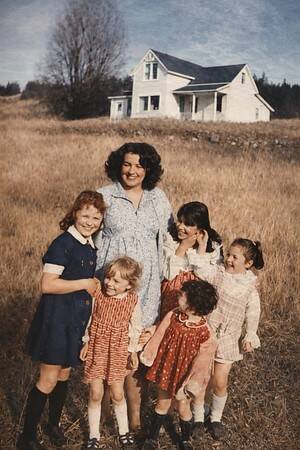
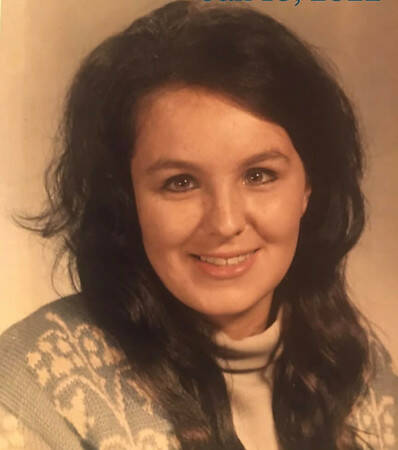
For years, George Lamb kept a quiet heartache. His wife Karen — historian, teacher, Native American scholar and the love of his life — had one final wish: to be buried on the family’s land on Decatur Island, where her Tlingit ancestors had lived since the 1860s. The law said no. And so Karen Jones Lamb waited in a crypt near Anacortes, her body wrapped in a Tlingit blanket, her childhood doll Elizabeth tucked beside her, an arrowhead placed in her hands.
On Feb. 12, Substitute House Bill 2239 passed the Washington State House 96 to 0. The bill, championed by Rep. Jim Walsh of the 19th Legislative District and Rep. Hunter Abell of the 7th District, enables the creation of family burial grounds on privately owned property to provide greater flexibility and options for individuals in choosing where to be interred, and to honor and support individual and family connectivity with the land.
The bill had failed multiple times, but Tacee Lamb, Karen and George’s daughter, lobbied representatives across the state until the votes were there. “If you don’t want to do it, we’re just going to do it,” Tacee reportedly told one opponent.
On the night of the vote, Abell rose in the Washington House chamber. “That’s Karen Jones Lamb, a Native American leader and historian from the San Juan Islands. Among her final wishes was a desire to be buried on the family property on Decatur Island, something that is currently not permitted, but something that would be permitted under this bill.” The clerk called the roll: 96 yeas, 0 nays. Substitute House Bill 2239 was declared passed.
For Kendra — Karen and George’s daughter — the moment lifted years of weight, “It has always been a hardship in my heart that mom might not get what she really wanted, which was to be buried here on Decatur.”
Reed Lamb — George and Karen’s son — echoed the feeling, “One of his uncles had desperately wanted to be buried on Decatur too, but it didn’t happen for him. We were determined that it was going to work out for my mother because it was very important to her.”
Roots that run to Alaska
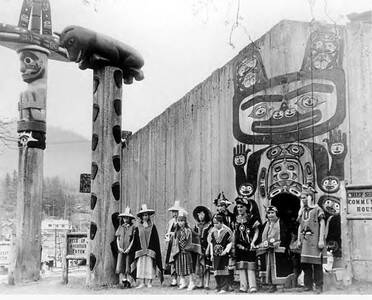
To understand why this piece of land matters so much, you have to go back to Russian-occupied Alaska in the mid-1800s, where Karen’s great-grandmother, a high-caste Tlingit woman named Mary Tacee Weldon Reed, was born a niece of Chief Shakes of Wrangell. She was kidnapped by the rival Haida tribe, held captive and eventually escaped. She fell gravely ill — likely from smallpox — lost two children to the disease and was placed on a funeral pyre, believed dead, before John P. Reed, a Hudson Bay Company fur trader, saw her finger move.
He pulled her from the pyre, and she lived. She and John Reed traveled south past Haida Gwaii and settled on what was then unclaimed land in the San Juan Islands. They built a log cabin on Decatur Island in 1870 and raised 10 children. The bay below that cabin bears their name to this day: Reed Bay. This is the very land where Karen Jones Lamb asked to be buried.
The family that grew from those roots shaped the Pacific Northwest. A Reed daughter married Henry Cayou, the first Indigenous elected official in Washington state and founder of OPALCO, the electric cooperative that still powers the islands today. Through the Paul family, they helped win the national right for Native Americans to vote. Karen inherited all of this history — and treated it as a responsibility. She compiled the genealogy that won federal recognition for the Samish tribe and published “Native American Wives of San Juan Settlers,” a tribute to the Indigenous founding mothers of the islands — women like her own great-grandmother, who survived the pyre and built a family on a Decatur hillside that still stands.
A woman who saw the world
For the 1976 bicentennial, Karen — who taught her own children in a one-room schoolhouse on Decatur — had her 7-year-old daughter Kendra memorize Longfellow’s “Paul Revere’s Ride” in its entirety, three and a half pages long. Kendra recited every word. They held a celebration on the beach. Karen sewed colonial-era costumes for the neighbors and the children.
Karen’s one-room schoolhouse — the smallest in Washington state — became a launching pad for students who carried her lessons far beyond the island. Ayanna Berkshire attended for one year in 1986, her fourth-grade year. “Karen embraced me like one of her own kids, and we had a friendship through the rest of her life,” Berkshire said. She is now a professional actor. “Just because we were on an island, that was no excuse to think small,” Berkshire said. “Karen only thought big.” That philosophy meant field trips funded by letters students wrote to artists — Dale Chihuly sent three vases. Morgan Jones, who attended for nine years, remembers tours of the Capitol by Sen. Patty Murray and the Supreme Court by Justice Sandra Day O’Connor. “I think she’s very much in my backbone,” Berkshire said of Karen.
Years later, Berkshire still marvels at the couple. “What a wonderful, glorious character. We laugh about George bringing her to school in the bucket of his excavator when her car had broken down. Karen always wore dresses, she always wore lipstick, she always had her purse, and here she comes in the bucket of his backhoe to school.”
Morgan Jones, another student of Karen’s, has her own memory of Karen’s ride to school. When Morgan and her father spotted Karen walking along the road one morning, they pulled over in their 1952 International flatbed pickup to offer a ride. Karen hopped onto the running boards and held the rearview mirror. “Aren’t you going to come inside?” they asked. “Oh no, I want to ride right here,” Karen said. She rode standing on the outside of the cab, her dress flapping in the breeze. “She was always just really in touch with the childlike nature,” Jones said.
Before she was a teacher or scholar, Karen was a Pan Am flight attendant. Her airline carried troops to Vietnam, and Karen made night flights into the war zone, all lights extinguished as they descended. “She would tell me about the young troops crying because they’re so afraid of having to go into battle,” George recalled.
George grew up in the swamps of Florida, the son of a gator hunter and the grandson of a moonshiner. “We were the poorest of the poor,” he said. Their neighbors were Black families living in shacks. “We lived in the same kind of circumstances,” George explained. The Air Force brought regular meals. Before that, the family ate squirrels, rabbits, alligators, turtles, fish, cornbread and collard greens. A job at Boeing changed everything, but nothing prepared him for Karen. He was 21, living in a Seattle apartment, when two neighbors knocked on his door with Karen in tow. “I had dirty clothes, underwear and stuff lying on the floor, and I was scrambling around trying to pick things up,” George recalled. “None of it mattered. I was just enchanted with Karen from the time I first saw her. It was love at first sight.” Six weeks later, they were married.
He told his sister Karen’s eyes twinkled — and Kendra confirmed it decades later. “She would be talking with people and her eyes would just kind of twinkle,” Kendra said. “Just like a real light of engagement. She was genuinely interested in other people.”
Reed credits that quality with shaping his life. “The lesson is that you need to treat people with respect and kindness,” he said.
They were married for 54 years. The last decade brought Alzheimer’s. Karen never knew anything was wrong. “The more she needed us, the more it became our privilege to take care of her,” George said, “because of the love we had for her.” Karen passed quietly on Jan. 10, 2022. She simply did not wake up.
“That’s exactly how she wanted to go,” Tacee said. George plans to sell Karen’s 1956 T-Bird — the car her father bought her, the car she drove to their wedding — to pay for the vault he will build beside her on the log cabin property on Decatur, where Karen’s great-grandparents arrived in 1870. It is the land named after her family: Reed Bay.
Chief Seattle’s words, which George and Karen both held close, come to mind: “There is no death, only a change of worlds.” George believes that.
“I feel like I can communicate with her,” he said. “And eventually, not too many more years, I’ll be joining her.”