Schoolhouse named after Karen Lamb
Published 1:30 am Tuesday, November 4, 2025

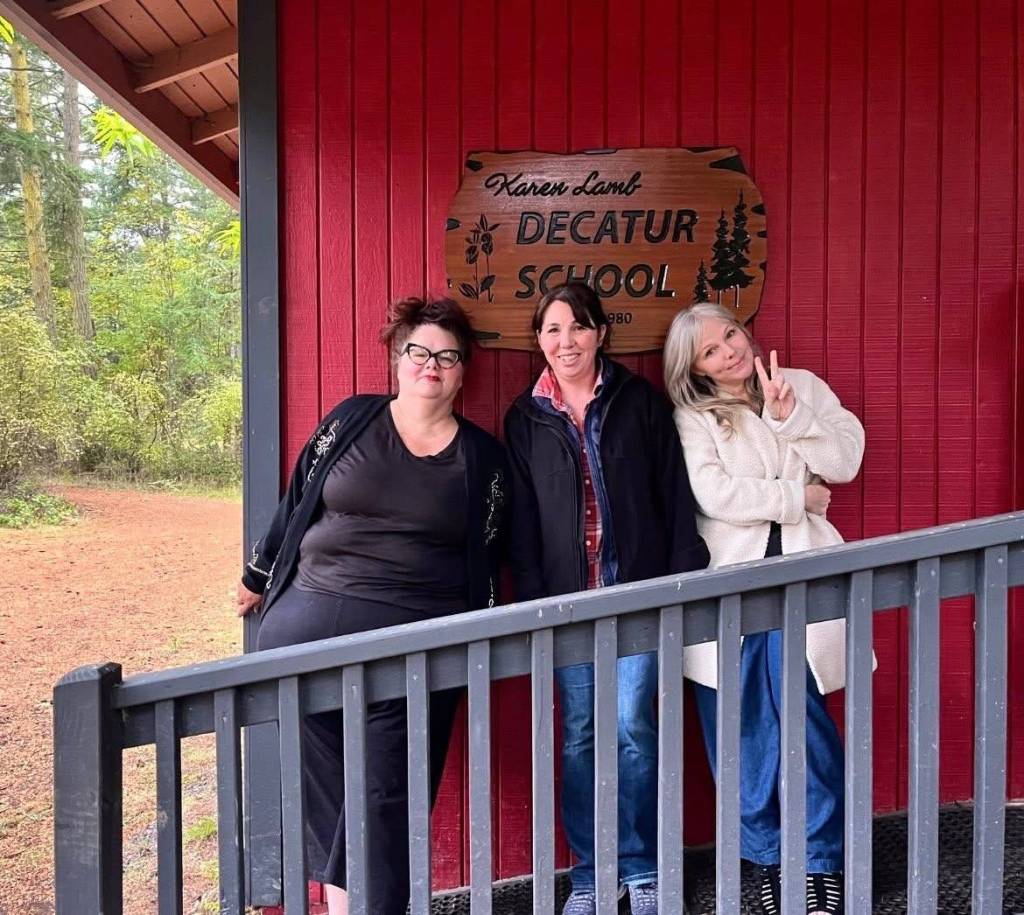
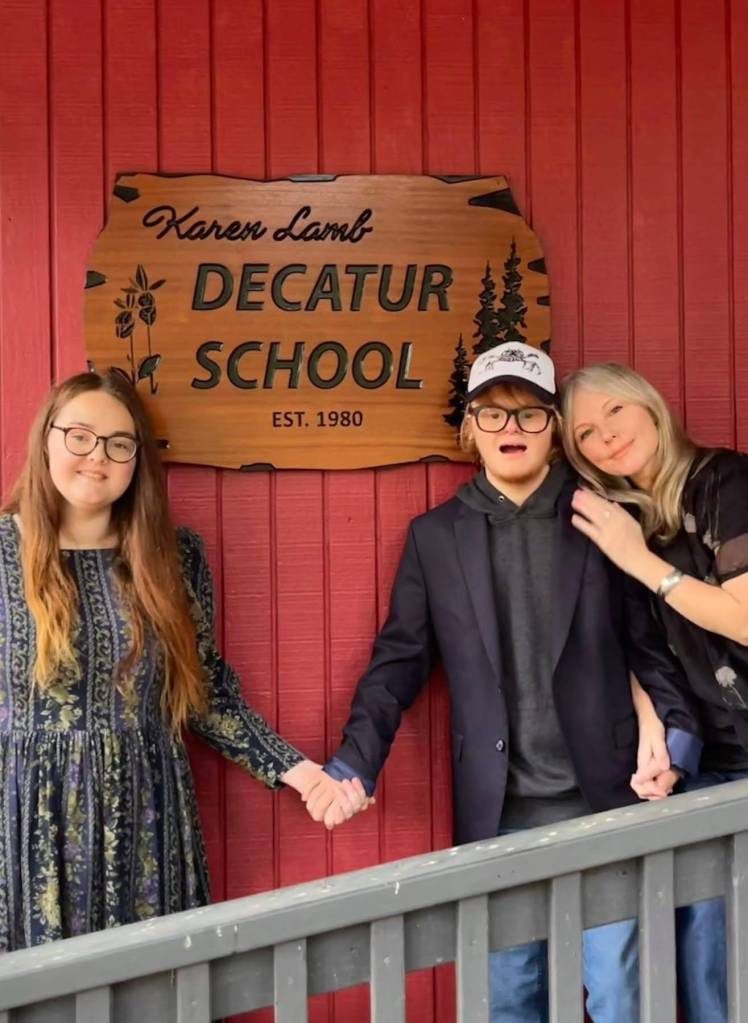




Author, historian, teacher and matriarch Karen Lamb was honored Oct. 18, as the Decatur schoolhouse was named the “Karen Lamb Decatur School.” Approximately 50 people attended the dedication event, according to Lopez School District Superintendent Brady Smith.
“Many loving tears were shed at her Khu ‘eex [Lingit for ceremony/potlatch] Oct .18,” Lamb’s daughter Tacee Lamb told the Journal. “Mom was a teacher, for two years, at Lopez and then Decatur, making her a Lopez District teacher for 35 years.”
The name change was suggested by her son, Reed. The idea gained traction, causing a number of islanders to write letters in support of the tribute, as Karen was well-loved. As testament to that, when she finally retired, all 40 of her students attended her retirement party, Tacee said. Many returned to the naming dedication, reliving fond memories of their former teacher.
According to George, Karen’s husband, she was a dedicated teacher and believed kindness was far and above the most important. She worked to expand her students’ knowledge and experiences, fundraising and taking them on trips to places like London and to Washington D.C., where they met Supreme Court Judge Sandra Day O’Connor, in her judge’s chambers. In Hawaii, they learned about sea turtles, and during a trip to the South Carolina Sea Islands, they immersed themselves in the unique Gullah language. Karen made the Seattle Times twice during her teaching career, once in a story about the schoolhouse and another when she retired.
Tacee explained that her mother attended school in the original schoolhouse. As an adult, she established the school’s original library, which became the gathering place and heart of the growing community.
“It was her lifelong dream to be the island teacher and nothing would please our mother more than to know that the school is now named in her honor,” Tacee said.
“She was the best, a community builder. She passed her love of history onto her children,” Tacee said. Tacee’s siblings are Reed and Kendra. “May my hands always do her work.”
The Lamb’s are related to Henry Cayou (Coastal Salish/Mitchell Bay Band). He was the family’s great-uncle. Cayou married Mary Reed, Karen’s aunt and Decatur resident.
The Lamb family is also related to Chief Seattle through his first wife, as well as being descendants of Chief Shakes of SE Alaska.
“To this day, we are enrolled tribal citizens of the Tlingit nation. We will be attending the Celebration in June in Juneau as a family,” Tacee said. “We are proud of our deep roots in northwest Alaska and our rich maritime history. From the giant Tlingit canoes to the fine ships built and owned by our family.”
Their ancestors were builders of famous ships like the Fearless, the Azalea, and owners of Wawona and the Fantome, among others.
Karen Lamb’s great-grandmother was Ts’ats’ée Reed, daughter of Chief Shakes of the Tlingit tribe. As a matrilineal, clan-based culture, she was part of the Raven clan, frog emblem, of Wrangell, Alaska. Being a high-caste recognised daughter of Chief Shakes, Ts’ats’ée was kidnapped at the age of 14 by the Haida and held for ransom. She settled in the San Juans after escaping Haida Gwaii. As a result of being kidnapped, she lived in fear of the Haida all of her life.
Ts’ats’ée married John Reed in both a Christian and a Tlingit ceremony. They arrived in the San Juans in 1867. Ts’ats’ée gave birth to Mary Reed, the first childbirth recorded on Blakely.
The couple homesteaded on Decatur in 1869, building a log cabin. This cabin is now one of the oldest intact pioneer and Native American homesteads in Washington. George is working to restore the cabin. John was an Irishman who worked for Hudson Bay Co. They had two children who died of smallpox while the couple lived in Alaska. Ts’ats’ée was said to have died of smallpox as well. According to Tacee, legend says Ts’ats’éewas on her funeral pyre when John saw her move her little finger and saved her. She went on to be a beloved mother to 10 more children. Her sons formed Reed Brothers Shipyard, said to have been the finest boat builders in the Northwest.
“These Native American men of the San Juans became titans of industry at a time when Native Americans didn’t even have the right to vote,” Tacee said. “Henry Cayou was the founder and first president of OPALCO and brought light to the islands! Our family owned canneries, ships, and became elected officials.”
George was also a contractor for OPALCO and ran cable for the company. He told the Journal that when he moved to Decatur in the ’60s, it was referred to as “Indian Island,” as Native Americans still owned a large portion of it.
Over time, the island has changed. Tacee recalls growing up on Decatur in the ‘80s. “When I was small, there were years when there were only 12 or 18 of us on Decatur. We only had CB radios and no phones until I was 18. Now there are almost 300 households, per Opalco. Many of those are part-time residents. There is [still] no store on Decatur, no police.”
Moving forward, the family is planning to form a museum in the original schoolhouse.
“[This was] another one of our mother’s lifelong dreams. She not only documented the history of Decatur and our family, but also the Native American Mothers of the San Juans in Karen’s book “Native Wives of San Juan Settlers.” The book is currently out of print, but it will be reissued in the spring of 2026. Her second book centers on the Reed boatbuilders.
Karen passed away in 2022. Her body has been in a crypt outside of Anacortes since that time. Her family is waiting for her to come home, according to Tacee, saying, “In Tlingit culture, she is in Ki-Wawah (an in-between place) and we pray to bring her body home to the island, which was her heart.”
Tacee clarified that Karen was a Christian woman with a deep respect for the Tlingit culture.
House Bill 1065, championed by Rep. Walsh, pertains to family burial grounds. and allows people to be buried on their family property, should all family members agree.
“Should it pass, mother will be buried with our ancestors on Decatur,” Tacee said.
Meanwhile, Karen’s legacy continues. While the Decatur school follows the state-approved and tribal-designed “since time immemorial” curriculum, Smith says, “We definitely supplement that with local history, so yes, it is appropriate to say that Karen’s book and family history will be woven into the curriculum.”